
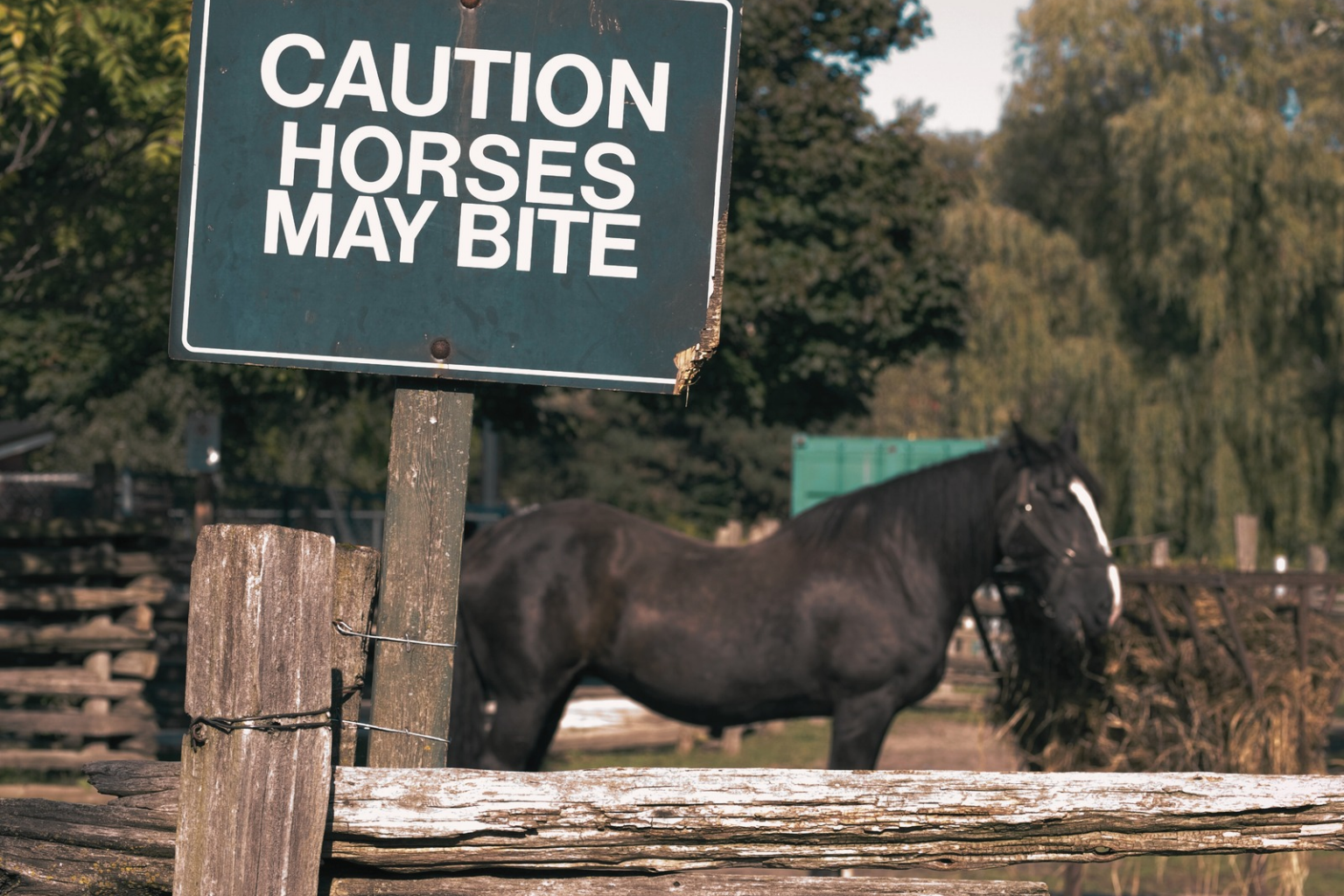

He swings his head toward your arm, grabs at your sleeve, or pins his ears the second you approach. I know how much that can make your stomach drop. Please don't brush it off as a quirky habit, and please don't assume he's simply nasty. Biting is communication, and it can become a serious safety problem very quickly if it's misread.
A Bite Rarely Comes Out of Nowhere
Here's what I want you to understand first. Horses give smaller signals before this, tension through the jaw, ears back, a swishing tail, a quick snake of the neck. When those signals get missed, or accidentally rewarded, he can learn that biting is the only thing that actually gets a response.Start With the Pattern, Not the Label
Before you decide he's dominant or dangerous, I want you looking for a pattern. When does it happen? Who's nearby? What happened in the few seconds right before? A horse who bites during girthing is telling you something completely different from one who bites when you're carrying a feed bucket. Try keeping a simple record for a week. Note the time, what you were doing, his body language, and whether he made contact. This takes the emotion out of it and helps you see if you're actually dealing with discomfort, excitement, or a learned habit, sometimes more than one at once. I'd also say this plainly: please don't stand close just to "test" whether he'll bite. Set yourself up safely. Work somewhere you have room to move, and ask for experienced, hands-on help if you're feeling nervous at all.Please Rule Out Pain Before You Rule On Manners
A horse who's always been pleasant and suddenly starts biting deserves a physical investigation, not a lecture. Pain genuinely lowers a horse's tolerance and can make ordinary handling feel unbearable. A few things worth discussing with your vet or dentist if biting shows up around a specific task:- Biting near the girth may point to anticipated pain, even if he stands quietly for the saddle itself
- Biting during grooming in one particular spot can point to soreness there
- Biting when feet are picked up might mean discomfort in the legs or back
Food Confusion Is More Common Than You'd Think
Food-related biting shows up a lot, especially in horses who've learned that people equal treats. It often starts small, searching pockets or nudging a hand, then progresses toward grabbing fingers or clothing when the treat doesn't appear fast enough. Hand-feeding isn't automatically wrong. It just requires consistent timing and a horse who can genuinely wait calmly. If yours is already a bit pushy around food, I'd keep treats out of your pockets for now, and deliver feed in a bucket instead. One thing I'd really want you avoiding: don't laugh, squeal or offer a treat right after he's mouthed you. Even a big reaction can read as rewarding attention to him.Sometimes It's Fear, Not Confidence
Some horses bite because they're frightened and have run out of quieter ways to ask for space, in a stable, a tie-up area, or anywhere that feels cornered. I'd want you watching for the difference between a horse coming forward boldly to take charge, and one who looks tight and ready to escape. They're not the same problem, and they don't get the same response from me. If you find yourself holding your breath every time you go to catch him, that matters. You genuinely can't train well while braced for impact. Bring in skilled support rather than trying to prove you can handle it alone.Here's Something I See Constantly: Biting Is Often a Boundary Problem First
Horses aren't naturally polite about personal space. They learn what's allowed through every single interaction you have with them. A horse who regularly leans on you or drifts into you at the gate is showing you the boundaries are unclear long before teeth ever enter the picture. This is exactly where I see well-meaning owners get stuck. They don't want to seem harsh, so they keep stepping away, and he learns that moving into your space simply works. Then, when you finally get fed up and react strongly to an actual bite, he receives a confusing, inconsistent message from you. There's one specific, easily missed habit behind most of this, something happening on the human end of the rope far more often than people realise. Once you can actually see it, everything about the boundary conversation gets simpler, and that's exactly what I built Claim Your Space to walk you through.What I'd Actually Do the Moment He Tries to Bite
Your first job is preventing the bite, not winning an argument. Read the early signs and create space before he connects. If he turns his head toward you with tension, don't keep grooming or feeding as though nothing's happening. Step to a safer position and work out what actually triggered it. Please avoid hitting around the face or yanking the lead. Beyond the risk to you, it can make a worried horse more defensive and a pushy horse more reactive. Get experienced help promptly if he bites repeatedly, leaves bruises, or targets faces. Those aren't problems to minimise because you feel embarrassed. Plenty of genuinely capable owners have found themselves with a missed pain issue, or a pattern that simply grew quietly over time without anyone noticing.Don't Let Shame Make This Decision for You
A biting horse can chip away at your confidence fast. I hear the excuses all the time. "He only does it to me." "She's just mare-ish." Sometimes there's real context behind those lines. Context is never the same thing as a free pass, though. You deserve to feel safe handling your own horse, and he deserves someone willing to actually listen to what his behaviour is telling them. Start with safety, rule out discomfort, and tighten up the everyday boundaries before the next near miss becomes something worse. That's not giving up on him. That's the most responsible way I know to protect the relationship.💛 Claim Your Space - $27
A short, focused mini course that shows you the one unconscious handling habit behind most pushy, boundary-testing behaviour, biting included, and exactly how to reverse it before your next trip to the paddock. 👉 Watch Claim Your Space Here