
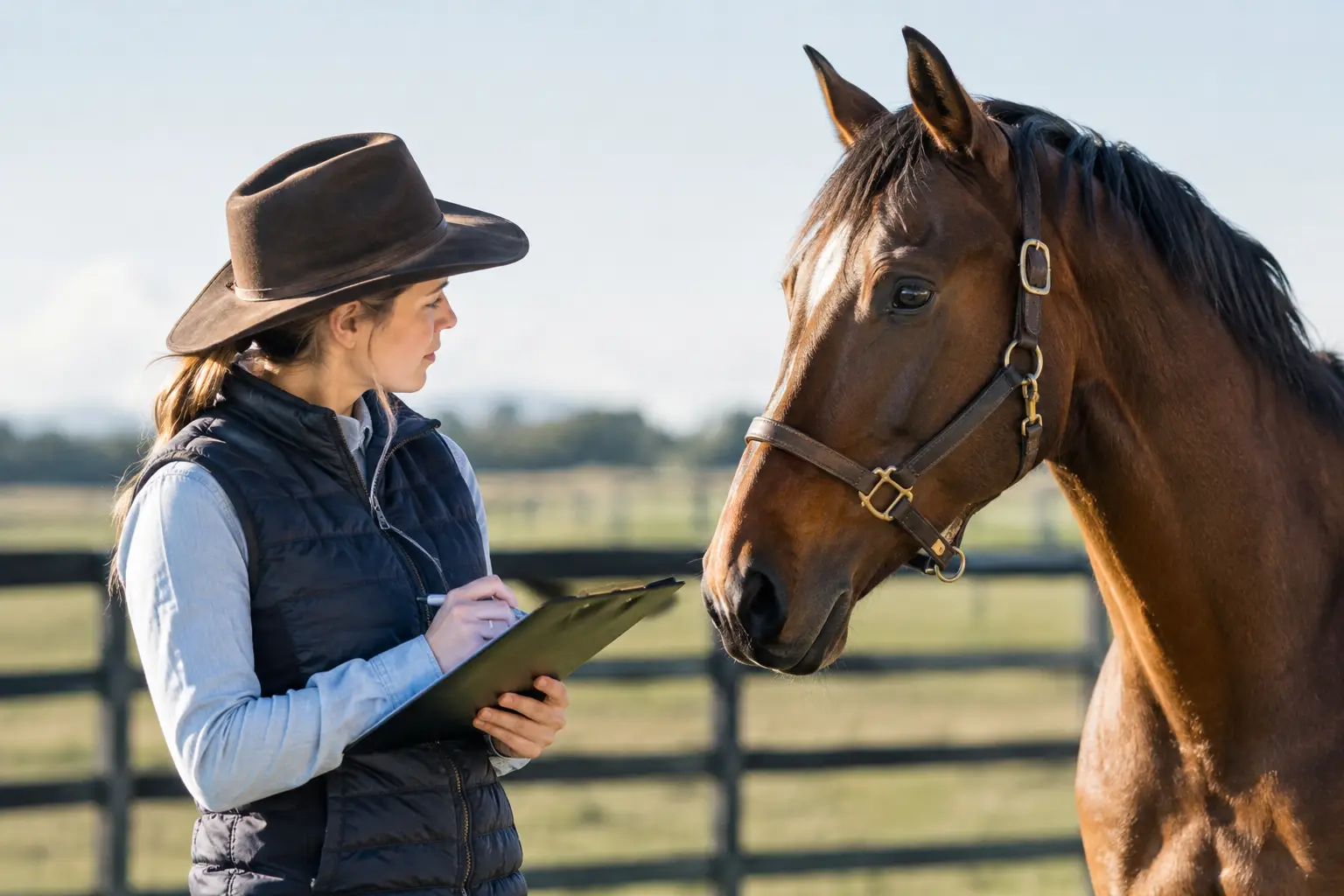
A horse can look kind in the stable, move beautifully in the arena and still be completely wrong for you. That is why a guide to evaluating horse history matters before money changes hands. You are not being suspicious or difficult by asking questions. You are protecting your safety, your confidence, your savings and the horse from ending up in another unsuitable home.
A horse’s past will not predict every moment of its future. Horses are living animals, and circumstances matter. Pain, poor handling, changes in feed, turnout, riding and confidence can all affect behaviour. But a clear, consistent history gives you something far more valuable than a seller’s reassurance: context.
Start with the story, not the sales pitch
Ask the seller to talk you through the horse’s life in order. Where did they come from? How long has the seller owned them? What was the horse doing before that, and why is it now for sale?
Listen for a story that makes sense. A seller does not need to know every detail from a horse’s early years, especially with an older rescue or a horse bought through several homes. What matters is whether they are open about what they do know, clear about what they do not, and willing to let you check the facts.
Be wary when the story changes depending on who is asking, or when every previous owner is blamed for a problem. A horse described as too much for its owner, then too quiet for their next owner, deserves more questions. So does the horse that has supposedly been bought and sold repeatedly because everyone’s circumstances suddenly changed.
There may be a perfectly reasonable explanation. Divorce, illness, drought, work transfers and family pressures are real. But frequent changes of home can also point to a horse that has been difficult, unsafe or expensive to keep sound. Do not decide based on one detail. Look for the pattern.
A guide to evaluating horse history: questions that matter
You do not need to interrogate someone. You do need to be specific. Broad questions such as, “Is he good?” usually produce broad answers such as, “Yes, he’s lovely.” That tells you almost nothing.
Ask what the horse is like to catch, lead, groom, rug, float, clip, shoe or trim, worm and handle for the vet. Ask whether they have ever bucked, bolted, reared, bitten, kicked, pulled back, rushed gates or become difficult to mount. Then ask when it last happened, what was going on at the time, and how it was managed.
A useful seller will not pretend their horse has never had a bad day. They may say, for example, that the mare can be tense after time off, or that the gelding needs a confident farrier because he was poorly handled as a youngster. That is information you can work with. What you cannot work with is a vague promise that the horse is fine, followed by a quick change of subject.
Ask about the horse’s normal routine too. How many days a week is it ridden? By whom? In what environment? A horse ridden quietly in a familiar arena by a capable rider twice a week is not necessarily ready for a returning rider who wants to hack out, attend club days and ride after work.
The question is not whether the horse has ever done the job. The question is whether it can do that job safely and consistently with someone like you.
Check the paper trail without handing over trust
Registration papers, a passport, dental records, farrier invoices, vaccination records and veterinary reports can help fill gaps. Make sure the horse’s microchip, markings and paperwork match the animal in front of you. If the seller says records are available, ask to see them before you commit.
Pay attention to dates. A long unexplained gap in competition results, veterinary care or regular work is not proof of a problem, but it is worth asking about. A horse may have had a paddock break, changed disciplines or simply belonged to a non-competitive owner. It may also have been lame, injured or difficult to manage.
When you arrange a pre-purchase veterinary examination, tell the vet honestly what you plan to do with the horse. A horse intended for quiet trail riding has different demands from one intended for jumping, endurance or regular competition. Your vet is not there to choose the horse for you, but their findings can help you understand risk, likely costs and suitability.
Do not let anyone rush you past this stage with lines like, “There are three people coming this afternoon,” or, “You won’t find another one like him.” Maybe there are other buyers. That does not make a pressured decision a good one. The right horse will stand up to sensible questions.
Watch for what the history leaves out
Sometimes the most telling part of a horse’s history is what is missing. If a seller says the horse has never bucked, ask whether it has been ridden regularly enough for them to know. If they say it is easy to float, ask when it last travelled and where. If it is advertised as a confidence builder, ask to see it ridden and handled in ordinary conditions, not only after it has been worked down by a professional.
These gaps deserve a closer look:
- A horse advertised as quiet but not available to be ridden by the buyer.
- A seller who will not allow a pre-purchase veterinary examination.
- Repeated ownership changes with no clear explanation.
- Behaviour problems described as quirks, attitude or the rider’s fault.
- A horse that is only manageable with a particular rider, routine or medication.
None of these automatically means walk away. Together, however, they can tell you that the picture is incomplete. If you are already feeling uneasy, do not talk yourself out of that feeling because the horse is pretty, talented or within budget.
Speak to the people who know the horse
Where appropriate, ask whether you can speak with the horse’s farrier, vet, coach, agistment manager or previous owner. A genuine seller may need permission from those people first, and they may not have contact details for every person in the horse’s past. That is reasonable.
What matters is their response. Defensiveness, urgency and excuses are different from simple privacy. If you do speak to someone, ask practical questions: how the horse behaves on the ground, whether it has been consistently sound, how it copes away from home, and what sort of rider it suits.
Remember that people see different versions of the same horse. A farrier can tell you about feet and handling. A coach may tell you how the horse responds under pressure. A previous owner may give you useful context, but may also carry disappointment or resentment. Gather information, then weigh it rather than treating one opinion as the final word.
Compare history with the horse in front of you
A good history should match what you observe. If the horse is described as relaxed, respectful and easy to catch, do not only watch it standing tied after a groom. See it brought in from the paddock. Watch it being led through a gate, handled around feed, picked up for its feet and loaded if that is relevant to your life.
Watch the seller first, then handle the horse yourself if it is safe to do so. Notice whether the horse crowds space, barges ahead, swings its hindquarters towards people or becomes unsettled when asked to wait. These behaviours do not make a horse bad. They do tell you something about its training, comfort and the boundaries it has learned.
Be especially careful with the phrase, “He just needs a confident rider.” It can mean a horse needs calm, consistent handling. It can also be polite sales language for a horse that has learned to intimidate less experienced people. Confidence is not a magic shield. If a horse is too much horse for you now, buying it in the hope that you will catch up is a costly way to lose confidence.
Give yourself permission to pause
The best decision is not always a quick yes or no. Sometimes you need a second viewing, a trial period where appropriate, another set of experienced eyes, or time to read the veterinary report without someone hovering beside you.
Write down what the seller says after each visit. When you are excited, it is easy to remember the flattering parts and forget the details that made you hesitate. Compare your notes with the advertisement, the paperwork and what you saw. If they do not line up, ask again.
You are not trying to find a horse with a spotless past. You are trying to find an honest picture and a match you can live with. The horse that gives you the clearest answers, the safest feeling and room to enjoy your riding is often a far better choice than the one that makes your heart race at first glance.