
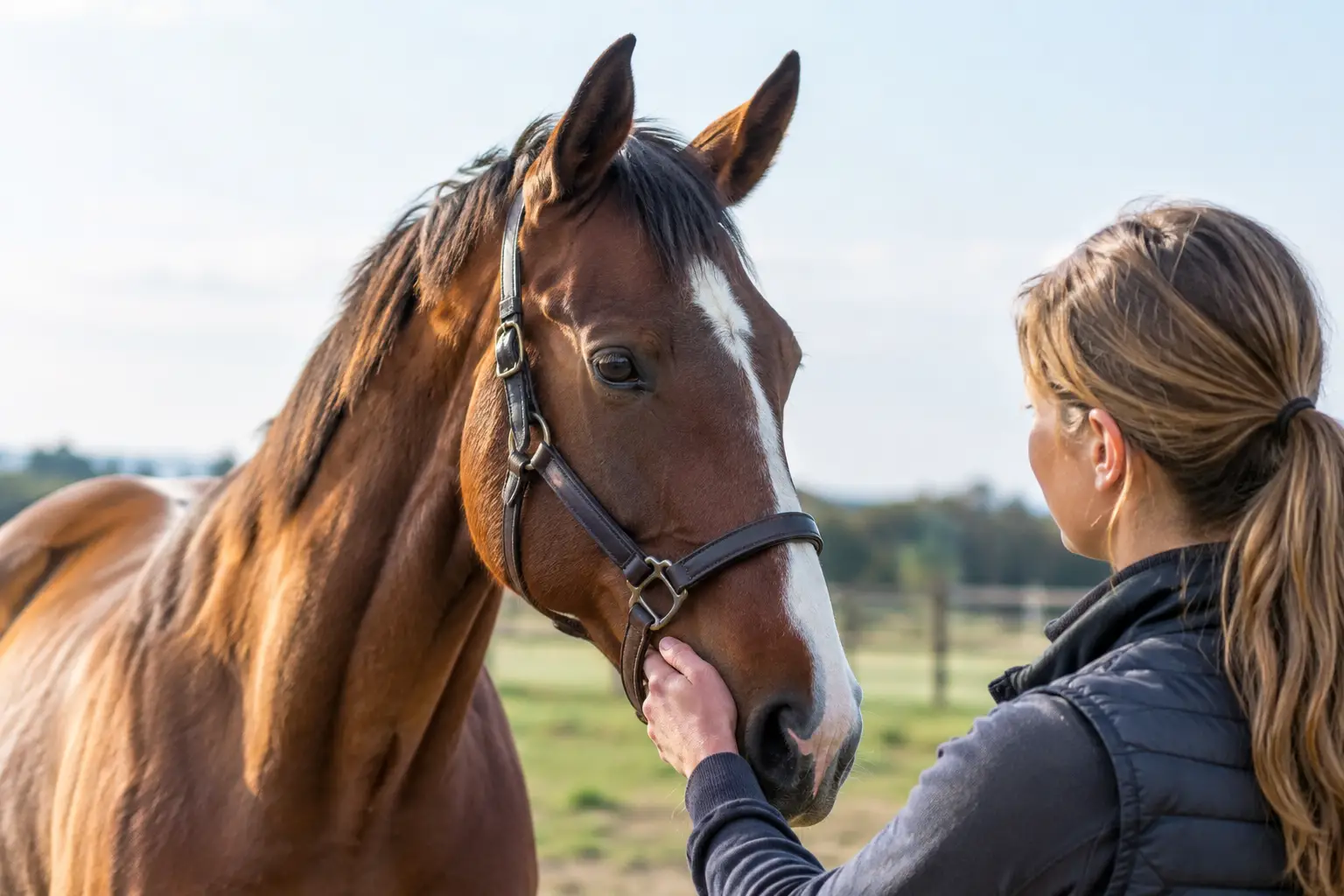

A horse rarely starts with a big reaction. Before the spook, the bolt, the sudden "bad behaviour," there's usually a quieter message first, a tight mouth, a fixed stare, feet that can't stop moving. I want you learning to notice those messages while he's still asking for help, not waiting until he feels he has to shout at you.
This matters if you own him, ride at a lesson barn, or you're standing in front of a horse you're thinking of buying. So many riders get told a worried horse is just "fresh" or "testing boundaries." Sometimes clearer handling really is the answer. But stress was never the same thing as badness, and punishing a horse for being overwhelmed can turn a manageable concern into a genuine safety problem.
Start by Comparing Him to Himself
There's no single sign that proves a horse is stressed. One horse paws when worried, another goes completely still. I'd ask you three plain questions instead: What's changed? What happened right before it changed? Does he settle once the pressure's removed? A horse who lifts his head when another horse calls out might simply be alert. A horse who stays rigid, stops chewing and can't reconnect with you at all is telling you a different story entirely. The first is just information. The second is rising stress, and I want you able to tell them apart.The Face and Neck Give You the Earliest Clues
Watch the eye. A worried horse can show tension, a fixed stare, sometimes visible white. But white of the eye alone isn't a verdict, some horses naturally show more because of their conformation. I'd look for tightness through the muzzle, pinched nostrils, or a horse that suddenly stops chewing when something gets difficult. Then look up the neck. A rigid underside, head carried high, tends to mean he's braced for action. A neck stretched down only means relaxation if the rest of his body softens too, don't be fooled by a low outline sitting on top of a clamped tail and hollow back.Watch What His Feet Are Doing
Horses move their feet when they're uncertain. That doesn't automatically mean danger, but it's a conversation worth listening to. A few patterns I'd watch for:- Jigging on the spot or circling the handler
- Drifting toward the gate, or planting and refusing to move
- Rocking weight repeatedly from one leg to another
Please Don't Call This "Naughty" Too Quickly
Tail swishing, ear pinning, refusing to go forward, all of it gets blamed on attitude constantly. Sometimes a horse really has learned that pushy behaviour works. But pain, poor saddle fit, ulcers and dental trouble can all sit underneath behaviour just as easily. If a normally willing horse changes suddenly, becomes girthy, or can't settle where he once could, please don't simply train harder. Rule out physical discomfort with the right professionals first. He might also be stressed because he's being asked for more than he currently understands. A green horse in a busy arena isn't necessarily too much horse by nature. Sometimes the situation itself is simply too much, right now.Watch the Whole Picture, Beyond the Ride
If you really want to understand his stress, stop watching only under saddle. Notice him being caught, floated, tied up, left alone. A horse who's quiet under saddle but panics at the float is still struggling somewhere, just not where you've been looking. A simple record over a couple of weeks helps enormously here, what happened, where, and how long it took him to settle. Patterns become far clearer than relying on memory after one difficult day.What I'd Actually Do in the Moment
When you spot early stress, your job isn't to win an argument. It's restoring enough safety that he can think clearly again. Lower the pressure where it's safe to. That might mean stepping away from the scary corner, or ending a session before it becomes a fight. Then give him one simple task he genuinely understands, standing quietly a few steps away, or a familiar bend under saddle. Keep the request small enough that success is actually possible. Then reassess honestly. Has his eye softened? Are his steps more regular? If not, don't keep escalating just because you had a plan for the session. The horse in front of you matters more than the plan did.Reading Stress When You're Trying a Horse to Buy
A viewing is one of the easiest places in the world to misread stress, because everyone involved wants him to look good, including you. You might see one polished ride, then feel rushed to decide while your heart's already attached. Watch how he responds before he's even ridden. Notice the catching, the saddling, the handling around other horses. A tense horse isn't automatically a bad one. But a horse who regularly looks worried, shuts down, or reacts beyond your current skill level isn't a small detail to explain away. A beautiful horse can still be the wrong match, and walking away can protect your confidence and your bank balance both.Turning What You Notice Into a Genuine Decision
Everything above gives you a real foundation for reading a horse's stress signals. But telling the difference between ordinary sale-day nerves and a genuine mismatch, in the moment, while your heart's already involved, is a much harder skill than it sounds. That's exactly the gap The True Match™ Guide was built to close, with the specific questions to ask when something feels off, and a printable checklist to keep your head clear on the day it matters most. Your horse doesn't need you to be perfect. He needs you to pay attention early, stay honest about what you're actually seeing, and get help before fear becomes the language he uses most loudly.💛 The True Match™ Guide - $27
A complete framework for reading a horse's true stress signals and temperament before you buy, so a beautiful ride doesn't talk you past a genuine mismatch. Backed by a 30-day, love-it-or-it's-free guarantee. 👉 Get The True Match™ Guide Here