
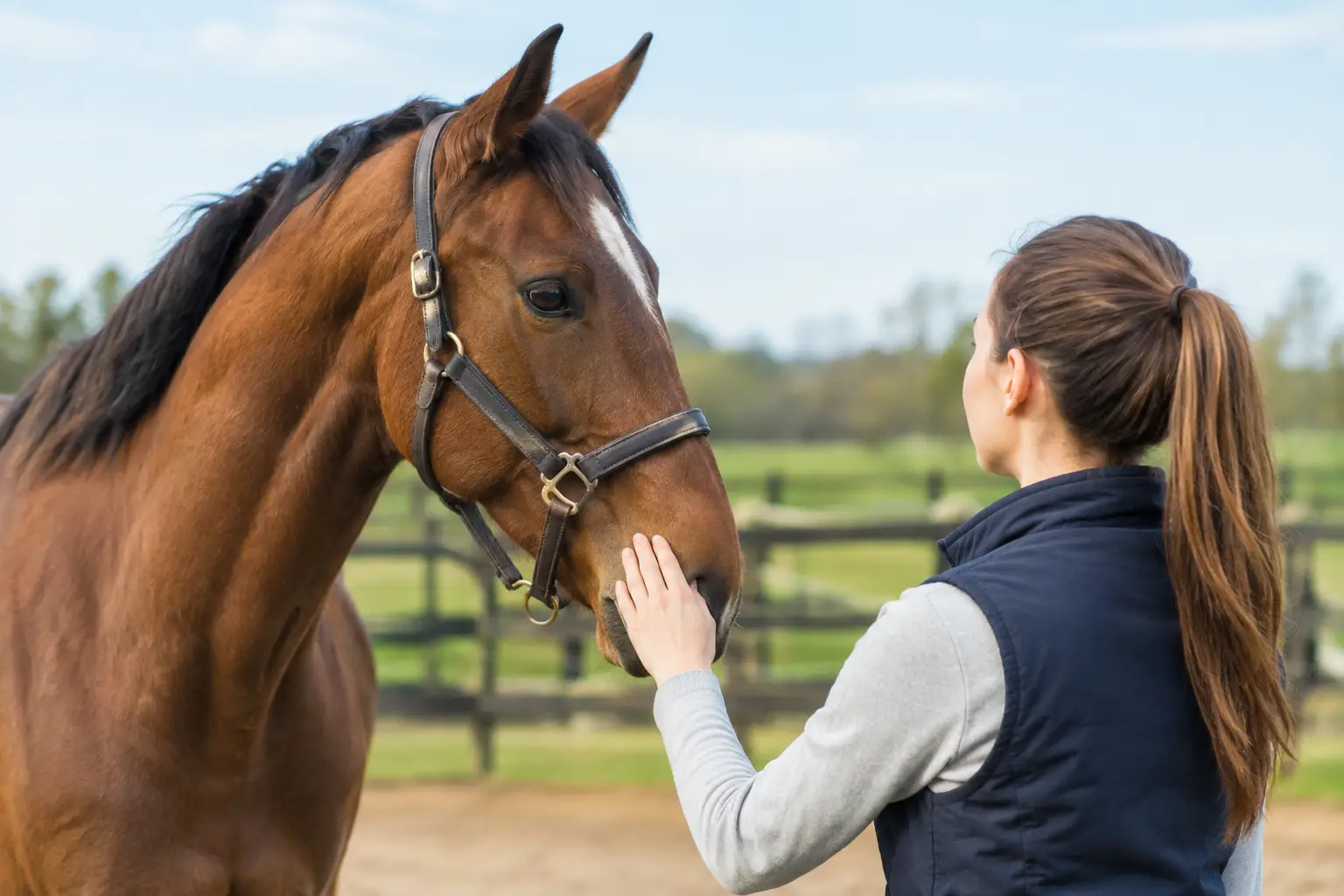

He can look perfectly quiet in a stable and still make you feel unsafe the moment a lead rope clips on. I want you to sit with that for a second, because it's exactly why manners matter more than colour, movement or the story you've already started telling yourself about your future together.
Manners aren't about demanding a horse stand like a statue. They're about whether he can be handled safely and predictably by an ordinary person, on an ordinary day. For a first-time owner or someone with limited help at home, that difference protects your confidence, your body and your bank account.
Please Don't Start Your Assessment in the Saddle
Watch what happens before anyone even touches him. Get there a little early if you can, and ask to see him caught from the paddock rather than already groomed and waiting for you. I know that feels like a small thing to ask for. It's actually where a huge amount of useful information lives. Notice his overall level of tension. Is he quietly aware of people, or scanning and calling and unable to settle? One neigh across the property isn't a red flag. A horse who can't focus for even a few moments deserves a closer look. Here's a question I'd want you asking yourself constantly during the visit: does this horse make the handler's job easy, or does the handler have to work hard to prevent a problem?Catching and Leaving the Paddock Tell You a Lot
Context matters with catching, a huge paddock or a new environment can make any horse harder to bring in. Still, I wouldn't accept "he just likes being out" as a full explanation for repeated avoidance. Watch whether the halter goes on without him swinging his hindquarters or threatening to bite. Then watch the first few steps away from the paddock. Does he walk beside the handler, or shoot ahead and pull? Gates are where a lot of accidents happen, because hands are full and attention is split. A horse who barges through a gate isn't showing personality. He's showing a real gap in safe handling.What I'd Actually Watch For on the Lead
A polite horse understands that people need space too. He should lead at a sensible pace on a soft lead, without leaning his whole body into you. A few specific patterns worth watching closely for:- Walking ahead until the lead goes tight, then continuing to pull anyway
- Swinging his shoulder into the handler, or stepping on their toes
- Crowding while standing still, especially near food or other horses
- Dragging the handler toward grass or a feed bin
Watch Him Stand for Ordinary Handling
You don't need to test every skill yourself, and if you feel unsure, please don't take over just because you think you should. Ask the owner to show you routine handling first. A suitable horse should stand reasonably for grooming and having his feet picked up. Watch for pinned ears, threats to bite, or continually walking off. A horse with a sore back might object to grooming in one spot, and that's a reason for a proper vet check, not a reason to label him naughty. But if basic tasks keep turning into an argument, I'd ask you honestly, who's going to be managing that argument after the sale?Ask, Then Ask What "Not With Me" Actually Means
A few direct questions worth putting to the seller: Has he ever bitten? Pulled away and broken a lead? Been difficult for the farrier or float loader? Then wait for the full answer. Here's what I'd flag immediately: vague replies like "not with me" or "only when he's fresh." Those aren't real answers. Follow up. Ask what actually happens, how often, and who's been able to handle it when it does.See If His Manners Hold Up Somewhere Less Tidy
A horse can behave beautifully in his familiar routine and unravel somewhere new. That doesn't automatically make him unsuitable, but it does change how much experience you'll need. If you're planning to float out, agist, or attend clinics, ask to see some evidence of how he copes beyond his usual stable block. Loading is a good example here. He doesn't need to walk on like he's rehearsed it, but it shouldn't involve panic or an hour-long battle either. If a seller says he "hasn't floated recently," I'd treat that as missing information, not proof he'll be fine.Please Don't Let a Good Ride Erase What You Saw on the Ground
This is where I see so many buyers get caught out. They have a lovely ride, feel a spark, and quietly excuse everything that happened beforehand. I really don't want that to be you. Ground manners are part of the whole horse. You'll catch, lead, rug and manage him far more often than you'll actually ride him. If those daily jobs leave you tense or worried about being knocked over, the partnership will wear you down fast, however good the riding feels. You're allowed to want a horse who's kind and manageable on the ground, beyond simply enjoyable under saddle. That's not being fussy. That's being realistic about the actual life you want with him.Turning What You Notice Into a Decision You Can Trust
Everything above gives you a real starting point for reading manners on a viewing day. But separating a fixable habit from a genuine pattern, and knowing exactly which follow-up question exposes a softened answer, is where I see even careful buyers second-guess themselves at the worst possible moment. That complete process, the specific questions, how to read what a seller isn't quite saying, and a printable checklist to bring with you, is exactly what The True Match™ Guide walks you through step by step. Walk away from pressure. Walk away from excuses that don't sit right. The right horse may not be perfect, but he should leave you feeling steadier after handling him, not relieved the visit is over.💛 The True Match™ Guide - $27
A complete framework for reading a horse's ground manners and true temperament before you buy, with a printable checklist to bring to every viewing. Backed by a 30-day, love-it-or-it's-free guarantee. 👉 Get The True Match™ Guide Here