
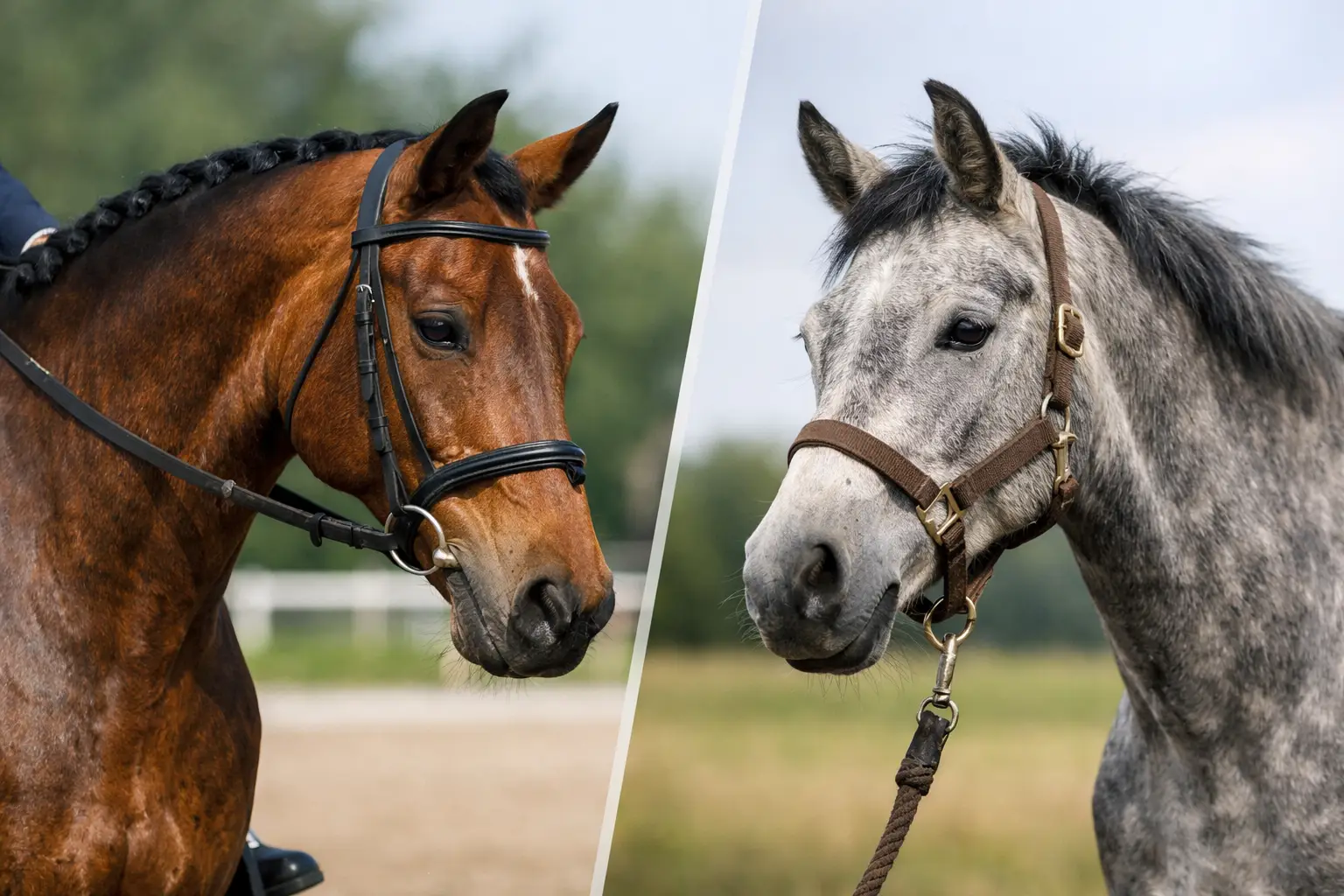

The horse who catches your eye in the yard isn't always the horse who'll look after you when you're tired, nervous, or having a bad day. That's the real question hiding underneath this decision. It isn't about which horse is more impressive or cheaper to buy. It's about if you can safely build the riding life you actually want.
I want to be honest with you upfront. A poor match here can cost far more than the purchase price. It can drain your confidence, strain your finances, and leave a genuinely good horse misunderstood because he was asked to carry a rider beyond his current skills. There is no shame in needing the right teacher. Choosing one might be the smartest decision you make all year.
Let's Get Clear on What Each Term Actually Means
A schoolmaster isn't simply an older horse who's competed, or one advertised as "quiet." A genuine schoolmaster is educated and forgiving within reason. He understands his job, and he has enough miles on the clock to cope with ordinary rider mistakes instead of punishing every loss of balance. That doesn't mean push-button. No horse is. Here's the actual question I'd want you asking: when things aren't perfect, does he stay with you, or does he make the moment bigger? A project horse needs development, and that might be:- Physical, if he needs conditioning or rehabilitation
- Educational, if he's green or recently restarted
- Emotional, if he's anxious away from home or inconsistent to catch
- Behavioural, if he's pushy on the ground or sharp under saddle
Be Honest About Who You Actually Are Right Now
Before you look at another ad, I want you to be truthful about your current riding and decision-making skills. Not the rider you were ten years ago. The rider you are today. If you're a returning rider, a first-time owner, or someone rebuilding confidence after a fall, a genuine schoolmaster often gives you the best possible shot. A project horse might suit you if you already have solid independent skills, regular access to excellent coaching, and the budget and emotional steadiness to work through setbacks. Even then, you need to genuinely want the process itself, beyond simply the idea of it. Please don't buy a project because you feel sorry for him, or because his price looks like a bargain.The Trouble With Sales Words
Words like "safe," "quiet" and "easy" mean very little until you know what they look like in real conditions. A capable rider can find a sharp horse straightforward. That doesn't make him straightforward for you. The questions worth asking go well beyond "is he quiet." A few starting points I'd want covered before you get emotionally invested:- What happens when he's had a few days off?
- How is he to catch, lead, and float?
- Has he ever bucked, reared, bolted, or pulled back, and what was happening right before it?
Don't Confuse Education With Suppression
Some horses look quiet because they've shut down. They move with little energy, ignore the rider, or stand frozen while being handled, right up until pressure builds and they react. That's not the same thing as a calm, trusting schoolmaster, and telling the two apart takes more than a glance. A project horse isn't necessarily a dangerous one, either. A green horse can be willing and honest, while an older horse may carry years of learned evasions underneath a polished exterior. Labels don't replace watching him closely, and this is exactly where I see even experienced buyers get caught out. They see one lovely ride and decide he's passed the test.Watch Out for the Emotional Trap
Many riders are drawn to project horses because they want to be the person who turns him around. That instinct comes from a genuinely good place. You care. You see the horse beneath the behaviour. But ownership was never meant to be a rescue fantasy, and love doesn't automatically create safety. A horse can deserve patience and still be wrong for you right now. There's a quiet pressure among adult riders too, to prove they're brave enough for a harder horse. Please don't confuse bravery with tolerating fear. A good schoolmaster doesn't make you less of a rider. He gives you the chance to become more of one.Choose for the Next Two Years, Not the First Two Weeks
Picture your ordinary week with this horse. You arrive after work, the weather's turning, and you're short on time. Can you catch him safely? Can you get on without three people holding him? The right match should feel realistic, not like a gamble you have to talk yourself into. A schoolmaster may not get the most comments at the fence line. A project horse might one day become extraordinary in the right hands. But your decision needs to honour both your safety and his welfare.Where Most Buyers Actually Get Stuck
Here's the honest part. Knowing the difference between a schoolmaster and a project horse in theory is one thing. Reading it correctly, in the moment, standing in someone's yard with a lovely horse in front of you and a seller who genuinely believes what they're telling you, is a completely different skill. That's exactly what I built The True Match™ Guide to teach, the specific questions that expose the gap between potential and suitability, how to read a seller's answer rather than just their words, and a printable checklist so you're working from evidence, not hope, on the day it actually matters.💛 The True Match™ Guide - $27
A complete framework for reading a horse's true temperament and suitability before you buy, including how to tell a genuine schoolmaster from a shut-down horse and a fair project from an unsuitable one. Backed by a 30-day, love-it-or-it's-free guarantee. 👉 Get The True Match™ Guide Here