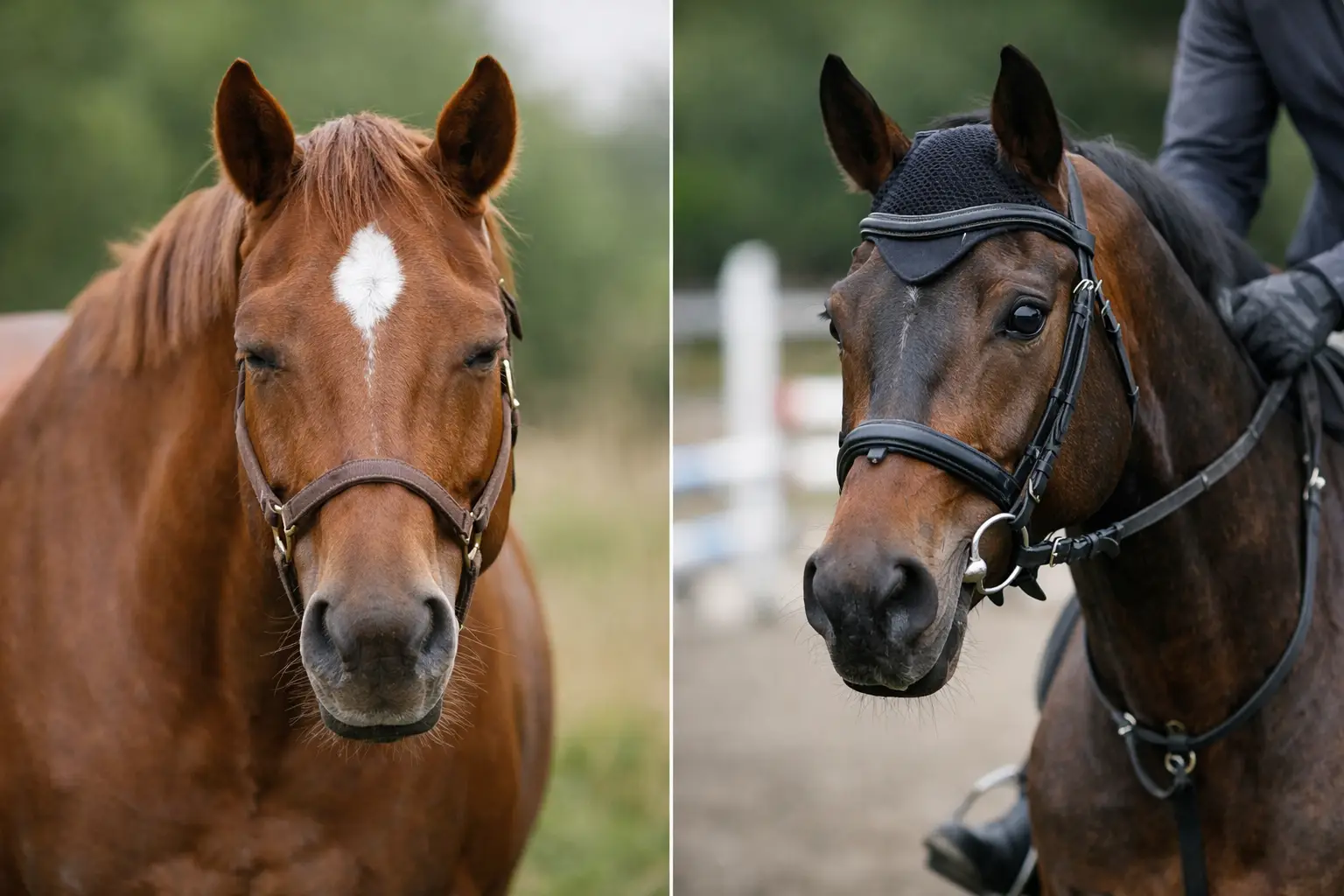
A horse standing quietly while you meet him can feel like a giant green light. I need to tell you something important, though: quiet and safe are two completely different things, and mixing them up is one of the most expensive, confidence-shaking mistakes a buyer can make.
I've watched riders buy the horse that looked like butter wouldn't melt in his mouth, only to end up frightened to catch him within weeks. That doesn't always mean someone lied to them. It usually means they judged a snapshot instead of looking for real evidence.
What's Actually Different Between the Two
A quiet horse is calm in a particular moment. A safe horse has a genuine history and pattern of behaviour that makes him a suitable partner across the ordinary, unglamorous situations that actually make up horse ownership.
Quietness is valuable, don't get me wrong — nobody wants a horse marching over the top of them at every little change. But quietness alone tells you almost nothing about how he handles pressure, boundaries, separation from his mates, or a day when nobody's worked him first.
And safety isn't the same as bombproof, either. No living animal is safe in every circumstance — horses are prey animals, they can spook, they can have an off day.
A genuinely safe horse isn't one who never reacts. He's one who's manageable when he does, and doesn't make you pay dearly for a normal mistake.
If you're rebuilding confidence, this distinction matters even more. You don't need a project horse teaching you bravery through repeated fright. You need enough emotional steadiness underneath you to actually learn without living on edge.
Why a Quiet Presentation Can Be Hiding Something
A few reasons a horse might look quiet that should genuinely make you slow down: he's been worked hard before you arrived, he's stressed by an unfamiliar place, or — this one catches people out constantly —
he's shut down rather than relaxed. A shut-down horse can look wonderfully placid because he's simply stopped offering much response at all. That's not calm. That might be resignation.
Then there's routine. A horse who's lived years in one predictable setting can seem effortlessly easy, because every feed time and every ride follows the same script. Move him to a new property, a different herd, a single owner instead of a busy professional yard — gaps show up fast.
None of this makes him a bad horse. It just means you need to see the horse actually in front of you, not the version you're hoping he'll turn out to be.
Watch for Recovery, Beyond Just Stillness
When you're viewing a horse, don't only watch for whether he spooks.
Watch what happens after. A horse who notices a barking dog, lifts his head, then settles back into the job with a bit of sensible support — that's a good sign. One who holds tension, rushes, or stays worried long after the trigger's passed is telling you something different entirely.
The small, unglamorous moments matter here too — does he stand politely while being groomed and saddled? Can he wait without fidgeting? Is he easy to lead past an open gate? These questions aren't exciting. They're exactly the ones that shape your daily safety.
The Questions That Cut Through Vague Reassurance
"He's very quiet" is an opinion. It's not an answer. Ask instead: when was the last time he spooked or pulled back? What happened right before it? How was it handled afterward?
I'd also want to know who rides him regularly and how often — a horse who suits a confident teenager riding five days a week may not suit an adult owner fitting in one or two rides between work and family.
And please be wary of "he just needs a confident rider" or "she can be a bit mare-ish."
Those phrases can hide anything from a minor quirk to a horse who's already told people he's beyond their skills. Ask what he actually does, not what label someone's chosen to put on it.
See Him More Than Once
One viewing is rarely enough. If a seller's pushing you to decide immediately because "someone else is coming," treat that as information, not pressure to act on. The right horse can withstand sensible questions and a proper look.
Where you can, return at a different time of day. Ask to see him after a fortnight off, beyond only after a week of consistent work. You're not trying to catch anyone out — you're trying to understand his normal, ordinary life, and whether it'll actually work with yours.
Match Safety to Your Real Life
The safest horse for you isn't necessarily the quietest one in the yard, or the prettiest, or the one with the flashiest breeding. It's the one whose temperament genuinely fits your actual experience, your support network and your riding plans.
Be honest about the rider you are on an ordinary Wednesday — not the rider you were twenty years ago. There's no shame in choosing the horse that feels almost boring. Honestly, for a lot of riders, boring is the doorway back to real confidence. It's so much easier to build skills on a kind, predictable horse than while trying not to get hurt.
Turning "He Seems Quiet" Into Genuine Evidence
Everything I've covered here gives you a real starting point for telling quiet from safe. But turning what you observe in a single viewing into an actual evidence-based decision — including the exact recovery signs to watch for and the follow-up questions that expose a vague answer — is a bigger job than one conversation at the paddock fence can cover.
That full process, the questions, and a printable checklist for every viewing are exactly what
The True Match™ Guide walks you through.
If you feel rushed, confused, or talked out of your concerns at any point, step back. The right decision leaves room for questions and a proper look at the facts. A quiet horse might be a wonderful horse — but a safe partnership gets proven over time, through honest evidence, not a first impression.
👉
Get The True Match™ Guide for $27