What Does Horse Safety Actually Look Like?
Horse safety starts before you mount. Learn how to assess space, handling, riding and horse-rider fit, so confidence and good judgement can grow well.
A horse doesn't need to buck, bolt or bite for a situation to be unsafe. Sometimes the warning is much quieter — crowding at the gate, dragging you toward grass, rushing when led, leaving you holding your breath before you've even put a foot in the stirrup. I want you to hear this clearly: safety starts in those ordinary moments, well before something dramatic happens.

Please Stop Blaming Yourself for Feeling Nervous

So many adult riders tell themselves they should be braver, tougher, less sensitive. Here's what I'd say instead: fear is often useful information. It might be telling you the horse, the environment, or the expectations placed on you aren't right for where you are right now. Good safety isn't about controlling every possible risk — horses are large, quick-thinking animals with their own history and reactions. It's about noticing what's actually in front of you and refusing to normalise the things that keep putting you on the back foot.

Safety Starts on the Ground, Not in the Saddle

A safe ride is genuinely set up before anyone mounts. Watch the least exciting parts of the day — being caught, led, groomed, tied up, taken through a gate. These moments show you whether a horse can regulate himself around people. A horse who occasionally spooks or steps sideways is still just a horse. What actually matters:
  • Can he come back to the handler after something startles him?
  • Does he respect personal space when asked?
  • Is the person handling him calm and matter-of-fact, or constantly bracing and making excuses?
Crowding gets brushed off as affection far too often. It's neither harmless nor something you should quietly endure. A horse who leans on you or barges through gates is showing you that your space is optional to him — and that turns dangerous fast when he's worried, fresh, or distracted. You don't need to pick a fight to fix this. You do need to stop rewarding it by continually stepping out of the way.

Look for the Cause, Beyond the Behaviour

When a previously quiet horse suddenly starts pinning his ears at saddling, rushing the mounting block, or refusing to be caught, please don't jump straight to "he's being naughty." Check the practical foundations first:
  • Saddle fit and teeth
  • Feet and workload
  • Feeding, turnout, and any recent changes to routine
A horse genuinely can't learn well while uncomfortable, and you can't make a sound decision if you're treating every warning sign as a training issue to push through. That said — an explanation isn't the same as a reason to put yourself at risk. You can care deeply about a horse and still decide his current behaviour is beyond your skill or support right now. Asking for help or stepping back is responsible horsemanship. It's not failure.

Choosing the Right Horse Is a Safety Decision Too

For buyers, the single biggest safety decision usually happens before any money changes hands. A gorgeous horse with flashy movement and a great story can still be far too much horse for the person standing beside him. Temperament deserves more weight than looks, breeding, or a seller's promise about "so much potential." Potential only helps you if you've genuinely got the time, experience and support to develop it safely. A few things worth watching for before you commit:
  • How does he behave when he's caught from the paddock, beyond when he's already prepared for you?
  • What happens when a gate rattles, or a rider makes a small mistake?
  • What's he like away from home — floating, farrier visits, time off?
Then ride only within your own ability, ideally with someone experienced there to support you. You're not proving anything by getting on a horse who makes your stomach drop. If the story keeps changing, or you're being told your concerns are silly, walk away.

The Boring Habits Protect You Most

Genuinely — the unglamorous routines do more for your safety than almost anything else:
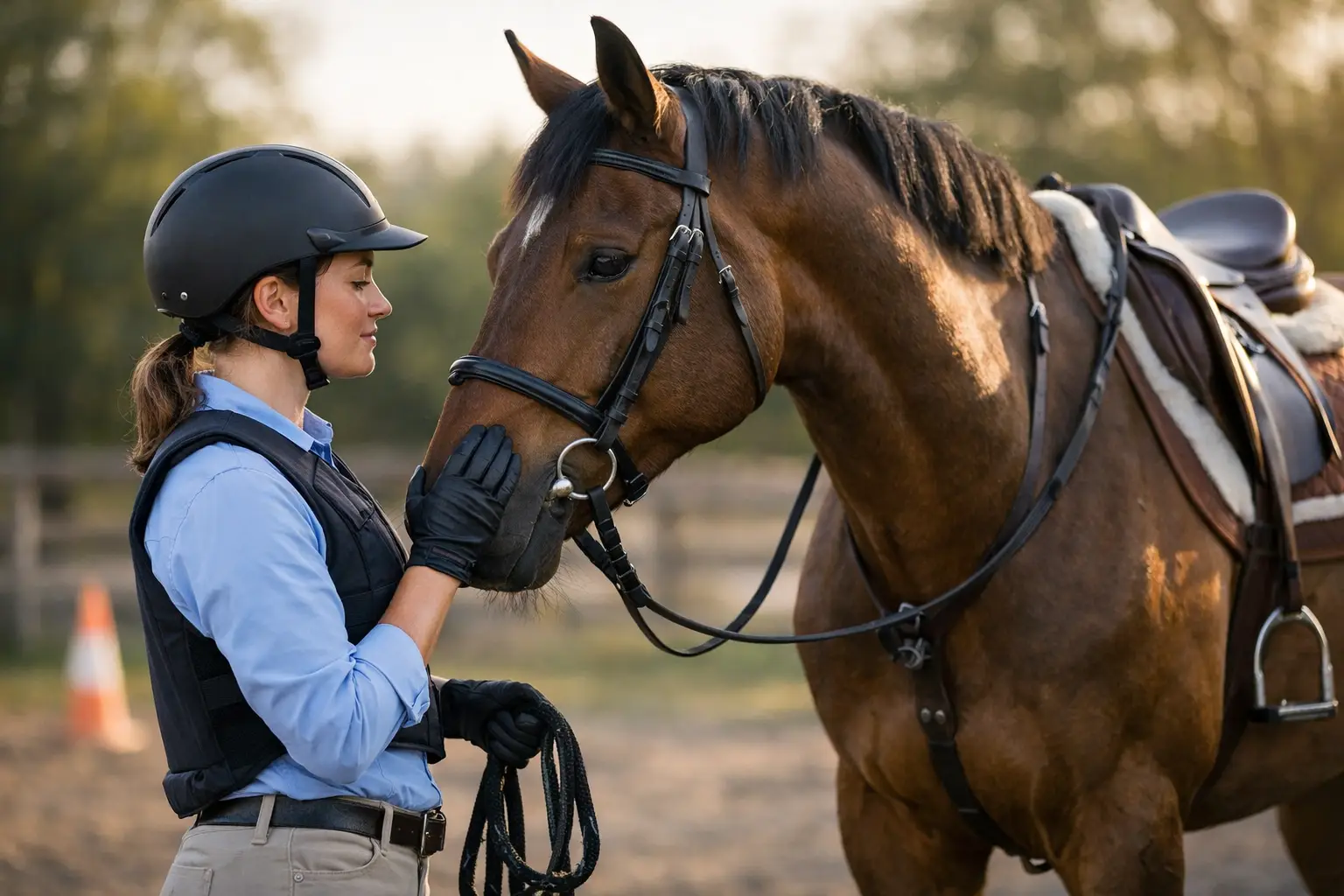
  • A correctly fitted helmet, every single ride
  • Gloves and enclosed boots when handling a young or unsettled horse
  • Lead ropes kept organised, never wrapped around your hand
  • Never lingering directly in front of a horse or in a blind spot
Think about your space, too, beyond the horse alone. A cluttered tie-up area or a poorly latched gate can turn a manageable moment into an accident before you've even noticed the risk. When you're riding, give yourself permission to take the lower-risk option — warming up in the arena instead of heading out on a wild, windy day, or getting off to lead past something frightening rather than pushing through. That's not timid. That's someone planning to enjoy horses for a long time yet.

When Confidence Needs Real Support

After a fall or months of struggling with the wrong horse, confidence can shrink fast. A lot of riders try to fix it by forcing themselves to ride through the panic — and that usually creates a miserable cycle: you brace, he feels it, the ride gets harder, and you both leave more unsettled than you started. Start smaller than your pride wants you to. Calm groundwork. A controlled environment. A capable instructor who respects your fear without letting it run the whole lesson. Confidence isn't pretending nothing could happen. It's trusting that you can read a situation and respond without abandoning yourself. Sometimes that grows with the right coaching. Sometimes it starts with admitting the horse you have — or the one you're considering — simply isn't the right match.

The Safest Decision Is Almost Always the Earlier One

Waiting until you've been knocked over or bucked off badly isn't a safety plan. Pay attention when handling starts to feel like a battle, or when you catch yourself explaining away behaviour that doesn't feel right. Early action might mean a vet check, a change in management, or a genuinely hard conversation about whether this partnership is working. If you're currently weighing up a horse to buy, this exact skill — recognising mismatch and pressure early, before an emotional decision becomes an expensive, confidence-shaking one — is precisely what I built my free guide to help with. 👉 Get the free 5 Red Flags guide here You're allowed to want a horse relationship that feels safe, enjoyable and fair to both of you. Protect that standard in the quiet moments — that's exactly where the better decisions begin.