
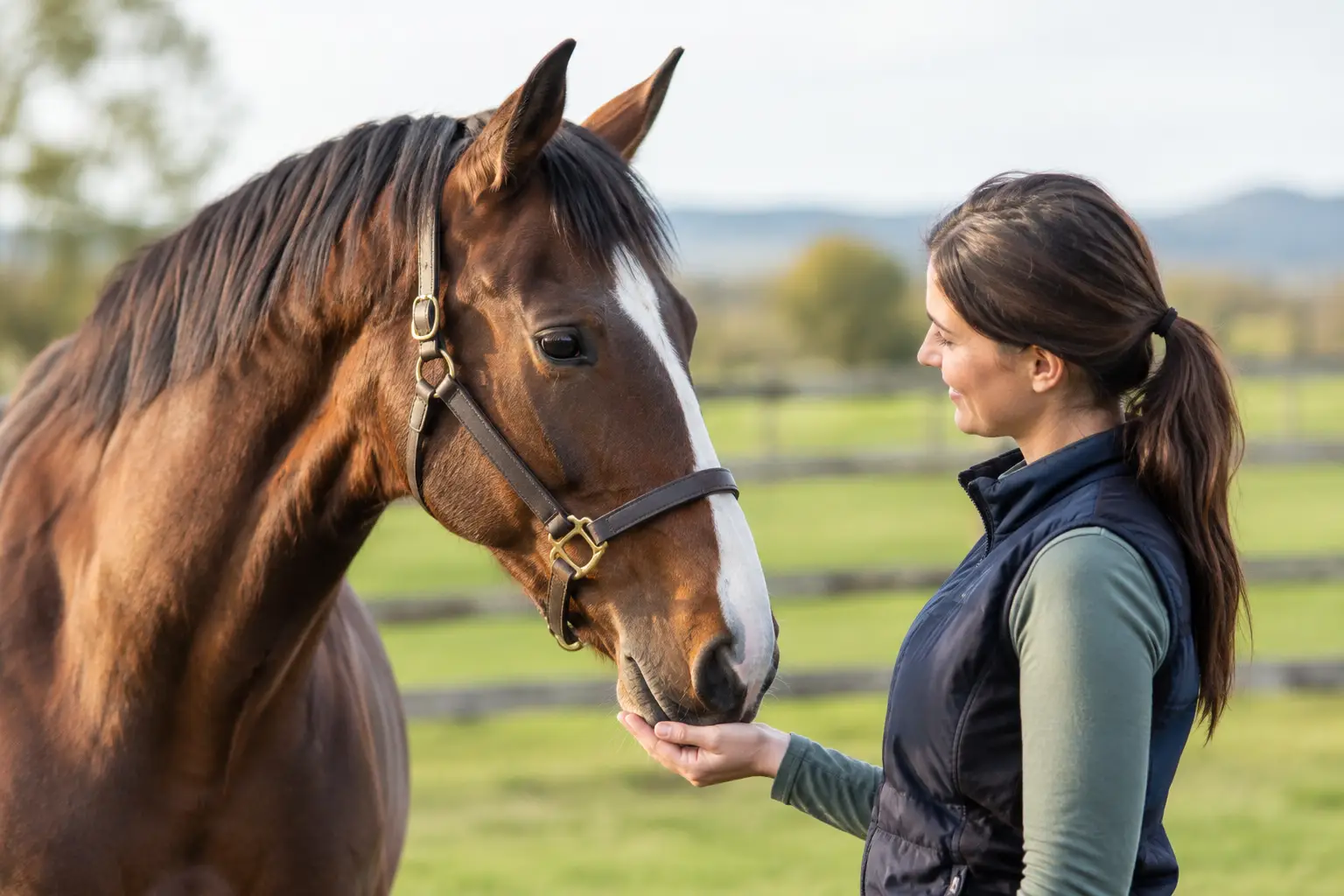

A horse who barges through your space, rushes at the gate or plants his feet when you ask him to move isn't necessarily naughty. But I don't want you brushing it off as "just what he does" either. Those moments are information, and I'd rather you learned to read them than talked yourself past them.
The Hardest Part Isn't Noticing. It's Trusting What You Noticed.
For so many adult owners, the hard part isn't knowing something feels wrong. It's wondering if you're overreacting. Maybe you've been told he's testing you, or he "just has a big personality." Sometimes there's a grain of truth in that. Often, honestly, it's just too vague to help you make a safe decision. I want to replace those labels with actual observation. What's he doing? When does it happen? What changed right before it started? That's where the useful answers actually begin.What Good Coaching Should Actually Give You
Coaching isn't about winning an argument with your horse. It's about clearer communication and a more settled relationship. A confident professional can make a difficult horse look easy for ten minutes, and that tells you nothing about whether the issue is actually fixed when you're alone at the gate on a windy Tuesday. I'll also say this plainly: sometimes groundwork is only part of the answer. A horse who suddenly becomes grumpy to saddle or reactive under saddle might need a vet, dentist, farrier or saddle fitter before a trainer. Training through pain was never horsemanship. It's how a manageable issue becomes a much bigger one.Start With the Behaviour, Not the Story
Owners often arrive with a story they've been told over and over. "He's a rescue, so he has trust issues." "She's just a mare." I get why those explanations feel useful, but they don't actually explain what's happening in front of you right now. Here's what I'd want you getting specific about instead:- Does he walk into your space only when food is involved?
- Does he swing his hindquarters toward you when the saddle comes out?
- Is the behaviour worse with one particular person, or in one location?
Watch for the Signals Before the Big One
Horses rarely go from perfectly calm to dangerous without offering smaller signs first. I'd be watching for tension in the jaw, a fixed stare, rushing feet, or a tail that clamps sharply. None of these automatically mean he's a bad horse. They do mean I'd want you paying attention, because ignoring them repeatedly tends to lead to a much louder message later. If you've lost confidence before, your body may notice risk before you can put it into words. Please don't dismiss that feeling. Get clearer information instead of forcing yourself to "get over it."Boundaries Are Not the Same as Harshness
One of the most common problems I see is a horse who invades personal space, and an owner who steps back or turns away because they don't want to seem harsh. Unfortunately, that quietly teaches him that moving you actually works. Claiming your space was never about getting angry or waving your arms. It's about being consistent regarding where his feet are allowed to be, and calmly asking for a response before he makes the choice for you instead. I'll be honest with you though, this can feel awkward at first. If you've spent months stepping aside for him, changing that pattern might bring a brief increase in testing. Stay calm, keep the request clear, and release the pressure the moment he responds. If you're feeling frightened or he escalates, please bring in experienced, in-person help rather than pushing through alone. There's a specific, easily missed habit behind most of this crowding, something happening on your end of the rope more often than his, and once you can actually see it, the fix tends to move fast. That's precisely what I built Claim Your Space to walk you through.When the Behaviour Points to a Deeper Mismatch
Coaching can improve handling. It cannot turn an unsuitable horse into the right horse for every rider, and this is one of the most painful truths in horse ownership. You can love your horse deeply and still be genuinely over-faced by his size, sensitivity or reactions. That doesn't make you a failure. It means the match needs an honest look. Ask yourself if you can handle him safely on an ordinary day, beyond simply a good one. Are you becoming more confident with support, or increasingly tense before you've even arrived at the yard? There's a real difference between a horse who needs education, and a horse who's simply too much horse for your current skills right now. The first can be a realistic project with the right support. The second can quietly cost you confidence, money and enjoyment, while asking the horse to live in a situation that doesn't suit him either.Protect Your Confidence While You Learn
You don't build confidence by ignoring fear. You build it by making sensible decisions, gaining skills in manageable steps, and recognising when you need support. That might mean asking someone experienced to stand with you while you practise a new boundary. It might mean choosing groundwork over riding for a while. These aren't admissions of defeat. They're responsible choices, and they're the ones that actually protect the partnership you're trying to build. The best partnerships were never built by pretending every problem was minor. They're built when a rider learns to notice what the horse is actually communicating, and keeps enough honesty in the relationship to say, this needs attention.💛 Claim Your Space - $27
A short, focused mini course that shows you the one unconscious handling habit behind almost all pushy, space-invading behaviour, and exactly how to reverse it before your next trip to the paddock. 👉 Watch Claim Your Space Here