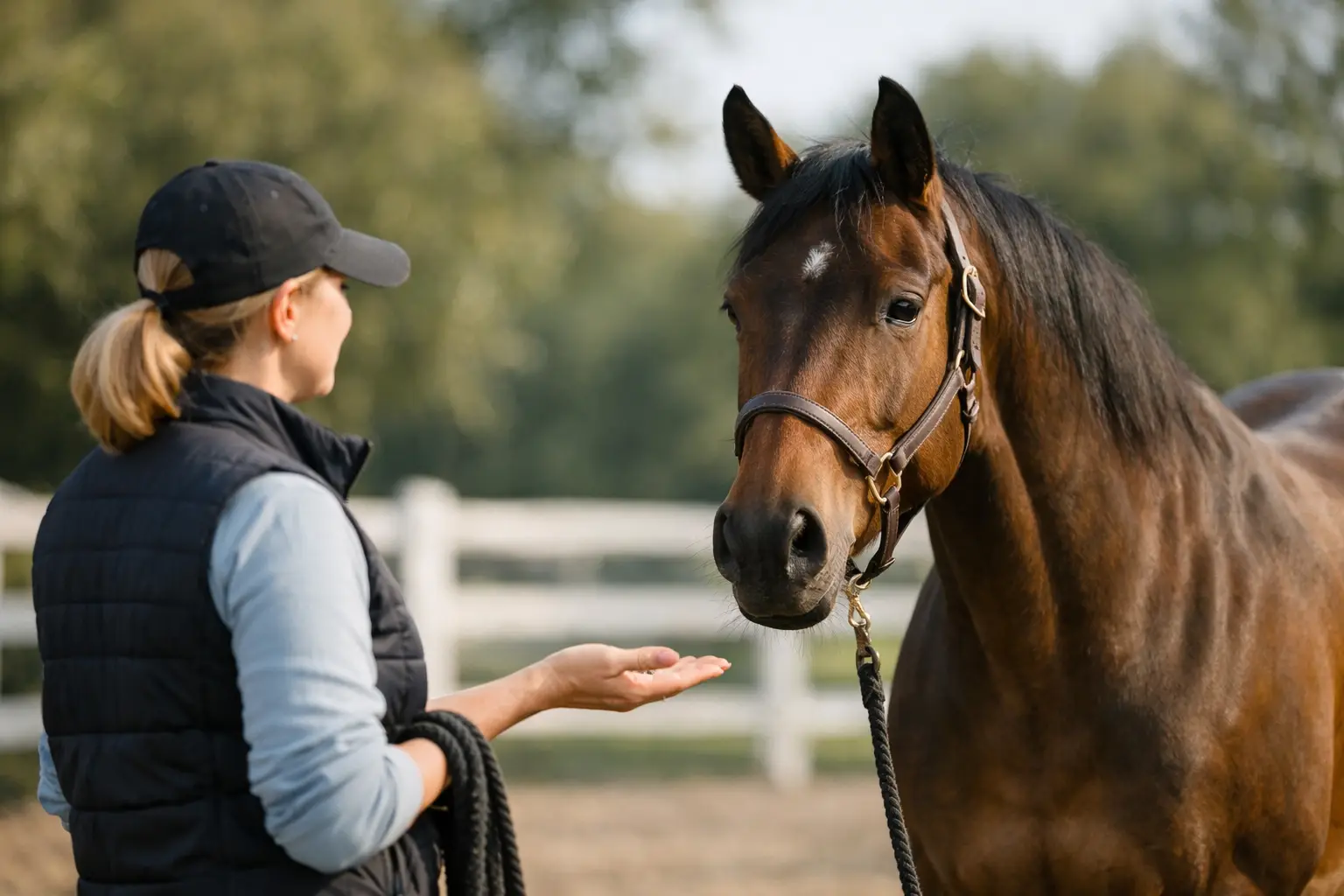
How Do I Assess a Horse's Confidence Before Buying?
He stands quietly while you pat him. Loads without fuss. Looks beautifully relaxed in every sale photo. And he might still not have the confidence to cope when life gets a little harder.
Here's what I really want you to understand before we go any further: assessing confidence isn't about finding a horse who never notices anything. It's about seeing whether he can think, recover, and stay connected to you when something feels unfamiliar or worrying.
Confidence and "Quiet" Are Not the Same Thing
I see this mix-up constantly, and it catches out even experienced buyers. A quiet horse isn't automatically a confident one. Some horses look quiet because they're tired, shut down, or genuinely unsure what they're allowed to do — and they'll seem like the safest horse in the yard right up until pressure rises, then react with a suddenness that stuns the rider.
Real confidence is the ability to notice a concern and come back to a workable state. A confident horse might hesitate at a puddle or look up when another horse calls out — that's completely normal. What you actually want is a horse who can pause, listen, and settle, rather than escalate, spin, or mentally check out entirely.
Don't mistake stillness for relaxation, either. A horse standing motionless with a high head and a fixed stare might be enduring the moment, not coping with it.
What to Watch Before Anyone Picks Up a Lead Rope
Start observing before the sales pitch even begins. Watch him in his usual environment if you can. Is he interested in what's happening without being frantic? How does he respond when a gate bangs or a wheelbarrow goes past?
You're not chasing perfection here — you're looking for a pattern. One startled step followed by a breath and a return to normal is a completely different animal from ten minutes of pacing and pulling.
When he's caught and led, watch how he treats your space.
Pushiness gets brushed off as personality far too often. Sometimes it's poor education. Sometimes it's anxiety. Either way, a 500-kilo horse who can't regulate his own body around a person isn't a small thing to overlook.
The Question That Actually Tells You Something
Here's the question I'd want you asking above almost everything else:
what happens after he's worried? Does he come back down, or does he stay tight and reactive?
Recovery tells you far more than the initial spook ever will. A horse with genuinely workable confidence tends to show a handful of things across different situations — he notices something new without instantly bolting, he settles after a surprise instead of carrying the tension into the next task, and he copes with small changes in routine or footing without falling apart. None of that means bombproof. There's no such thing. It just means his reaction is proportionate, and his recovery is reliable.
Watch for the Phrases That Aren't Really Answers
I want you to be genuinely cautious around a few specific lines: "he just needs a confident rider," "she's fine once she knows you," "he hasn't done that before." They might be completely honest. They're still not answers.
Ask instead what he does when he's worried, how long it takes him to settle, and what level of rider has actually managed him successfully over time.
Riding Him Yourself Tells You Something Nobody Else Can
Watching the owner ride first is useful, but it's never the whole picture — a capable rider can make an anxious horse look far more straightforward than he actually is.
When it's your turn, don't let embarrassment push you into doing more than you'd normally do. You don't need to prove you're brave. Your only job is finding out whether he feels understandable beneath you.
If you climb off feeling shaken or relieved it's over — please don't talk yourself out of that information.
Training Can Hide a Confidence Problem. It Can't Always Fix One.
A green horse might be genuinely kind and willing — just not know the answer yet. That can turn into a lovely partnership with the right education. The real question is if you're the person to provide it.
On the flip side, a highly trained, older horse can still be anxious or reactive underneath all that polish. A horse who performs beautifully only for a professional isn't necessarily suitable for an amateur owner — and that gap is one of the most common, most expensive mistakes I see buyers make.
Give the Decision Real Time
Confidence assessment simply can't be rushed. See him more than once if you can, at different times of day. Bring someone experienced and independent. And be wary of urgency — "there are three people coming this afternoon" might be true, but it shouldn't push you into ignoring what you've genuinely seen with your own eyes.
If your gut feels uneasy, write down exactly why before you leave the property. Vague discomfort tends to sharpen once the charm of the visit wears off.
The Deeper Read You Actually Need
Everything above gives you a solid start. But reading confidence properly — separating a green horse's honest uncertainty from a genuine temperament issue, and knowing exactly what questions to ask when a seller's answer doesn't quite add up — takes a fuller framework than one blog post can hold.
That's exactly what
The True Match™ Guide was built for: the complete system for reading a horse's true temperament and confidence before you commit, with a printable checklist to bring to every viewing.
A confident horse doesn't need to be flashy or fearless. He needs to cope with the life you can genuinely offer — your current skills, your support, your ordinary imperfect days. Choose the horse who leaves you feeling safer and more capable. That's the kind of confidence worth bringing home.
👉
Get The True Match™ Guide for $27