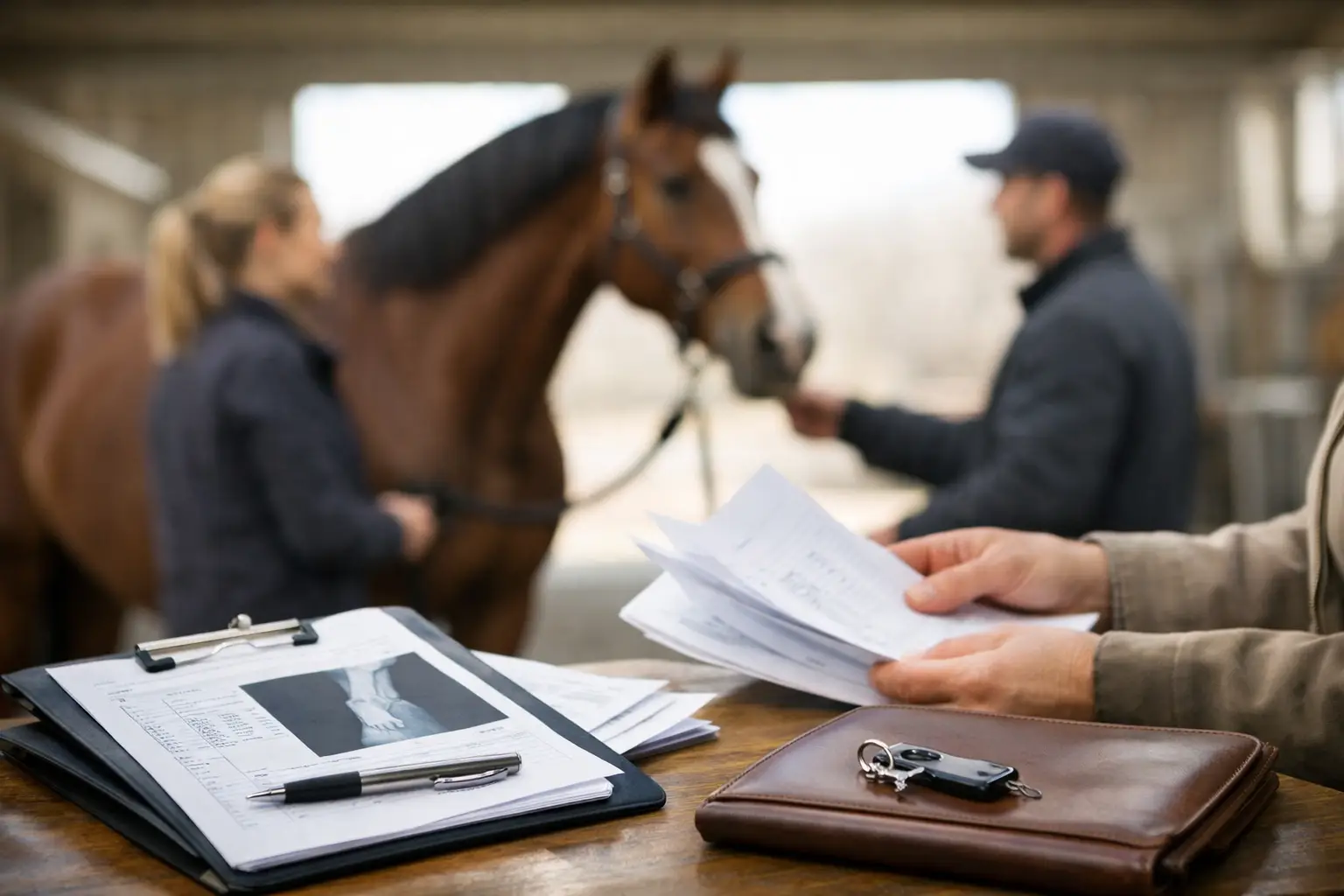
He's quiet in the arena, beautifully groomed, and comes with a story that makes you want to load him straight into the float. I get it. I really do.
But here's the thing paperwork can do that your heart can't: it lets you check parts of that story. Documents won't tell you whether he's the right emotional or riding match for you — that's a completely different job. What they
can do is stop an expensive mistake before it ever starts.
This Isn't About Interrogating Anyone
I want to be really clear about this, because it can feel awkward: asking for paperwork isn't turning a sale into a courtroom. It's slowing things down long enough to make a clear decision.
A genuinely suitable horse and an honest seller can stand up to reasonable questions every time.
If you're made to feel difficult for asking, that feeling is telling you something worth listening to.
Why Paperwork Actually Matters Here
Documents create a trail. They help establish who actually has the right to sell the horse, whether he's genuinely the horse being advertised, and what care he's received. That matters a great deal when you're handing over thousands of dollars for a living animal.
It protects him too, honestly. A horse with an old injury or a known management need isn't automatically a bad horse — plenty of horses with a bit of history make wonderful partners. The real problem is being sold a horse under the impression he's simple and sound when the reality is something else entirely.
Proof the Seller Can Actually Sell Him
Start with ownership, plainly. How long have they owned him? Is he registered? The name on any certificate should line up with the person selling him — or there should be a clear, believable explanation for why it doesn't.
You don't need someone's personal ID. You do need a written sale agreement and receipt with the seller's full name and contact details.
A vague receipt with a first name and a cash figure gives you almost no protection if something goes wrong later.
An Independent Vet Check, Not the Seller's Assurance
A pre-purchase exam is one of the most useful records you can have — provided it's arranged by
you, through your own independent vet, not a report handed to you by the seller.
Tell your vet exactly what you plan to do with him. A quiet trail horse and a competitive jumping prospect don't carry anywhere near the same risk. Get the findings in writing, and keep every image and report somewhere safe.
If a seller refuses a vet check, insists on their own vet only, or pressures you to decide before the appointment happens — that's your answer. There are other horses.
Health and Management Records
Ask for whatever's written down — vaccinations, dental, farrier visits, worming, any significant treatment. Not every owner keeps a glossy folder, and that's fine. What you're actually checking for is consistency: does the story match the horse, and does it match what the seller's telling you out loud?
Be a little more careful if he's currently on medication, just had shoes pulled, or is being sold right after treatment. None of that automatically rules him out. It just means you need time, clear answers, and your own vet's opinion before you commit to anything.
Get It in Writing, Every Single Time
A handshake feels friendly, but it's genuinely not enough when your safety and your finances are on the line. A proper written agreement should identify the horse, the price, when ownership passes to you, and everything included in the sale — rugs, tack, papers, all of it.
Here's the part I really want you to take on board:
if he's described as safe for a novice, quiet to float, or free of vices — put it in writing. If the seller won't, ask yourself why not.
Checking for Money Owed Against Him
This one surprises a lot of buyers. In Australia, a horse can potentially be subject to a security interest if money's owed against him — a search of the Personal Property Securities Register can help you check. Ask directly whether he's ever been used as security for finance. Don't feel awkward about it. Financial trouble attached to him can become your trouble very quickly if you skip this step.
Match What's on Paper to the Horse in Front of You
Bring a notebook. Compare dates across everything you're given — a horse advertised as ten but recorded as twelve somewhere else deserves a clear, honest explanation.
This still isn't about catching anyone out. Dates get muddled, names change hands, people genuinely forget details. What actually matters is how the seller responds when you ask. A straightforward seller explains and gives you room to think. One who gets defensive or suddenly creates urgency is showing you something worth paying attention to.
Paperwork Alone Won't Tell You Everything
A complete folder doesn't make a horse safe. It won't tell you if he barges into your space, freezes when worried, or overwhelms you once the sale-day polish wears off. You still need to watch him in ordinary moments — caught from the paddock, led, groomed, ridden by his owner before you ever get on.
There's a lot more ground to cover than documents alone — reading the horse himself, spotting when a "quiet, confident rider" comment is code for something bigger, and knowing exactly what to ask at every stage of a viewing. That's the full picture
The True Match™ Guide was built to walk you through, with a printable checklist covering the paperwork and the horse together.
The right purchase shouldn't require you to ignore a missing document, a knot in your stomach, or that quiet voice telling you to slow down. Protecting yourself with clear records is one of the kindest things you can do, both for your future horse and for yourself.
👉
Get The True Match™ Guide for $27