
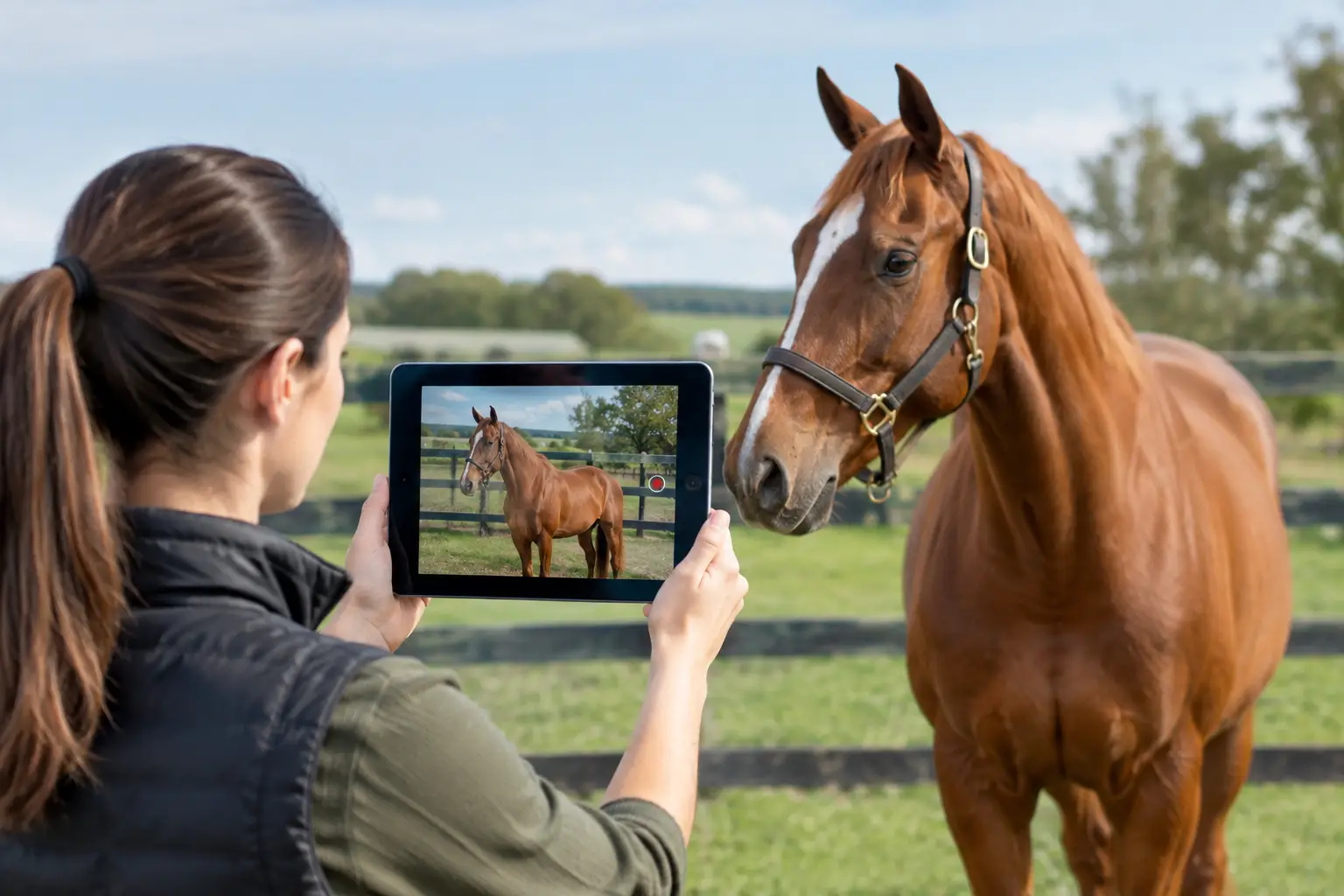
A polished sales video can make almost any horse look like the answer you have been waiting for. The horse is clean, the rider is smiling, the music is warm, and every stride appears effortless. But a guide to horse sales videos needs to start with one hard truth: a video is an advertisement, not an assessment.
That does not mean every seller is dishonest. Plenty of good people use videos to show a horse at its best and reach the right home. The problem is that buyers often mistake a carefully selected two-minute clip for proof of temperament, training and suitability. It is not proof. It is one small piece of information, and sometimes it leaves out the very things you most need to see.
If you are returning to riding, buying your first horse, or feeling nervous after a bad match, your job is not to be impressed. Your job is to get curious. A horse can be lovely, talented and well cared for, yet still be too much horse for you.
What Horse Sales Videos Can Tell You
A useful video can give you an early sense of the horse's movement, way of going and general education. You may see whether the horse looks comfortable in walk, trot and canter, whether the rider appears to be constantly correcting it, and whether the horse is relaxed or carrying tension through its body.
Look beyond the highlight moments. A horse that is genuinely straightforward usually looks fairly ordinary in the best possible way. It walks on a loose enough rein, stands quietly when asked, responds without drama, and does not need to be held together every second. The horse need not be perfect. In fact, perfection can be a warning sign if the footage is heavily edited or only shows the horse performing at one speed, in one direction, with one confident rider.
Pay attention to the rider as well. Are they quietly guiding the horse, or are their hands fixed, their legs gripping and their body braced? A skilled rider can make a worried, strong or sharp horse look manageable. That is their skill, not necessarily the horse's nature.
The horse's expression matters too. Watch the eye, jaw, tail and overall posture. A swishing tail or an occasional look around does not automatically make a horse unsafe. Horses are allowed to have opinions. But repeated tension, rushing, hollowing, tail wringing, ears pinned back, or a horse that seems unable to settle deserves a closer look.
This Guide to Horse Sales Videos Starts With What Is Missing
The most revealing part of a sales video is often what has been left out.
If every clip begins after the horse is already mounted, you have not seen the catching, leading, grooming, tacking up or mounting. Those moments matter enormously, especially for an adult amateur who will be handling the horse alone or with limited help. A horse that is pleasant under saddle but barges, drags, dances around the mounting block or threatens people on the ground can quickly drain your confidence.
Likewise, if you only see the horse in a tidy arena with an experienced rider, you know very little about how it copes with real life. What happens on a windy day? Does it leave the yard willingly? Can it stand while another horse trots past? How does it react when a gate bangs, a ute goes by, or a rider loses balance and accidentally catches it in the mouth?
You are not looking for a horse that has never been startled. That horse does not exist. You are looking for recovery. Does it take a breath, listen and come back to the rider, or does one surprise turn into ten minutes of spinning, bolting or escalating behaviour?
A short video cannot answer all of this. A decent seller should understand why you are asking.
Watch the transitions, not just the flashy work
Many sales clips focus on extended trot, neat jumping or a pretty canter. Those things can be appealing, but transitions often tell you more about rideability. Watch for the walk-to-trot, trot-to-canter and downward transitions. Is the horse willing to come back without hauling on its mouth? Does it rush into canter, throw its head up or become quick after a transition?
Also notice whether the horse can walk. A horse that only looks settled when it is kept busy may be carrying more anxiety or forwardness than the video suggests. A calm, marching walk on a reasonably loose rein is not boring footage. It is valuable information.
Questions to Ask Before You Arrange a Viewing
Do not apologise for asking clear questions. You are considering a major financial commitment and, more importantly, a partnership that affects your safety and enjoyment. The right seller will not pressure you to make a decision before you have enough information.
Ask for unedited or longer footage of the horse being caught, led, tied up, groomed, saddled, mounted and ridden from both sides. Ask to see walk, trot and canter in both directions, including ordinary transitions. If the horse is advertised as safe on trails, ask for footage outside the arena too.
Then ask who is riding in the video. Is it the owner, a professional rider, a teenager with good balance, or someone similar to you in confidence and ability? There is no shame in wanting a horse demonstrated by an everyday rider. It may be the most relevant footage you see.
You can also ask what the horse was like before filming. Had it been ridden every day that week? Was it lunged first? Was it sedated for clipping, shoeing or travel earlier in the day? Again, these questions are not accusations. Context changes how you read behaviour.
Be cautious if the answers are vague, defensive or overly polished. Statements such as “he just needs a confident rider” or “she can be a bit mareish” can hide a wide range of issues. Ask what that looks like in practical terms. What does the horse do? How often? In what situations? What has helped, and what has not?
Do Not Let Editing Create a Story
Music, slow motion and flattering camera angles are designed to create a feeling. They can make a horse appear calmer, bigger moving or more consistent than it is. Even a video with no obvious cuts can be selective. You may be watching the best ten minutes from a month of riding.
This is why you should avoid filling in the blanks with hope. If you cannot see the horse stand at the mounting block, do not assume it does. If no video shows it hacking out alone, do not assume it is confident off the property. If the horse is always in a double bridle, a strong bit or tight contact, do not assume it will be easy in lighter hands.
There may be perfectly reasonable explanations. Some horses are filmed in their usual competition gear. Some sellers simply have not thought to record groundwork. The point is not to decide the horse is wrong from one missing clip. The point is to keep the question open until you have evidence.
When the Video Looks Too Good
A very impressive horse can be a poor choice for the rider watching it. This is where buyers get hurt emotionally as well as financially. They see elegance, scope or charisma, then convince themselves that lessons, determination and love will bridge a large gap in experience.
Sometimes they can. More often, the horse becomes tense, the rider becomes frightened, and both lose confidence. The horse is not bad. The rider is not a failure. It is simply the wrong match.
If the video makes your stomach drop because the horse looks powerful, quick or difficult to sit, listen to that response. Excitement and anxiety can feel similar when you are watching from your mobile. Give yourself time to separate them. A suitable horse should not require you to become a braver, more advanced rider before you can safely enjoy it.
Use the Video as a Filter, Not a Final Decision
Sales videos are useful when you treat them as a first filter. They can help you rule out horses that clearly do not suit your goals, budget or current ability before you spend hours travelling across the state. They cannot replace seeing the horse in person, riding it more than once where possible, getting independent advice and arranging a thorough pre-purchase examination.
When you view a horse, ask to see the ordinary bits first. Watch it come in from the paddock. Notice how the seller handles it. See whether it respects personal space, stands for mounting and settles after work. Then ride only within your ability. You do not have to prove you are worthy of the horse by getting on when something feels wrong.
Walking away can be disappointing. It can also be the decision that protects your confidence, your wallet and a horse from being placed in a home that cannot meet its needs. The right horse does not need a clever video to talk you out of your common sense.