
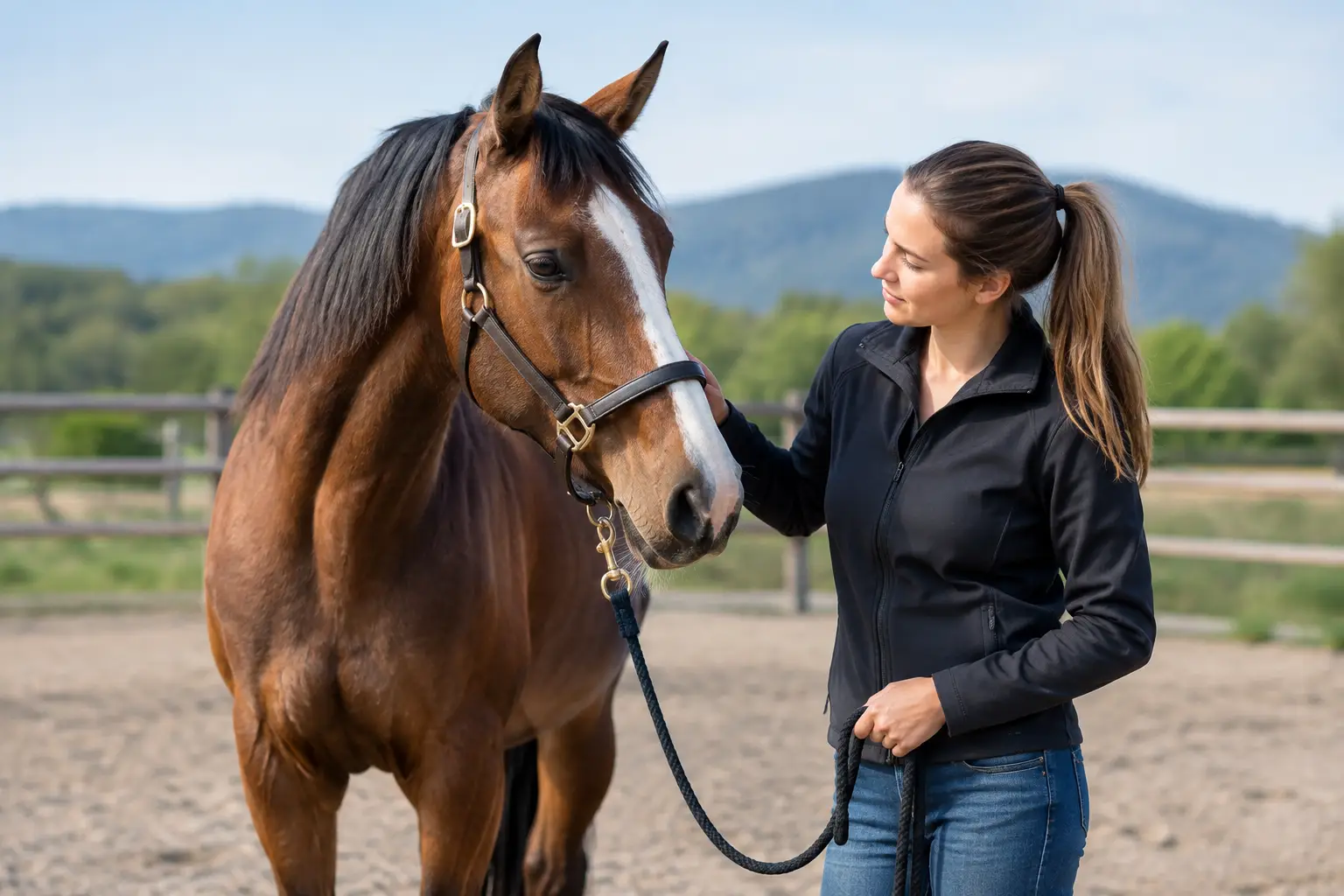

A horse that crowds you at the gate, swings its quarters into your space or drags you towards grass is not being cheeky. It is giving you useful information about safety, boundaries and how secure it feels with you. This horse handling guide is for the moments that can seem small until they shake your confidence or put someone on the ground.
Good handling is not about making a horse stand like a statue or proving you are the boss. It is about creating clear, fair boundaries that allow both of you to feel safe. Horses do best when the person handling them is calm, consistent and aware of what is happening before the situation gets bigger.
That matters whether you own a quiet older gelding, lease a school horse, or are considering buying your first horse. Ground behaviour is part of the whole picture. A horse can look beautiful under saddle and still be difficult, unsafe or simply too much horse for the person expected to manage it every day.
Start with safety, not bravery
Many riders have been told to be firmer when a horse pushes into them. Sometimes that advice is incomplete. Being firm does not mean getting into an argument with 500 kilos of worried, excited or pushy animal. It means noticing the early signs, setting a clear boundary, and not allowing the horse to practise barging, leaning or pulling you off balance.
Before you handle any horse, check the practical basics. Wear enclosed boots, gloves if the horse is strong or you are unsure, and use a well-fitting halter and lead. Avoid wrapping the lead rope around your hand. Keep enough space to move your feet, particularly around gates, tie-up areas and narrow yards.
Your position matters. Stand where you can see the horse’s shoulder and body, rather than directly in front of it or trapped against a fence. If the horse rushes forward, swings around or startles, you need somewhere to go. Safety is not pessimism. It is sensible planning.
If a horse is suddenly difficult to catch, girth up, lead, float, rug or pick up feet, do not assume it is a training issue. Pain, ill-fitting gear, dental discomfort, ulcers, lameness and hormonal changes can all affect behaviour. A veterinary assessment and appropriate professional support may be the kindest first step.
Read the horse before asking for more
Horses communicate long before they explode. The trouble is that people are often concentrating on the task - getting to the arena, catching the farrier, loading the float - and miss what the horse is saying.
Look at the whole horse, not just its ears. A tight muzzle, fixed stare, raised head, braced neck, hurried feet or a tail clamped hard against the body can suggest tension. A horse that repeatedly turns its hindquarters towards you, pins its ears or threatens to bite is telling you it is uncomfortable, defensive or has learned that people will back away.
Context changes the meaning. A horse may call out and jig when its paddock mate leaves because it is genuinely distressed, not because it has decided to be naughty. Another may walk into your space at feed time because people have unintentionally taught it that crowding gets results. The behaviour may look similar, but the safest response depends on why it is happening.
Do not ignore your own body signals either. If you find yourself holding your breath, gripping the rope or dreading a routine task, pay attention. Fear is not proof that you are incapable. It is information that the situation needs a safer plan and possibly experienced help.
Horse handling guide: protect your personal space
Personal space is not about dominance. It is a basic safety boundary. Your horse should be able to stand near you without leaning, stepping on you, swinging into you or treating you like a movable gate post.
Start with a modest, realistic goal: your horse stays out of your space when you ask, and you can move your feet without being followed or blocked. Be clear about where you want the horse to stand, then reward the moment it softens, steps away or waits quietly. Release pressure promptly when the horse makes a genuine effort. Timing is what makes your request understandable.
Avoid the common pattern of repeatedly backing away to make room for a horse. When you move every time the horse enters your space, it can learn that crowding works. Instead, use calm body language and an appropriate cue to ask the horse to yield away. There is no prize for handling a horse from too close because you are worried about hurting its feelings.
That said, do not turn every interaction into a confrontation. If the horse is anxious, over-aroused or reacting to pain, escalating pressure can make the problem worse. Step back, create distance, lower the difficulty and work out what has changed. Clear boundaries and compassion belong together.
Build calm habits in ordinary moments
The most useful groundwork is often not dramatic. It happens at the gate, on the walk from the paddock, while standing for grooming and when waiting beside the float. These ordinary moments teach a horse what to expect from people.
Aim for consistency in four areas:
- Leading: The horse walks with you, rather than towing you, lagging behind or cutting across your path.
- Stopping: When you stop, the horse learns to stop without running into your shoulder or passing you.
- Waiting: Gates, feed bins and float ramps are handled without rushing or crowding.
- Yielding: The horse can move its shoulder or hindquarters away from light, fair pressure when asked.
Do not try to fix all of this in one session. A horse that has spent years dragging handlers to grass will not become polite because you had one good day. Small, repeatable sessions are more useful than long sessions that leave both of you frustrated.
Keep your requests simple. Ask, allow the horse a moment to respond, then release when it tries. If nothing changes, increase clarity before you increase intensity. Many horses are not defiant. They are confused by mixed signals, inconsistent rules or a handler who asks while accidentally giving a different answer with their feet and body.
Know when the problem is beyond your current skill set
There is no shame in admitting that a horse feels unsafe. In fact, it is one of the most responsible decisions an owner can make. Too many people keep trying alone because they fear being judged, or because they have been told that they should be able to handle their own horse.
Get qualified, hands-on help promptly if your horse rears, strikes, bolts while being led, bites, kicks, barges through people, becomes dangerous around food, or cannot be safely managed for routine care. Do not wait for someone to be injured. A knowledgeable professional can observe details that are hard to see when you are emotionally involved or worried about what others might think.
The same applies when you are viewing a horse to buy. Do not accept “he is only like that on the ground” as a throwaway comment. Ground manners affect catching, farrier visits, vet treatment, floating, paddock management and the confidence you bring to every ride. Ask to see the horse caught, led, tied up, groomed and handled in its normal environment. If the seller rushes you, makes excuses or will not let you see everyday handling, walk away.
A horse does not need to be perfect. No honest horse person should promise that. But the horse should be safe enough for your experience, your facilities and the help you genuinely have available. Buying or keeping a horse that regularly overwhelms you can drain your money, your confidence and the joy you hoped horse ownership would bring.
Calm does not mean passive
A calm handler is not someone who tolerates poor behaviour. It is someone who can make a fair decision without panic, anger or wishful thinking. They do not excuse dangerous behaviour because they love the horse, and they do not punish a horse for communicating discomfort.
That balance takes practice. It also takes honesty. Some horses need a more experienced home, a different management set-up, pain investigation or structured training. Some owners need support rebuilding skills after a frightening experience. Neither reality makes either one a failure.
At Louise Kropach, the focus is on helping owners recognise the small patterns that can turn into big safety problems, before confidence is lost. A clearer eye for behaviour is one of the best protections you can give yourself and your horse.
The next time you lead your horse out, resist the urge to simply get the job done. Notice where its feet are, whether it can wait, and whether you still have room to breathe and move. Those quiet details are where safer partnerships begin.