
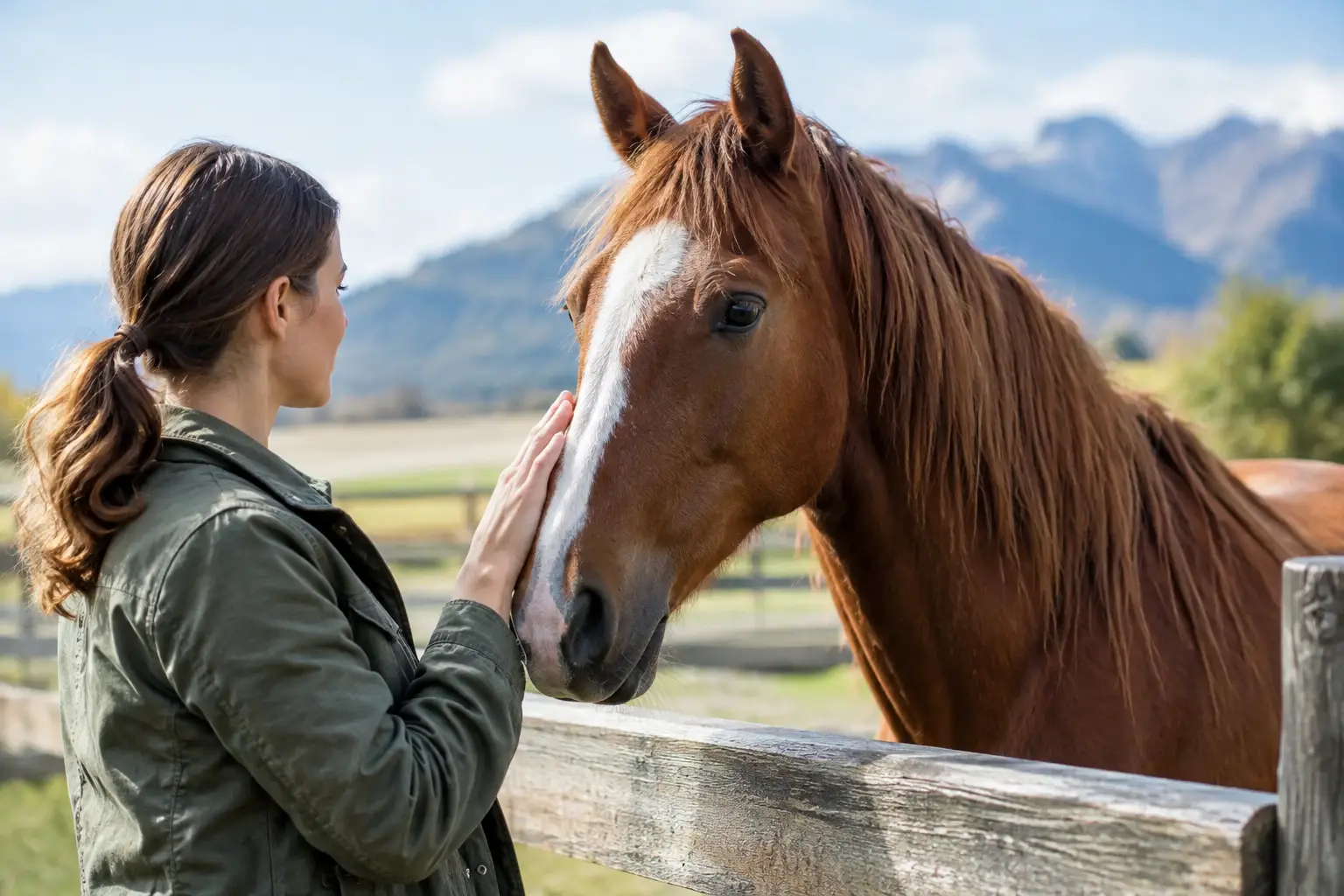
A horse can look quiet in a stable, polished in a sales photo and perfectly manageable while someone else is holding the lead rope. Then the gate opens, the routine changes, or the horse feels your uncertainty - and suddenly you are dealing with far more horse than you were led to expect.
That is why the best horse viewing safety tips are not about finding fault with every horse. They are about slowing the process down enough to see the horse honestly, protect your confidence, and avoid a decision that could cost you dearly in money, safety and joy.
A viewing is not a performance where you are meant to be impressed. It is your chance to gather evidence. If a seller makes that difficult, pay attention.
Best horse viewing safety tips start before you arrive
Do not arrive at a viewing hoping the horse will be right. Arrive ready to assess whether the horse is suitable for your experience, support network and actual riding life.
Before you go, ask the seller direct questions about the horse’s behaviour on the ground, ridden history, health, management needs and the reason for sale. Ask what the horse is like after time off, in wind, around other horses, for the farrier, to catch, float and ride away from home. A good seller may not claim the horse is perfect, but they should be able to answer clearly and consistently.
Be wary of vague reassurance such as, “Anyone can ride him,” or, “She just needs a confident rider.” Those phrases can mean very different things. Ask what happens when the horse is worried, fresh, reluctant or challenged. Does it stop and look? Rush? Rear? Buck? Pull away? Shut down? The detail matters.
Take someone sensible with you if you can. This is not because you are incapable. It is because emotional attachment can form quickly, particularly if you have waited a long time or badly want this to work. A calm second set of eyes may notice the tight lead rope, the handler’s tension, the excuses that do not match what is in front of you, or the fact that you are being rushed.
Watch the horse before anyone asks you to interact
The first few minutes can tell you more than a long sales conversation. Ask to see the horse in the paddock or stable before it has been brought out, groomed or tacked up for you.
Look at its overall demeanour. Is it settled and aware, or shut down and dull? Is it pacing the fence, calling constantly, striking at the door, pinning its ears when approached, or barging into the handler’s space? One behaviour does not automatically make a horse unsafe. Horses have off days and environments matter. But repeated signs of anxiety, pushiness or poor boundaries deserve more questions, not less.
Watch how the seller catches and leads the horse. Notice whether they need a chain, a tight hold, a helper, treats or a lot of verbal correction to manage ordinary tasks. Again, there may be a reasonable explanation. But if the horse is described as easy while the person handling it looks braced for trouble, trust what you see.
A horse does not need to stand like a statue to be a good match. What you want is a horse that can return to calm with ordinary, fair handling. That ability to settle is often far more useful than a flashy movement or a beautiful head.
Do not accept a prepared-only version of the horse
A horse shown already tacked up, warmed up and ridden hard before you arrive may still be completely genuine. Yet you need to know how that horse behaves through the parts of ownership that happen every week, not just during a polished demonstration.
Ask to see the horse caught, groomed, saddled and mounted. Observe how it stands for the girth, reacts to being touched, and responds when asked to move its feet. If you are considering buying, it is reasonable to ask to see it handled in a normal routine on another day as well.
If the answer is no, or you are told you are being difficult for asking, walk away. A safe sale should withstand sensible questions.
Keep your body out of the danger zone
Many injuries happen on the ground because people are trying to be polite, helpful or brave. You do not need to prove you can handle a horse you have only just met.
Stay out of kicking range whenever possible, especially behind the horse or beside a hind leg. Do not stand directly in front of a horse when it is being led, and do not get trapped between the horse and a wall, stable door, float or fence. Leave yourself room to step away.
Wear closed-in boots with a solid toe and a properly fitted riding helmet if you may be getting on. Gloves can be useful when handling an unfamiliar horse, but they are not a substitute for good judgement. If the horse is pulling, spinning, rushing or invading space, hand the rope back to the experienced handler. Do not hang on and hope for the best.
Be especially careful around gates. A pushy horse can bowl through a person in seconds, and a nervous horse can rush backwards or sideways when confined. Let the seller handle awkward moments. You are there to assess the horse, not rescue the situation.
See the horse ridden before you ride it
Never make your first impression from the saddle. Watch the current rider catch, tack up, mount and ride the horse first, ideally without an elaborate routine designed to keep the horse quiet.
Pay attention to the transitions, not just the pretty moments. How does the horse respond when asked to walk on, halt, turn, move away from the gate or leave its mates? Does the rider need to keep its head held in place? Is there rushing, tail swishing, ear pinning, resistance or a repeated need for strong correction?
Then ask for the horse to be ridden in a way that resembles your likely use. If you hope to trail ride, a few neat circles in an arena are not enough information. If you want a steady adult riding horse, watching a capable teenager ride through a difficult moment does not prove the horse will be safe for you.
It depends on what you want to do, of course. A forward, athletic horse may be a wonderful match for an experienced rider with regular coaching. For a returning rider rebuilding confidence, that same horse may be too much horse. Suitability is not a judgement on the horse. It is a safety decision about the partnership.
Your test ride is optional
You are never obliged to ride because the seller has offered, because you have travelled a long way, or because someone says, “He’s being so good today.” If anything you have seen leaves you uneasy, do not get on.
If you do ride, start in the safest available environment and keep it simple. Mount with support if needed. Walk, halt, steer and notice how the horse feels beneath you. Does it listen without you having to wrestle? Can you breathe, think and make ordinary decisions, or are you immediately managing tension?
Do not let embarrassment talk you into doing more. You can decline the trot, the canter, the jump or the trail ride. The right horse does not require you to override your own alarm bells at the first meeting.
Treat pressure as useful information
Pressure is one of the clearest warning signs at a horse viewing. It may sound like, “There are three other people coming this afternoon,” “You won’t find another one like this,” or, “You need to decide now.” Sometimes another buyer really does exist. That does not make a rushed decision sensible.
Buying a horse is not like missing out on a jacket in the shops. You may be taking on years of expense, responsibility, training needs and risk. A horse that is wrong for you can drain your savings and leave you frightened to ride. No bargain or deadline changes that.
Give yourself time to reflect after the viewing, preferably away from the seller and the horse. Write down what you observed before you replay only the lovely parts. Compare the reality to what you need: your riding ability, the facilities available, the help you can access, your budget and the kind of partnership you want.
A pre-purchase veterinary examination and an independent assessment can add valuable information, particularly where the purchase is significant or your experience is limited. They cannot guarantee every future outcome, but they can prevent you from buying blind.
Let calm matter more than chemistry
Some horses create an instant emotional pull. They are beautiful, affectionate or familiar in a way that feels meant to be. That feeling is real, but it is not enough to build a safe partnership on.
The horse that protects your confidence may not be the most dramatic one in the paddock. It may be the one that is ordinary in the best possible way: easy to catch, respectful of space, honest in its work and able to cope with a normal human making normal mistakes.
You do not have to justify walking away from a horse that makes you uncertain. A good match should leave room for learning, enjoyment and the occasional imperfect day. Choose the horse that lets you come home safer, steadier and still looking forward to tomorrow.