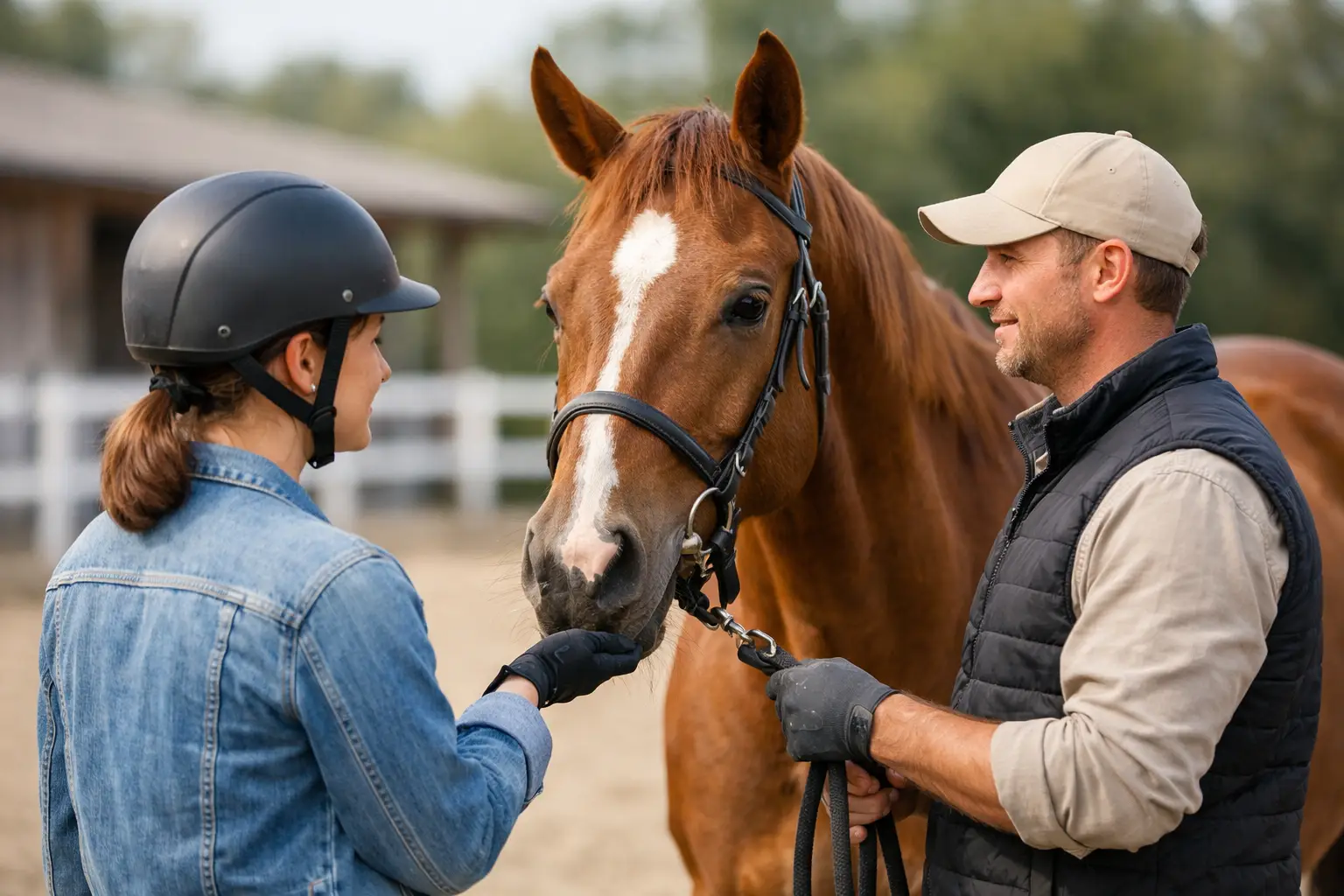

He looks lovely in that tidy paddock, doesn't he? Especially after months of scrolling ads and hoping this might finally be the one.
Here's what I need you to know before you even book the float: a good viewing takes more than a list of questions on your phone. I've watched too many riders talk themselves out of what they plainly saw, simply because they wanted so badly for it to work. What follows is usually heartbreak, lost confidence, and a very expensive lesson. A viewing isn't your job interview for the horse. It's your chance to work out if this is genuinely a sensible match.
Get Honest With Yourself Before You Leave the House
I want you to picture the horse you can safely handle and ride right now — not the one you're hoping to grow into over six months. Be truthful with yourself about your recent riding, the help you've actually got at home, and how much uncertainty you can genuinely cope with. A forward, sensitive horse might be wonderful for a confident rider. He might also be too much horse for someone rebuilding confidence. That's not a character flaw. That's just a mismatch — and mismatch is where most difficult horse stories start. Write your non-negotiables down before you go. And decide, right now while your head's clear, what would actually make you walk away. Make that call at your kitchen table, not standing beside a beautiful horse while someone tells you three other buyers are on the way.Bring Someone Who'll Tell You the Truth
A good support person isn't there to pick apart every horse or embarrass the seller. They're there to notice what you'll miss once your emotions take over — and honestly, a good coach or experienced friend is worth far more than their fuel money. Take a notebook too. Write down the facts, your questions, and how the horse actually made you feel. There's a real difference between feeling excited and feeling tense because something's unpredictable — and that difference can be surprisingly hard to notice in the moment.Ask for the Ordinary Version, Not the Performance
Before you arrive, ask the seller not to have him fully tacked up or freshly exercised for you. I want you seeing him caught from his usual paddock, led out, tied up — those ordinary moments tell you more than ten impressive circles in an arena ever will. A horse doesn't need to stand like a statue to be suitable — a bit of calling or fidgeting is just being a horse. What actually matters is whether his behaviour is proportionate and manageable, and whether the person handling him is calm, or quietly bracing and making excuses. Here's a phrase I want you to be genuinely cautious around: "needs a confident rider." That can sometimes mean the horse has behaviour requiring more skill than the ad let on — and there's a very specific way to tell the difference between a fair warning and a softened truth, which is exactly the kind of thing I walk buyers through properly rather than trying to squeeze into a single paragraph here.Watch the Seller Ride First — But Don't Be Fooled by Skill
The seller, or whoever knows him well, should ride before you do. Don't be impressed simply because an experienced rider can sit him nicely — a confident rider can make a sharp or anxious horse look deceptively easy. What I actually want you watching is how much management it takes. Is the rider constantly holding him together? And pay close attention to recovery — does he come back and settle after a moment, or does it escalate? That tells you far more about him than any seller saying "he's never done that before."You're Allowed to Say No to Getting On
You don't owe anyone a ride because you drove two hours, or because you're worried about looking inexperienced. If what you've seen on the ground doesn't feel right, that's information — listen to it. If you do ride, start simply. Walk. Check whether he responds to your aids without rushing or leaning. There is no prize for proving bravery on a horse who's already made you uneasy.Ask, Then Ask Again a Different Way
Cover the obvious ground — injuries, vet history, behaviour around other horses, any bucking, rearing or biting episodes. Then, later in the visit, ask about the same thing again, phrased slightly differently. Not to trap anyone — just because details genuinely matter, and consistency tells you something a first answer alone won't. Be wary of urgency, too. "Someone else is coming this afternoon" might be completely true. It still doesn't make him right for you.Sleep On It. Always.
Please don't make an offer at the viewing unless you're completely certain. Go home. Read your notes. Talk to your support person. The emotional high of meeting a horse can make real concerns feel small in the moment — by the next morning, the facts are usually a lot clearer. If you're unsure at all, arrange a second viewing at a different time of day. A second visit tells you whether what you saw was representative, or carefully staged for you.Turning What You See Into a Decision You Trust
Everything above gives you a strong starting point for the day itself. But knowing exactly what question to ask when an answer doesn't quite add up, how to read recovery accurately under saddle, and what specific phrases tend to soften a genuine problem — that's a deeper skill than one blog post can teach, and it's precisely what I built The True Match™ Guide to walk you through, step by step, with a printable checklist for the day itself. The right horse doesn't need to be perfect. He needs to be a safe, realistic prospect for your actual ability and life right now. You might feel a spark with him — but a spark was never a safety assessment. Walk away from pressure and vague answers. There will be other horses. Your confidence and future enjoyment are worth protecting.💛 The True Match™ Guide — $27
A complete, step-by-step framework for preparing for a horse viewing — including the exact questions to ask, how to read a seller's answers, and a printable checklist to bring with you on the day. Backed by a 30-day, love-it-or-it's-free guarantee. 👉 Get The True Match™ Guide Here