
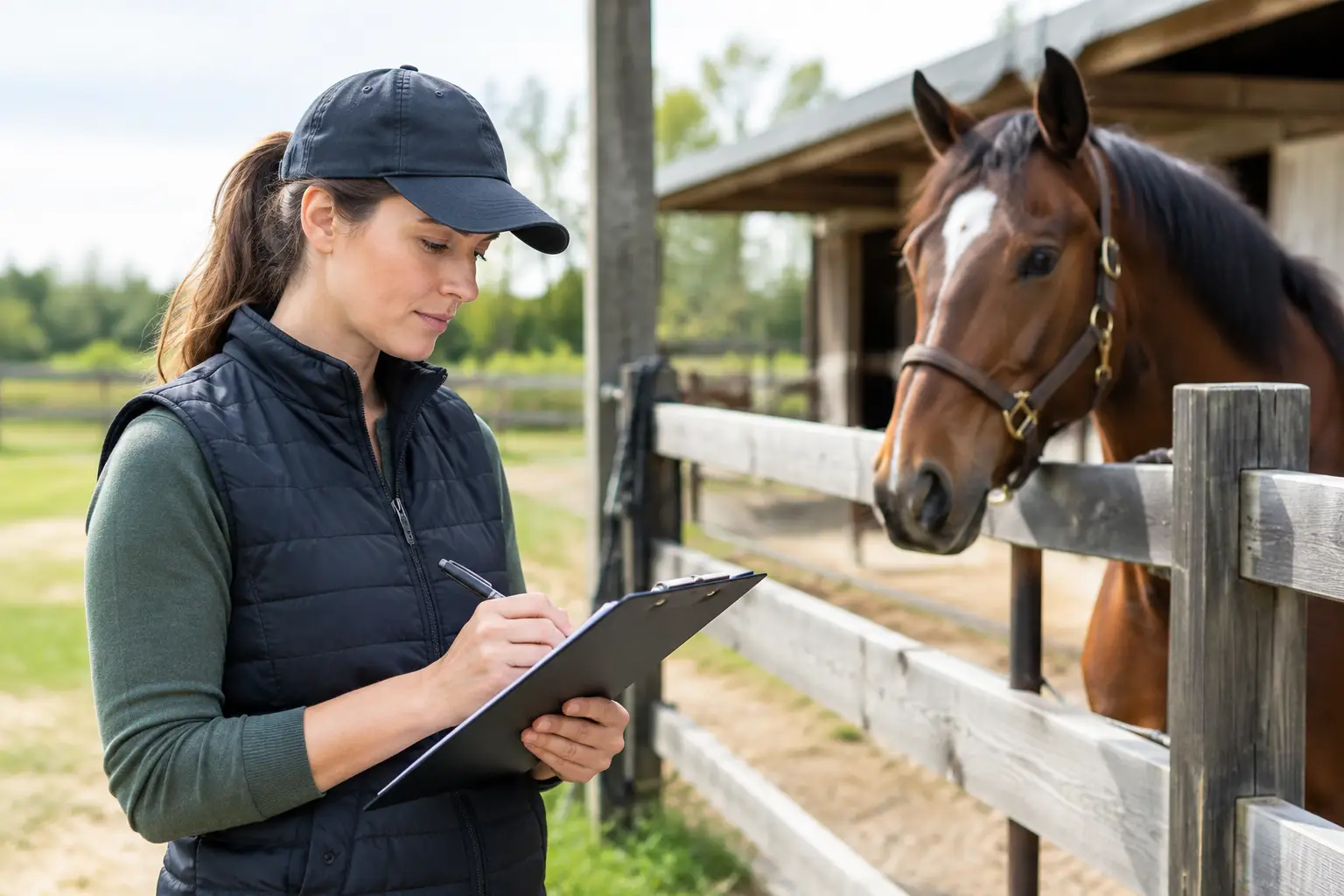

A lovely arena, green paddocks and friendly people can make an agistment property look perfect on the first visit. But a proper horse agistment checklist needs to go further than appearances. Where your horse lives affects his safety, soundness, routine and behaviour, and it affects how confident you feel handling and riding him every single day.
This matters even more if you're a newer owner, returning to horses, or settling a horse you've only just bought. The wrong arrangement can leave you paying for services you assumed were included, dealing with a herd that doesn't suit him, or facing unsafe handling conditions daily. Don't ignore a nagging feeling just because the place is popular or the owner seems lovely.
Start With the Paddock Itself
Ask to see the actual paddock he'll be in, beyond the nicest one on the property. Look closely at the fencing. It should be secure, visible and well maintained, with no broken posts, loose wire or damaged tape. A fence that's fine for a quiet older gelding may not contain a fit, anxious horse who's just been moved away from his mates. Check the ground underfoot too. Deep mud around gates, troughs and shelters can create hoof problems and make catching or leading him genuinely risky. Very bare paddocks may mean budgeting for more hay, while long, rich grass can be a real concern for a horse prone to laminitis or metabolic issues. There's no single perfect paddock here. What matters is if it suits your particular horse and is managed properly. Find out how many horses share each paddock, how groups are chosen, and what happens if one gets bullied. Don't accept "they'll sort it out" as a complete answer. Some settling-in friction is normal. Relentless chasing, bite marks and a horse too frightened to reach water or feed are not things to simply wait out. Ask if paddocks are checked daily and who actually notices if a horse is injured, cast, lame or missing. Get specific about what "daily check" really means. Is someone walking through the herd and looking at each horse properly, or glancing from a car on the way to work?Look Past the Facilities
An indoor arena is nice, but it can't make up for unsafe yards, poor drainage or a stressful daily routine. Walk through the areas you'll actually use, at the times you're most likely to be there. If you work full-time, visiting at 11am on a quiet weekday tells you almost nothing about access after work or on weekends. Pay attention to the practical details:- Parking, lighting and the walk from paddock to tie-up area
- Secure gates, wash bays and feed storage
- Enough room to safely pass another horse in the laneways
Check the People and the Culture
You're choosing more than a paddock here. You're choosing a community around your horse. Watch how people handle horses on the property. Are gates left open? Are horses tied to unsafe rails? Does anyone rush, shout or treat rough handling as perfectly normal? You don't need everyone to train exactly the way you do. You do need a culture that respects basic safety, boundaries and welfare. A yard where people wave off pushy behaviour or let horses barge through gates can quietly undo the handling work you're trying to build at home. It's also fair to ask how concerns get communicated. If he comes in lame, loses a shoe, or is caught up in a paddock injury, will you get a call promptly? Who decides if a vet is needed when you can't be reached? Get this clear before there's ever an emergency, not during one.Know Exactly What Your Fees Cover
Agistment can look affordable right up until the add-ons start appearing. Ask for every cost in writing:- The base agistment fee and what feed is actually included
- Rug changes, holding for the farrier or vet, and medication
- Arena use, manure removal, late-payment fees and notice periods
Questions Worth Asking Before Any Money Changes Hands
- How much notice is required if you leave, and what lets the owner ask you to leave?
- What's included in feeding, and who supplies hay, hard feed and supplements?
- What happens if your horse damages fencing or needs emergency treatment?
- Is there insurance on the property, and what are you expected to hold yourself?
- Can fees change during your stay, particularly through a dry season?
Match the Place to Your Horse, Not Your Wish List
A horse who's always lived in a small, stable herd may struggle in a large, fast-changing group. One needing controlled grazing may not suit a property where horses rotate freely through lush pasture. A recently purchased horse often needs a quieter transition than a busy place with constant arrivals and departures. Be equally honest about yourself too. If you're rebuilding confidence, choose an environment that makes good decisions easier for you. You might need staff nearby, safe handling areas and a straightforward routine. There's no prize for choosing the cheapest, flashiest or most competitive yard if it leaves you anxious every time you drive out there. Before committing, visit more than once if you can. Go after rain, on a busy afternoon and at feeding time. Ask current agisters what they genuinely like, and what they wish they'd known before moving in. Listen for patterns, beyond one isolated grumble. Every yard has small frustrations. Repeated concerns about injuries or poor communication deserve serious attention.The Part That Actually Determines How Settled He Gets
Here's what most people don't realise until they've already moved a horse twice. The paddock, the fencing, the fees, all of that is the easy half of the checklist. The harder half is knowing what a normal settling-in wobble looks like versus a genuine red flag, because a horse fresh off a move can look unsettled for reasons that have nothing to do with the yard itself, and plenty of new owners either panic too early or ignore something they shouldn't have. Once you choose a place, ask how new horses are introduced and if there's a proper settling period. Confirm where he'll be kept initially, if he needs to arrive with a buddy, and how rugs, feed and medication should be labelled. Then give him time to adjust. Appetite, manure, behaviour and rideability can all shift for a while after a move, and knowing which of those changes is ordinary and which one actually needs a phone call is exactly the kind of thing that catches new owners off guard in the first few weeks. That whole settling-in stretch, what's normal, what's not, and what to actually do about it, is covered properly inside my New Horse Owner Survival Guide, built for exactly this stage of ownership. The best agistment isn't the one with the best sales pitch. It's the one where your horse can live safely and comfortably, and where you can show up, take a breath, and feel ownership becoming more manageable rather than harder.💛 New Horse Owner Survival Guide - $17
A practical, step-by-step guide to the first weeks and months of ownership, including what's normal during a settling-in period and what genuinely needs attention. Backed by a 30-day, love-it-or-it's-free guarantee. 👉 Get the New Horse Owner Survival Guide Here