
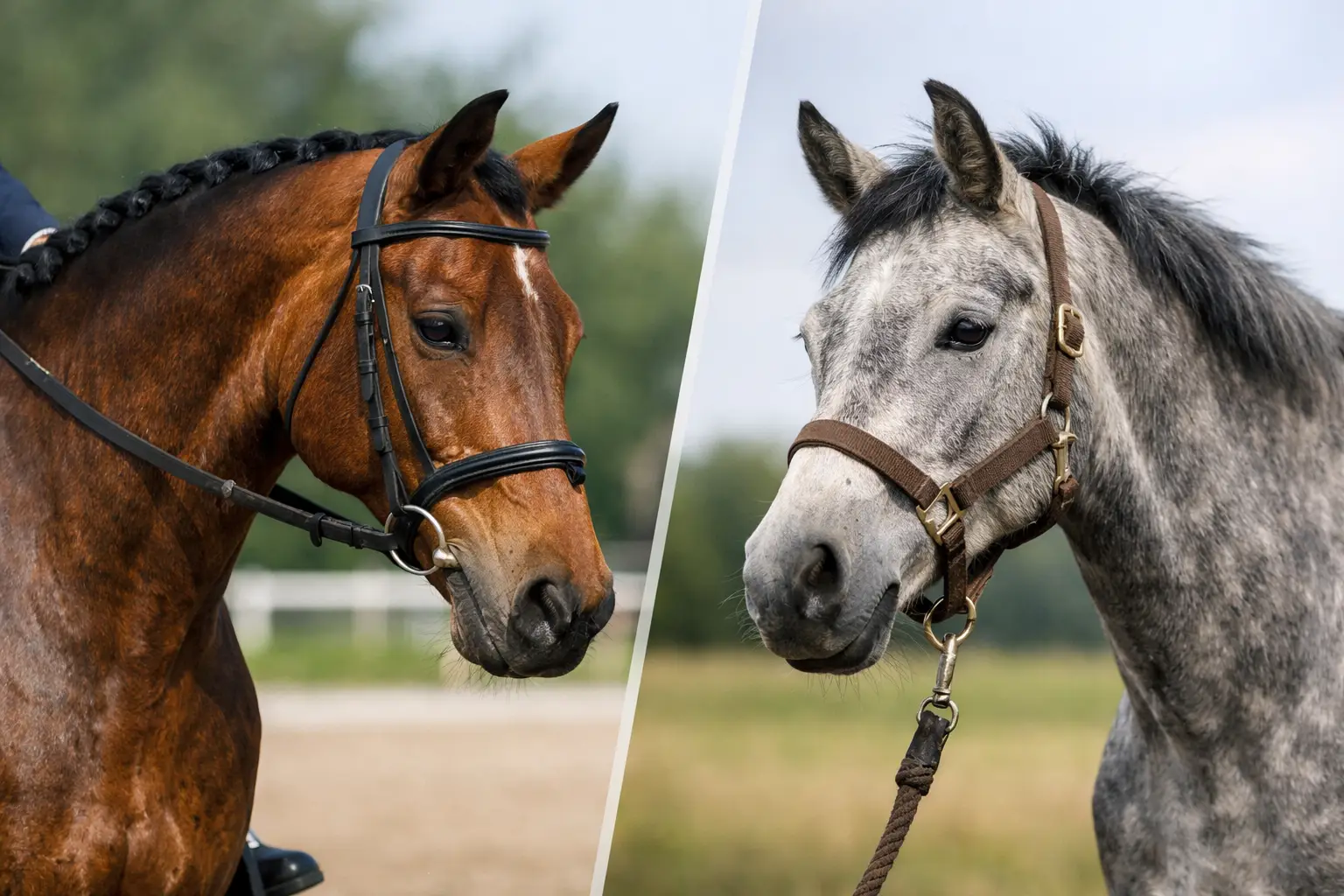
The horse who catches your eye in the yard is not always the horse who will look after you when you are tired, nervous, learning, or having a bad day. That is the real issue in a schoolmaster versus project horse decision. It is not about which horse is more impressive, more fashionable, or cheaper to buy. It is about whether you can safely build the riding life you actually want.
A poor match can cost far more than the purchase price. It can drain your confidence, make every ride feel like a test, strain your finances, and leave a good horse misunderstood because they were asked to carry a rider beyond their current ability. There is no shame in needing the right teacher. In fact, choosing one can be the most sensible decision you make.
Schoolmaster versus project horse: know the difference
A schoolmaster is not simply an older horse that has competed or one advertised as “quiet”. A genuine schoolmaster is educated, consistent and forgiving within reason. They understand their job, have the miles on the clock to cope with ordinary rider mistakes, and can help their rider learn rather than punishing every loss of balance, unclear aid, or moment of tension.
That does not mean they are push-button machines. No horse is. A schoolmaster can still be sensitive, forward, opinionated, or require a capable rider in certain situations. They may have limits around jumping height, workload, soundness, feeding, or the kind of management they need. But the important question is this: when things are not perfect, does this horse stay with the rider or make the moment bigger?
A project horse needs development. That development may be physical, educational, emotional, or behavioural. They might be green, recently restarted, anxious away from home, inconsistent to catch, difficult to float, pushy on the ground, sharp under saddle, or still learning their job. Some are lovely horses with enormous potential. But potential is not the same thing as suitability.
The term “project” can sound exciting because it promises progress. It can also hide a great deal. If the seller says the horse “just needs time”, “needs one person”, or “will be amazing once they trust you”, ask exactly what that means in daily life. Time does not fix a horse who is frightened, confused, sore, poorly handled, or simply too much horse for their rider.
What are you really buying?
Before looking at ads, be honest about your current riding, handling and decision-making skills. Not the rider you were ten years ago, or the rider you hope to become by next summer. The rider you are now.
If you are a returning rider, a first-time owner, or someone rebuilding confidence after a fall, a genuine schoolmaster often gives you the best chance of success. You need a horse who makes correct riding easier to learn. You need room to make small mistakes without fearing a big reaction. You need to come home from the agistment feeling more capable, not sick with dread about tomorrow.
A project horse may be suitable if you already have solid independent skills, regular access to excellent coaching, enough budget for training and professional support, and the emotional steadiness to work through setbacks. Even then, you need to want the process itself. Do not buy a project because you feel sorry for them, because they are beautiful, or because their price seems like a bargain.
Cheap horses can become very expensive when you add training rides, vet investigations, bodywork, lessons, float problems, damaged confidence, and months of missed enjoyment. A more expensive, genuinely suitable schoolmaster may protect your budget in ways that are not obvious on day one.
The questions that cut through the sales pitch
Words such as “safe”, “quiet”, “confidence builder” and “easy” are not useful unless you know what they look like in real conditions. Sellers may be honest and still describe a horse through their own experience. A capable rider can find a sharp horse straightforward. That does not make the horse straightforward for you.
Ask what happens when the horse has a few days off. Ask how they behave to catch, lead, tie up, groom, rug, pick up feet, wash, float, ride out alone, and stand quietly while another horse leaves. Ask whether they have bucked, reared, bolted, spun, bitten, kicked, napped, or pulled back - and what was happening at the time.
Then watch before you ride. Notice whether the horse is settled in their stable or yard, respectful in the handler’s space, and easy to approach. Look at the person handling them. Are they calm and ordinary, or are they managing the horse carefully while telling you how quiet it is? You learn a lot when you watch the unscripted moments, not just the polished ride.
If you ride, do not let anyone rush you. See the regular rider handle and ride the horse first. Watch transitions, steering, brakes, mounting, opening and closing gates if relevant, and how the horse responds when something is not perfectly smooth. Then ride in the environment you are most likely to use. A horse who is settled in their familiar arena may feel very different on a trail, at a clinic, or when ridden alone.
Do not confuse education with suppression
Some horses look quiet because they have shut down. They may move with little energy, ignore the rider, stand frozen while being handled, or appear dull until pressure builds and they react. That is not the same as a calm, trusting schoolmaster.
Likewise, a project horse is not necessarily a dangerous horse. A green horse can be willing, honest and beautifully trained for their age, while an older horse may have years of learned evasions. Labels do not replace observation.
Look for relaxation, curiosity, clear communication and a horse that can return to calm after a small surprise. A suitable horse does not need to be perfect. They do need to have a temperament and level of education you can manage fairly.
This is where many buyers get caught. They see one lovely ride and decide the horse has passed. But buying a horse is not a one-ride decision. Return for more than one visit if possible. Take your coach or an experienced, independent horse person who understands your goals. Arrange a pre-purchase veterinary examination. If a seller pressures you to decide immediately, dismisses reasonable questions, or will not allow appropriate checks, walk away.
The emotional trap of wanting to prove yourself
Many riders are drawn to project horses because they want to be the person who turns it around. That instinct can come from a good place. You care. You see the horse beneath the behaviour. You do not want to give up on them.
But ownership is not a rescue fantasy, and love does not automatically create safety. A horse can deserve patience and still be wrong for you. You can be a kind person and decide that you are not equipped for the job in front of you.
There is also a quiet pressure among adult riders to prove they are brave enough for a more difficult horse. Please do not confuse bravery with tolerating fear. A good schoolmaster does not make you less of a rider. They give you the chance to become more of one, with repetition, correct timing, and safe miles.
Choose for the next two years, not the first two weeks
Picture your ordinary week with this horse. You arrive after work, the weather is changing, and you have limited time. Can you catch them safely? Can you lead them without being barged or dragged? Can you get on without needing three people to hold them? Can you ride them when they are fresh, or would every ride depend on someone more experienced being available?
Also consider what you want to do together. A horse for quiet trail riding, low-level dressage, lessons, pony club with grandchildren, or local competition may need different strengths. Be specific. “I want to do a bit of everything” is common, but it can hide a mismatch between a rider wanting calm confidence and a horse bred or trained for a far more demanding job.
The right match should feel realistic, not like a gamble you have to talk yourself into. You should be able to see a path forward that includes enjoyment as well as learning.
A schoolmaster may not be the horse that gets the most comments at the fence line. A project horse may one day become extraordinary in the right hands. But your decision needs to honour both your safety and the horse’s welfare. Choose the horse whose present reality you can handle with fairness, consistency and confidence - not the horse whose future you are hoping to invent.