
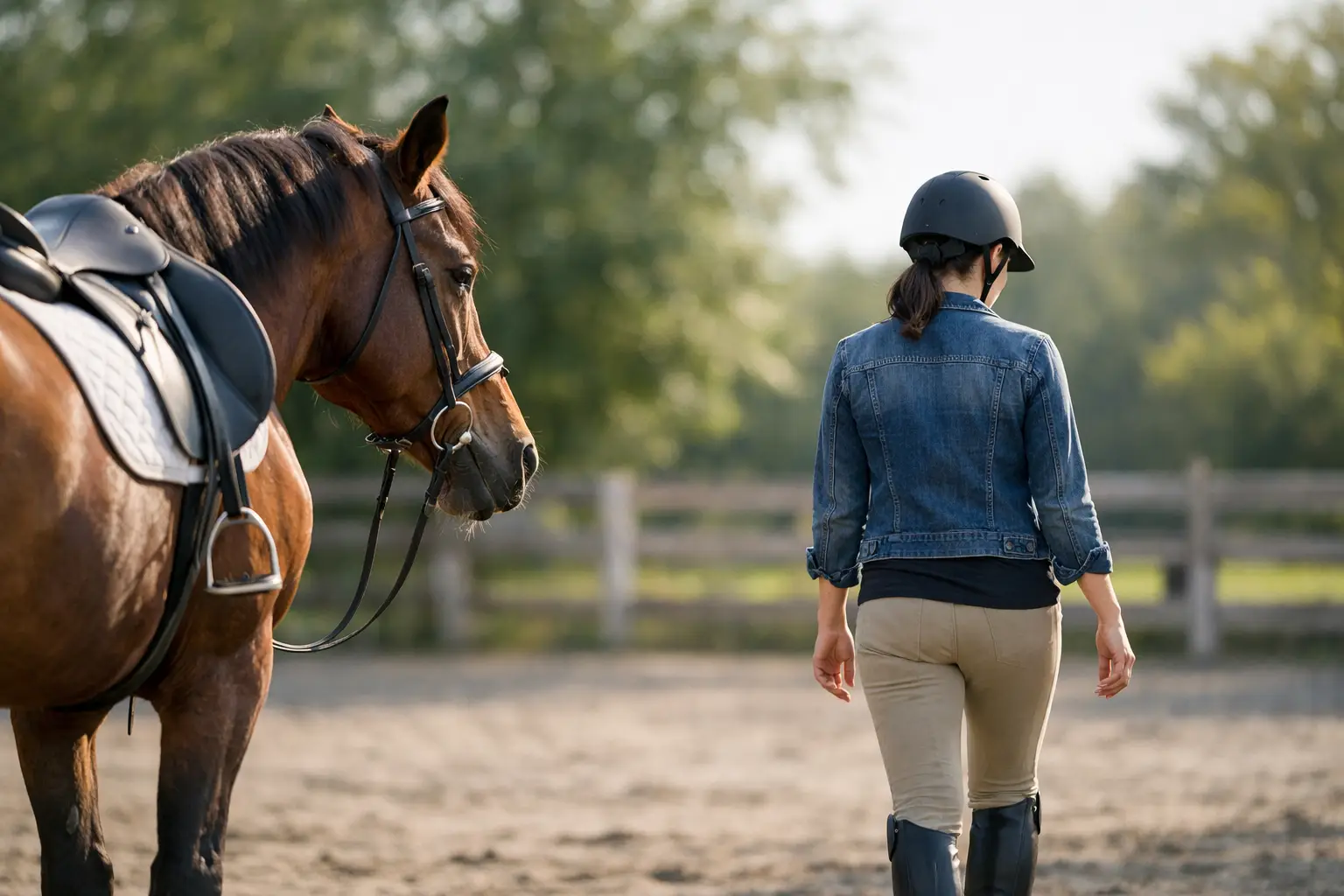

A horse can be beautiful, affectionate, and exactly the colour you always pictured — and still be the wrong one to take home. I need you to hear that, because I've seen it break so many good riders' hearts.
Walking away isn't failure. Honestly, it's often the most experienced, kind and financially sensible decision you'll make for both of you.
Here's the Trouble With Falling in Love First
By the time most buyers reach this decision, they've already driven for hours, pictured him in their paddock, and started quietly explaining away that uneasy feeling in their gut. I understand it completely. The seller's friendly, he's had a good day, and you're worried you're being fussy, or that this is your only chance. I want to say this plainly: you're allowed to be careful. A horse isn't a handbag you can return when it doesn't suit your life. The wrong match can cost you money, confidence, safety, and years you should have spent enjoying him instead.My Honest Answer: Walk Away When Reality Doesn't Match Your Life
Not when the horse is imperfect. When the reality in front of you doesn't match the life, skills or support you actually have. That might be about the horse, the seller, or simply your own readiness right now — and none of that makes him a bad horse. One small issue rarely means much on its own. What I want you watching for is a pattern — when several concerns show up together, I'd take that seriously. Your job here isn't to prove you can cope. It's to decide honestly whether this horse is a safe, suitable prospect for your real life, not your best day. There are a handful of very specific moments I watch for on a viewing — the exact point where a seller's answer stops matching what I'm seeing in front of me, and the particular kind of "off day" that isn't actually an off day at all. I'll be straight with you: those are the details I've put into my guides rather than a blog post, because half-explaining them does buyers more harm than good. Here are the broad areas worth thinking about, though.If He Feels Unsafe on the Ground, Don't Wait for the Saddle to Fix It
Please don't dismiss poor ground manners because you're hoping they'll vanish once you're riding. A horse who crowds, barges, or drags you is giving you real information right there, and some of what looks like a "training issue" is actually something else entirely. I could give you a checklist of ground behaviours here, but honestly, a list without context can send you either running from a fixable habit or ignoring a genuine risk. Knowing which one you're looking at is the actual skill — and it's exactly what I walk buyers through, step by step, inside The True Match™ Guide.Ask Yourself: Am I Only Seeing His Best Day?
A horse worked before you arrive can look completely different from that same horse on an ordinary Tuesday. There's nothing wrong with a seller presenting well. What worries me is when you're never shown anything else. If every request to see something ordinary gets met with a reason why today isn't possible, I'd pause right there. You're weighing up a major commitment, not buying off the strength of a short, polished clip.Pressure Is Not the Same as a Genuine Timeline
I want you to be really wary of urgency that shows up at a suspiciously convenient moment. Whether the seller means it or not, certain phrasing is designed to make your emotions outrun your judgement — and there's a specific pattern to when it appears that most buyers never notice until it's too late. A genuine buyer sometimes does need to move promptly on a good horse. Prompt is not the same as rushed, though. You should have room to arrange an independent check and think it over without being made to feel guilty for wanting that.Is He Beyond Where You Actually Are Right Now?
One of the most painful purchases I've seen is a horse bought because someone hopes to grow into him. There's a place for aspiration — but there's a real difference between a horse who helps you develop, and one who needs you to become a different rider before you can safely enjoy him. Here's a blunt question I'd ask you to sit with: if he had a rough day in his first month home, would you have the skill, help and confidence to handle it safely? Answer based on who you are right now, not who you're hoping to become.What Is Your Body Actually Telling You?
Sometimes a horse checks every practical box, and you still feel tense every time you picture bringing him home. I'd take that feeling seriously. Here's how I'd tell the difference: normal nerves usually sit alongside excitement and clarity. A poor match tends to create a stream of justifications instead — he'll settle once he knows me, the seller says he's just fresh, I probably just need to be firmer. You might be right about one of those. But horses aren't blank slates, and problems rarely disappear just because you've paid for them.Walking Away Is Not Letting Him Down
So many riders worry that walking away means they've judged a horse unfairly. Truthfully, buying a horse you can't safely manage is far less fair to him. He deserves an owner who can genuinely meet his needs. You deserve a horse who lets you build skill and trust without living in a constant state of worry. If you're finding it hard to separate genuine concerns from ordinary nerves, that's exactly the gap I built two things to close. My free guide walks you through the warning patterns buyers most often talk themselves past — the quiet ones, not the obvious red flags everyone already knows to watch for. 👉 Get the free 5 Red Flags guide here And if you want the complete system — every question worth asking, how to read the answer you actually get, and a printable checklist to bring to every single viewing — that's the whole reason The True Match™ Guide exists. It's the difference between having a vague sense something's off, and knowing exactly why, in the moment it matters most. The horse that's right for you probably won't be the one who makes the biggest first impression. He'll be the one who's calm to catch, straightforward to ride, and honest enough to help you actually enjoy the next chapter of your riding life.💛 The True Match™ Guide — $27
The complete framework for reading a horse's temperament, ground manners and seller answers before you buy — including exactly when to walk away and why. Comes with a printable checklist for every viewing, backed by a 30-day, love-it-or-it's-free guarantee. 👉 Get The True Match™ Guide Here