
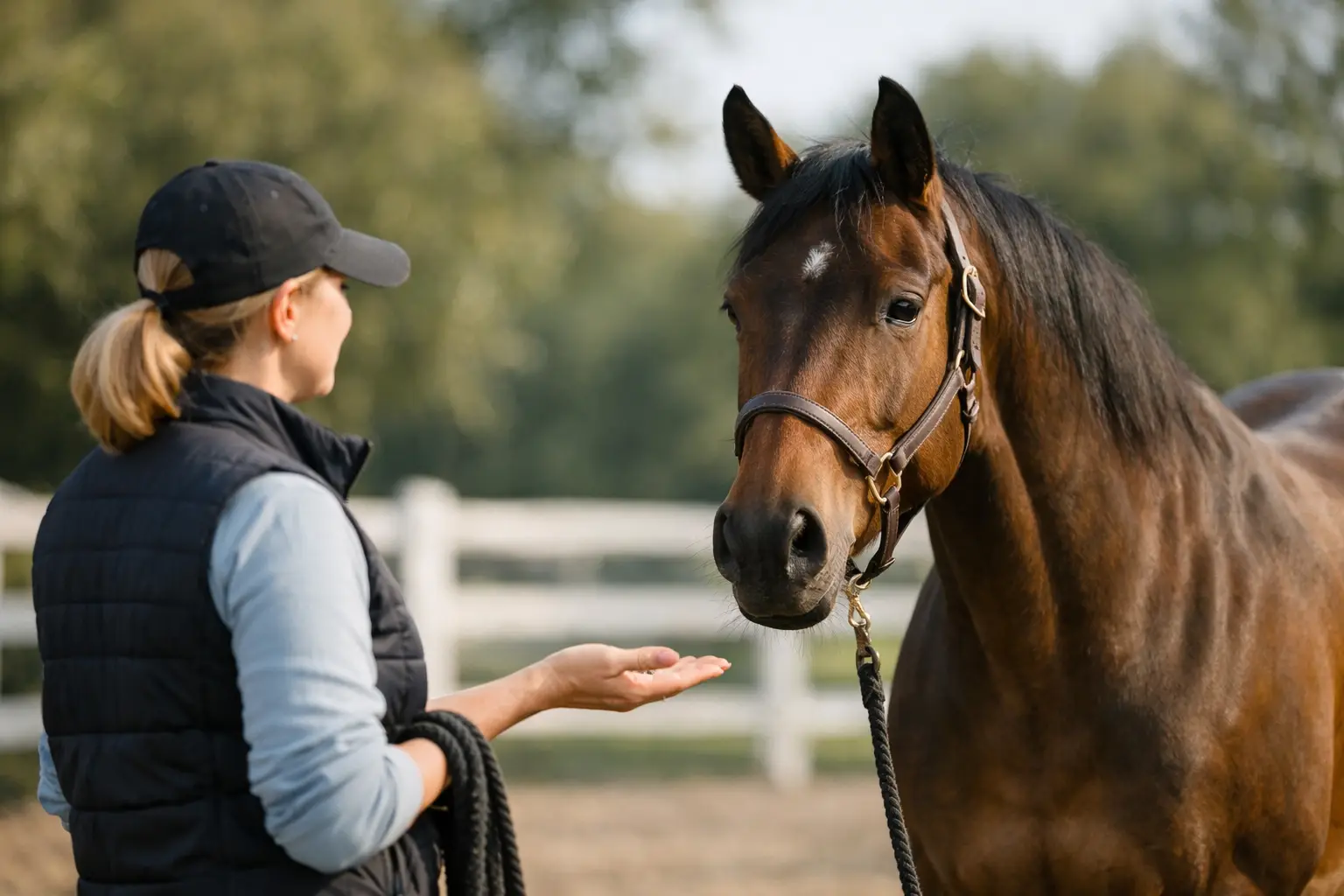
A horse can stand quietly while you pat it, load without fuss and look beautifully relaxed in the sale photos, yet still lack the confidence to cope when life gets a little harder. Learning how to assess horse confidence is not about finding a horse that never notices anything. It is about seeing whether that horse can think, recover and stay safely connected to a person when something feels unfamiliar, uncomfortable or worrying.
That distinction matters, particularly if you are a returning rider, a first-time owner or someone whose confidence has already taken a knock. A horse that is genuinely confident can make ordinary days feel manageable. A horse that copes only while everything is familiar can become too much horse very quickly.
Confidence is not the same as being quiet
A quiet horse is not automatically a confident horse. Some horses are naturally laid-back and have had good, consistent handling. Others appear quiet because they are tired, shut down, intimidated or unsure what they are allowed to do. They may look like the safest horse in the yard until pressure rises, then react with a suddenness that leaves the rider stunned.
Confidence is the ability to process a concern and return to a workable state. A confident horse may look at a flapping rug, hesitate at a puddle or become alert when another horse calls out. That is normal. What you want to see is a horse that can pause, listen and settle with sensible handling rather than escalating, barging, spinning or mentally leaving the conversation.
Do not mistake a lack of obvious movement for relaxation. Look for a soft eye, a normal blink, an easy jaw and a body that is not braced from poll to tail. A horse that stands motionless with a high head, tight mouth and fixed stare may be enduring the situation, not coping with it.
How to assess horse confidence from the ground
Start observing before anyone picks up a lead rope. Watch the horse in its usual environment if you can. Is it interested in what is happening without being frantic? Does it stand comfortably near people? How does it respond when another horse moves away, a vehicle passes, a gate bangs or someone walks through with a wheelbarrow?
You are not looking for perfection. You are looking for patterns. One startled step followed by a breath and a return to normal is very different from ten minutes of calling, pacing, pulling and refusing to settle.
When the horse is caught and led, pay attention to its respect for personal space. A confident, well-handled horse does not need to be dull, but it should not drag you, swing its quarters into you, crowd your shoulder or barge through a gate. Pushiness is often brushed off as personality. Sometimes it is poor education. Sometimes it is anxiety. Either way, it matters because a 500-kilo horse that cannot regulate its body around a person is not a small problem.
Ask to see normal handling, not a polished performance. Watch the horse be groomed, have its feet picked up, be saddled or rugged, and be led away from other horses. Notice whether the handler has to constantly manage tension before it boils over. An experienced seller may make a difficult horse look easy. That does not mean the horse will feel easy with you.
A useful question is: what happens after the horse is worried? Does it come back down, or does it stay tight and reactive? Recovery tells you more than the initial spook.
Signs of a horse that is coping well
A horse with workable confidence will usually show several of these qualities across different situations:
- It can notice something new without instantly rushing, pulling away or running over the handler.
- It responds to a clear, ordinary request and does not require force, repeated correction or constant reassurance.
- It settles after a surprise instead of carrying the tension into the next task.
- It can be handled away from its herd, even if it briefly calls or looks for company.
- It accepts reasonable changes in routine, footing, direction or location without falling apart.
None of these signs means the horse is bombproof. There is no such thing as a horse that will never be frightened. The point is that its reaction is proportionate and its recovery is reliable.
Watch the horse under ordinary pressure
Please do not ask someone to deliberately frighten a horse just to prove it is safe. That tells you very little about fairness, training or the horse’s threshold. Instead, use the natural little changes that happen during a viewing.
See whether the horse can leave the arena, walk past the wash bay, stand near a ute, or go into a different corner of the property. If appropriate and safe, observe it on a short trail or around the paddock rather than only in the same enclosed arena where it has been ridden every day. Some horses are confident in their home routine but become a different animal once the scenery changes.
Pay close attention to the person handling it. Are they calm and matter-of-fact, or are they talking continuously, keeping the horse very busy and steering you away from situations that might reveal a problem? A seller does not have to create a circus for you, but they should be willing to show ordinary, relevant handling without becoming defensive.
Be especially cautious if you hear, “He just needs a confident rider,” “She’s fine once she knows you,” or “He hasn’t done that before.” Those statements may be honest, but they are not answers. Ask what the horse does when it is worried, how long it takes to recover, and what level of rider has successfully handled it over time.
Assess confidence under saddle honestly
The horse’s confidence and your confidence affect each other. A steady horse can still become unsettled with a nervous, gripping rider, while a capable rider can make an anxious horse look far more straightforward than it is. That is why watching someone else ride is useful, but it is never enough.
First, watch the owner or regular rider mount, warm up and ride through simple transitions. Look for a horse that goes forward willingly without rushing, stops without bracing, and can cope with small mistakes. Notice whether the rider’s hands are constantly busy or whether they avoid one gate, one corner or one rein.
Then, if it is safe and you have suitable support, ride the horse yourself. Do not let embarrassment push you into attempting more than you normally do. You do not need to jump the biggest fence, canter in an open paddock or prove you are brave. Your job is to find out whether the horse feels understandable beneath you.
A horse that suits you should give you time to make a decision. It should not punish a slightly unclear aid by rushing, stopping dead, bucking, spinning or becoming stronger with every step. You may feel some nerves on a new horse. That is expected. But if you climb off feeling shaken, overfaced or relieved it is over, do not talk yourself out of that information.
Look for the difference between training and temperament
A horse can lack experience without lacking confidence. A young or green horse may be curious, kind and willing, but simply not know the answer yet. With the right education, it may become a lovely partner. The question is whether you are the right person to provide that education.
Likewise, an older, highly trained horse may know every button but still be anxious, sour or reactive. Training can contain a confidence issue, especially in familiar hands, but it cannot always remove it. A horse that performs beautifully only when ridden by a professional is not necessarily suitable for an amateur owner.
Ask about changes in behaviour. Has the horse become difficult to catch, load, shoe, ride out or separate from others? Has it had time off, moved properties, changed feed or had health concerns? Pain, ulcers, saddle fit, dental discomfort and lameness can all affect a horse’s willingness and confidence. Behaviour deserves investigation, not excuses.
Do not let sales pressure make the decision
Confidence assessment needs time. Ideally, see the horse more than once, at different times of day and in more than one setting. Take a knowledgeable, independent person with you if possible. Better still, arrange a pre-purchase examination and be honest with the vet about the job you want the horse to do.
Be wary of urgency. “There are three people coming this afternoon” may be true, but it should not force you to ignore what you have seen. A horse is not a handbag. The wrong decision can cost you money, months of worry and the confidence you worked hard to build.
If your gut is uneasy, write down exactly why before you leave the property. Vague discomfort often becomes clearer once the charm of the visit has worn off. You may notice that the horse was never handled by anyone but the owner, was tense every time it left the arena, or felt far stronger than advertised.
A confident horse does not need to be flashy or fearless. It needs to be able to cope with the life you can genuinely offer, with your current skills, your support team and your ordinary imperfect days. Choose the horse that leaves you feeling safer, clearer and more capable. That is the kind of confidence worth bringing home.