
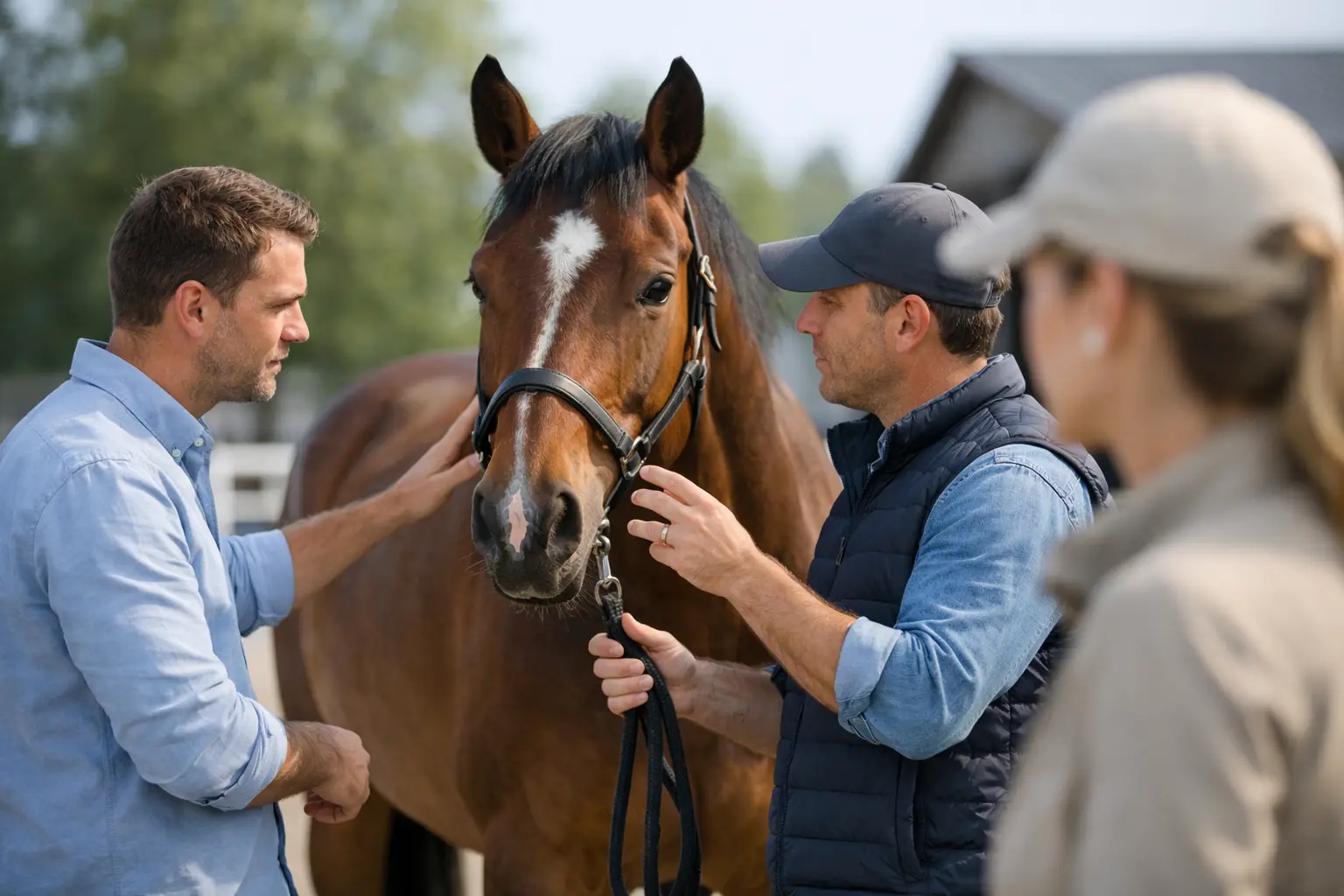

You arrive to meet a horse. Your stomach is fluttering. Within ten minutes you're told three other people are keen, someone's coming this afternoon, and it might be worth putting down a deposit before you leave.
That's how pressure usually shows up — not as one dramatic red flag, but as a quiet nudge to decide before you have enough information to decide safely.
A horse isn't a pair of boots you can return because the fit is wrong. Getting it wrong can cost you money, confidence, time and sometimes your safety. It's unfair on the horse too, who can end up moved from home to home because nobody stopped long enough to ask if the match was actually right.
Pressure Doesn't Always Look Rude
Most sellers aren't villains. Some genuinely have another buyer waiting, or need the horse moved due to agistment or changing circumstances. Having a timeline isn't the problem.
The real question is whether that timeline is being used to stop you asking sensible questions, arranging independent advice, or taking the time your decision deserves. A good seller may be disappointed if you walk away, but they'll still respect a careful buyer — watching the horse handled and ridden, requesting a second visit, arranging a vet check, bringing your instructor along.
When any of that gets you treated like you're being difficult, that reaction is worth paying attention to.
"You Need to Decide Today"
Urgency is the most common pressure tactic there is. Another buyer with cash ready. A price about to go up tomorrow. Sometimes it's even true.
It still doesn't mean you have to rush.
Watch specifically for urgency that appears right after you ask a reasonable question — about the horse's history, its medication, whether you can see it ridden somewhere new. If the timeline tightens the moment you get curious, that's not proof of a problem on its own, but it's not something to wave away either.
Flattery Is a Pressure Tactic Too
Some pressure hides inside reassurance rather than urgency. You're told you're the only person who really understands the horse, or that this is a once-in-a-lifetime opportunity. That can feel powerful when you've been searching for months.
Emotional connection isn't the same thing as suitability, though. Watch out for phrases that replace evidence with vague comfort — the kind of line that sounds sweet but explains nothing about what's actually driving a behaviour. There's a specific short list of these phrases that tends to repeat across sellers, almost word for word, and once you can recognise them, they lose most of their pull.
The Fastest Way to Test It: Say No
One of the clearest ways to read a seller is to calmly set a boundary. "I'll need to think about it overnight." "I'd like a vet check before we discuss a deposit."
Then watch what happens next.
A reasonable seller accepts it, explains their timing, and keeps things moving. A pressuring seller gets cold, defensive, or starts implying that serious buyers wouldn't need any of that. You're allowed to be serious and careful at the same time — in fact, the careful buyers are usually the ones building partnerships that actually last.
Questions That Tend to Reveal a Lot
You don't need to interrogate anyone. You do need consistency between what's said and what you see.
A few worth asking every time:
- Why is the horse for sale, and how long has the seller owned them?
- What work are they doing right now, and how do they behave after time off?
- What's the history with injuries, medication, dental care, or behavioural concerns?
Then watch for the gap. If a horse is advertised as safe for beginners but you're not allowed to watch a novice ride it, that gap matters. There's a longer, more specific version of this question list — including the exact wording that tends to expose the difference between a fair explanation and a story that's being managed — laid out in full inside the free 5 Red Flags guide.
👉 Get the free 5 Red Flags guide here
Protect Yourself Before Money Changes Hands
Never let the fear of missing out push you into handing over money without clear terms. If a deposit's on the table, know exactly what it covers, whether it's refundable, and what happens if a vet check turns something up. Get it in writing.
Being told a vet check is unnecessary because the horse is "too cheap" or "just for pleasure riding" should make you pause. A lower price doesn't lower the consequences of an unsuitable horse.
Your Calm Is Part of the Decision
The right purchase doesn't need to feel effortless — good horses do sell quickly, and there will always be some unknowns. But you should be able to ask questions and take your time without being made to feel foolish or disloyal.
The horse that's right for you isn't just the one that gives you butterflies at the gate. It's the one whose history, handling and temperament actually make sense for the rider you are right now — and telling the difference is a skill, not a gut feeling you either have or don't.
If you want the complete system for making that call with confidence — the full pressure-buy breakdown, the seller questions in detail, a workbook to define your own non-negotiables, and a printable checklist for every viewing — it's all inside The True Match™ Guide.