
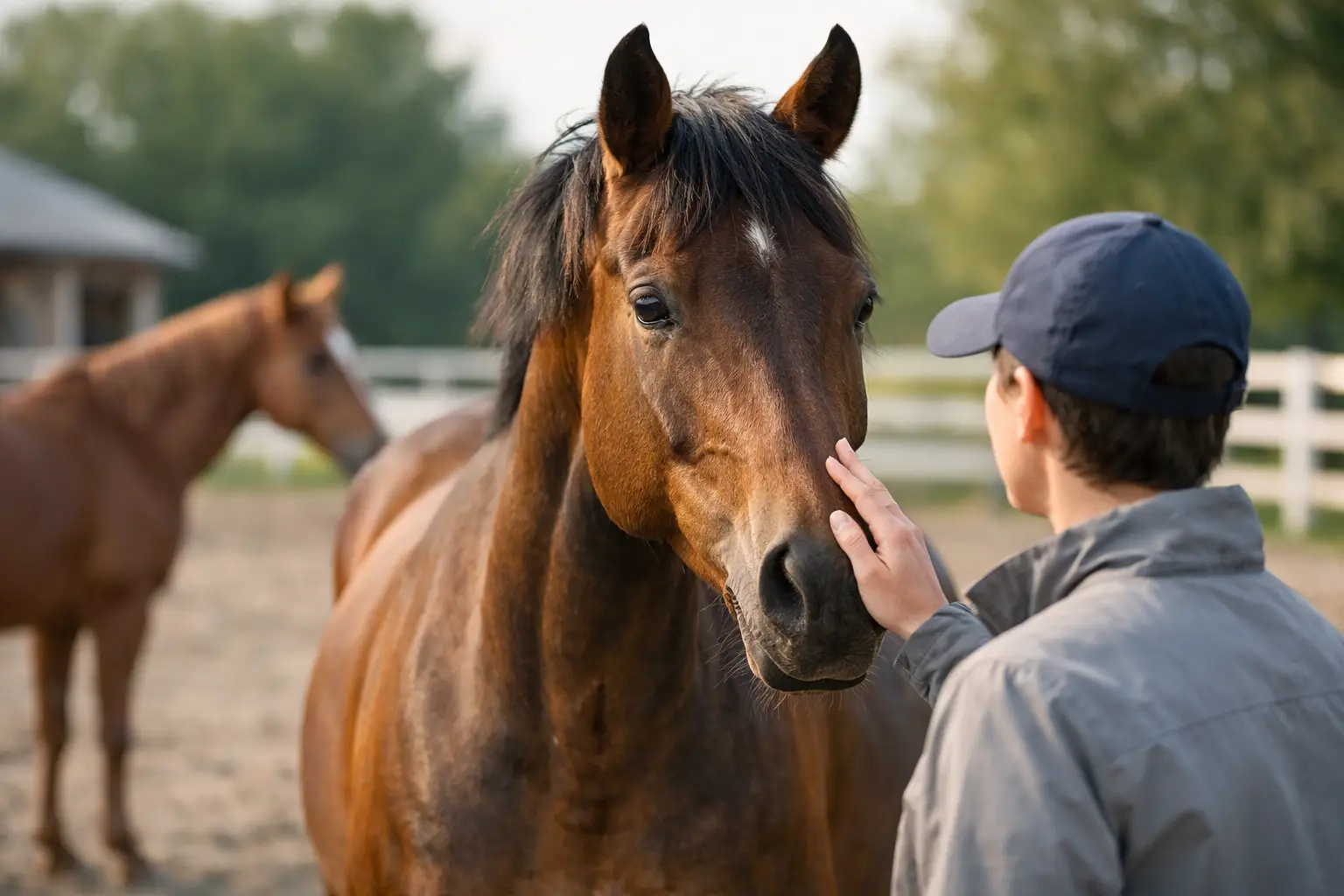

A horse can look polished in a sale photo, stand quietly while being tacked up, and still be telling you very clearly that something is wrong.
Reading body language before a purchase isn't about diagnosing every flick of an ear. It's about noticing whether the horse looks settled, comfortable and appropriately responsive — or tense, hurried and carefully managed. That difference can save you from a match that costs far more than money.
Watch Before You Touch
The most useful information is usually available before the seller puts a lead on the horse or starts talking him up. Arrive a little early if you can, and ask to see him in the paddock or yard before he's been groomed, lunged or worked.
A suitable horse doesn't need to stand like a statue. Horses move, look around, react to their surroundings — that's normal. What you're actually looking for is the ability to return to a calm state. Does he notice a noise, then soften and settle? Or does he stay on high alert, pacing, sweating, scanning?
Look at the whole horse, not one isolated signal. Pinned ears alone might just mean he's protecting his feed. Pinned ears combined with a tight muzzle, a hard eye and a braced body is a different conversation entirely — and there's a specific combination of signs that consistently separates "having a moment" from "genuinely uncomfortable."
Calm and Shut Down Look Similar. They Aren't.
This is one of the easiest mistakes buyers make, especially adult beginners and returning riders drawn to the quietest horse in the line-up.
A shut-down horse may stand very still, barely respond, and appear almost absent — some horses have simply learned that resisting handling brings consequences, so they stop offering much response at all. A genuinely calm horse still engages with his environment; he responds to a gentle request and shows some willingness without becoming reactive.
Ask yourself: is this horse relaxed because he feels secure, or because he's learned he has no choice? Getting that distinction wrong is one of the most common — and most expensive — mistakes in the buying process.
Watch the Handler as Closely as the Horse
The horse's body language is only half the story. How the handler manages him tells you whether you're seeing his everyday self, or a carefully controlled version for sale day.
A few things worth noticing: Is the lead rope hanging soft, or is it constantly being shortened and corrected? Is someone positioned to block barging before it happens? Is "he's never normally like this" coming up more than once?
Ask to see the ordinary, unglamorous moments — catching him, leading him through a gate, tying up, picking up feet. These aren't part of the polished sale ride, but they're exactly the moments that shape daily safety.
What Happens Under a Little Pressure Matters Most
Most horses look agreeable when nothing much is being asked of them. The real picture shows up under mild pressure — a new rider, separation from a paddock mate, a small surprise.
You're not trying to provoke a reaction. You're watching for recovery. A safe horse might startle or hesitate, then settle. A horse that escalates rapidly, braces or becomes impossible to redirect deserves real caution — and there are early tension signals most buyers miss entirely because they're focused on whether anything visibly "bad" happens, rather than how much support the horse needed to stay manageable in the first place.
One Visit Isn't Enough
Body language shifts with location, routine, company, weather and pain. Where possible, see the horse more than once, at different times of day, and watch him come in from the paddock rather than only seeing him presented.
This is also where a pre-purchase veterinary exam earns its place — girthiness, reluctance to move forward, and sudden reactivity can be training gaps, but they can also be pain talking. Nobody should be able to convince you that pain-related behaviour is just a horse being cheeky.
Don't Let the Sales Atmosphere Rush Your Judgement
Pressure is sometimes loud — "there are three other people coming this afternoon." Sometimes it's quiet: a seller who keeps the horse moving, or makes you feel silly for wanting a second visit.
A good horse for you will still be a good horse tomorrow. If reasonable requests get resistance, that's information, not rudeness on your part for asking.
Turning What You See Into a Decision You Trust
Your gut feeling matters, but it needs evidence behind it — written down, before the excitement of the ride takes over. Did he look comfortable? Did he recover after a worry? Were you more relaxed as the visit went on, or increasingly uneasy?
Learning to read a handful of signals in the moment is one thing. Having a complete, repeatable system for turning those observations into a clear decision — including the exact tension signs to watch for, the questions that separate a fair explanation from a managed story, and a printable checklist to bring to every viewing — is what The True Match™ Guide was built to give you.
He doesn't have to be perfect. He does need to leave you feeling like you can understand him, support him, and stay safe while you both learn. If your stomach tightens, give yourself permission to pause.