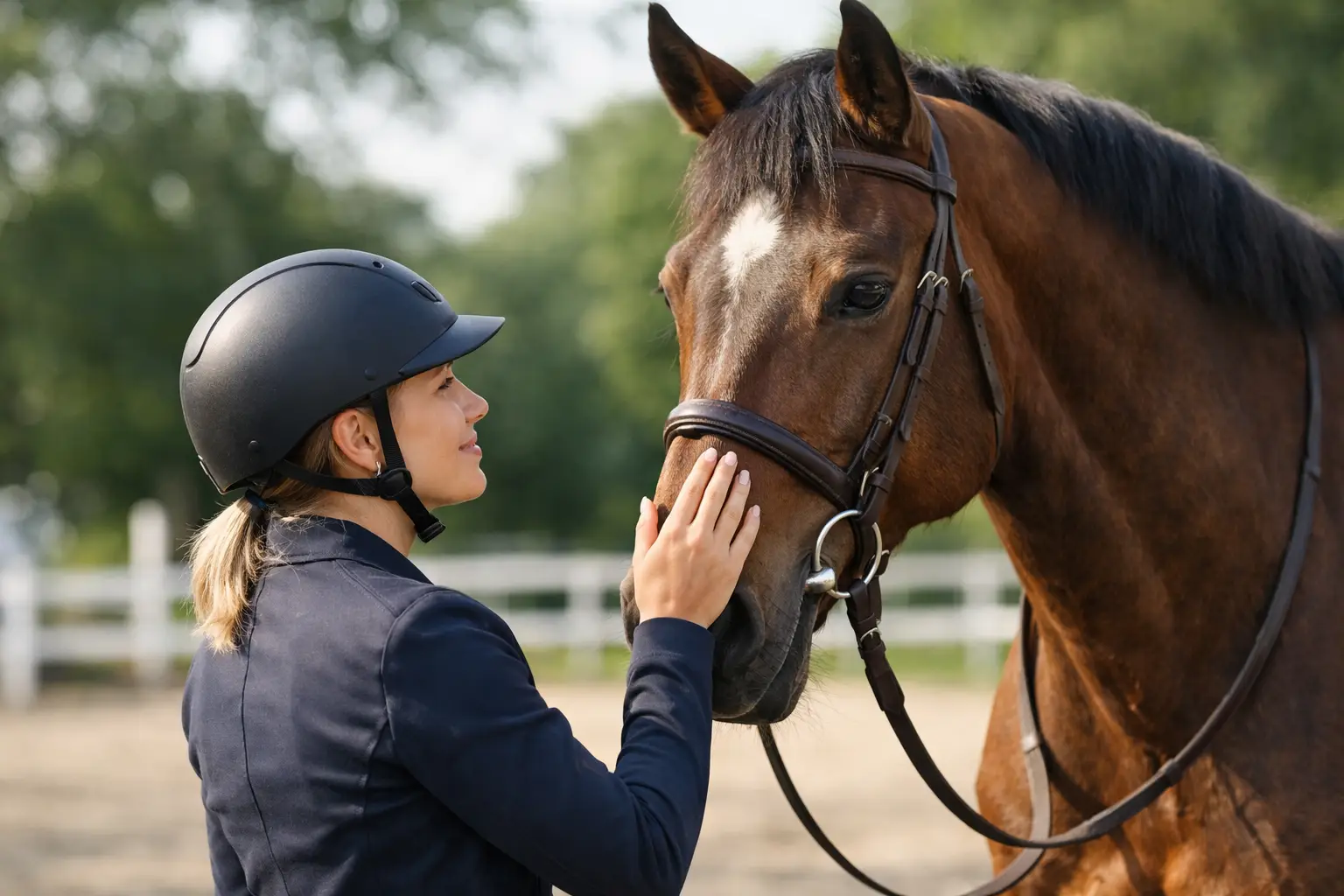
The horse stands with a soft eye, a pretty face and just enough sparkle to make your heart race. You can already picture the rides, the photos, the bond. Then someone says, “You won’t find another one like this.” That is exactly when you need first horse advice that brings you back to the facts.
Your first horse does not need to be impressive. It needs to be safe, suitable and genuinely manageable on ordinary days, not just on the day it is being shown to you. A good first horse gives you room to learn. It does not require you to become braver, stronger or more skilled overnight just to stay safe.
First horse advice: choose the ride, not the dream
Many adult riders begin their search with a picture in their mind. Perhaps it is a particular colour, breed, height or movement. There is nothing wrong with having preferences. The problem starts when the picture becomes more important than the horse’s temperament, training and fit for you.
The horse that looks exciting in an ad may be sharp, green, anxious, strong, herd-bound or difficult to handle on the ground. None of those qualities make a horse bad. They may simply make it too much horse for your current experience, time and support system.
Ask yourself a more useful question: what do I want my average Tuesday to feel like? Not the perfect sunny ride after a good lesson. Think about catching your horse after work, leading it through a busy agistment property, tacking up when it is windy, mounting without an audience, or dealing with a missed ride after a stressful week.
For most first-time owners, the right answer is a horse that is forgiving. It may be older, quieter or less flashy than the horse you first imagined. That is not settling. It is choosing a partner that can build your confidence instead of steadily taking it away.
A suitable horse is not the same as a quiet horse
“Quiet” is one of the most overused words in horse sales. One person’s quiet horse might be safe for an experienced rider who can sit a sudden spook and correct pushy behaviour immediately. For a returning rider, that same horse may feel unpredictable.
Suitability includes far more than whether the horse bucks, bolts or rears. Look at how it responds to pressure, change and uncertainty. Does it lead politely? Stand to be groomed? Move away from you when asked? Wait at the mounting block? Load calmly? Settle when another horse leaves the arena?
A horse can be pleasant under saddle and still be difficult or unsafe to manage on the ground. That matters. Ground behaviour is part of ownership, every single day. If you feel crowded, dragged, rushed or ignored before you even get in the saddle, do not talk yourself out of that feeling.
Slow the sale down
Pressure is not proof that a horse is desirable. Sometimes a good horse will have genuine interest from other buyers. But a seller who will not allow reasonable questions, a second visit, an independent assessment or a proper trial is asking you to make a big decision with too little information.
You are not being difficult by taking your time. You are protecting your safety, your savings and the horse from being passed on again when the match does not work.
Watch the horse before it is prepared for you. Arrive early if you can, or ask to see it caught from the paddock, groomed, tacked up and ridden by its usual person. Notice what happens when it is asked to stand still. Notice whether the handler needs a lot of strength, quick corrections or careful management to keep things orderly.
Then watch the owner ride first. A horse should not be made to look perfect by a rider who is quietly working very hard to contain it. Ask for an ordinary ride, including transitions, steering, stopping and a short period on a loose rein where appropriate. If the horse is described as suitable for your level, it should look comfortable and uncomplicated with a competent rider.
When it is your turn, do not let anyone rush you into getting on. Start with handling. If you ride, ride in the setting that reflects your real life as closely as possible. A horse that feels fine in a familiar arena with its owner standing beside you may feel very different alone at your own property.
Questions that uncover the whole horse
Good first horse advice is not about finding one magic question that exposes every problem. It is about listening for clear, consistent answers and being willing to ask again when something does not add up.
Ask how long the seller has owned the horse and why they are selling. Ask what work the horse has been doing over the past six months, not just what it did at its best. Find out who normally rides it, how often it is ridden and what happens when it has time off.
Also ask what the horse is like to catch, float, shoe or trim, worm, rug, clip and treat. Ask directly whether it has bucked, reared, bolted, bitten, kicked, pulled back, rushed gates or become difficult to load. A truthful seller may say yes to one of these questions and explain the context. That honesty can be more reassuring than a glossy claim that the horse has never put a foot wrong.
Pay attention to vague language. “Needs a confident rider” often means the horse has behaviours that require confident, timely handling. “Forward” can mean beautifully responsive, or it can mean strong and tense. “Not a beginner’s horse” should be taken literally, even if you are told you are more capable than you think.
You do not need to prove you can handle a challenge. Buying a horse is not an audition.
Bring experienced eyes and get a vet check
Take an experienced, independent person with you. Ideally, this is a coach or horse professional who understands your riding, not someone who is simply impressed by a flashy horse. Tell them privately what you are hoping for, what worries you and where your skills are right now. Give them permission to be honest.
A pre-purchase veterinary examination is also money well spent. It cannot guarantee that a horse will never go lame or become ill, but it gives you information before you commit. Be clear with the vet about what you plan to do with the horse. A horse suitable for quiet trail riding may have different demands placed on it than one intended for regular jumping, endurance or competition.
Do not skip these steps because you are worried someone else will buy the horse first. Missing out on a suitable horse is disappointing. Buying an unsuitable horse in a rush can cost far more in vet bills, training, agistment, lost confidence and heartbreak.
Budget for ownership, not just the purchase price
The purchase price is only the beginning. Before you buy, work out the ongoing cost of agistment, feed, farrier care, dental work, vaccinations, worming, rugs, lessons, transport, insurance and an emergency vet fund. Prices vary widely across Australia, especially between metropolitan agistment and regional properties, so use figures from the places you would actually keep your horse.
Your support network belongs in this calculation too. If your horse develops a behaviour issue, who will help? If you are injured or away, who can manage it? If you are not yet confident riding alone, is there regular instruction or a sensible riding companion available?
A cheaper horse that needs extensive training is rarely a bargain for a first-time owner. Nor is a horse that is physically inexpensive but emotionally exhausting. The right horse should leave enough room in your budget for good care and your own education.
Trust concern without letting fear run the show
Adult riders are often hard on themselves. They worry that they are too nervous, too fussy or not knowledgeable enough to judge a horse. Sometimes nerves do need support and skill-building. But anxiety is not always irrational. If your stomach drops every time the horse moves, crowds you, pins its ears or becomes difficult to stop, pay attention.
You do not need a dramatic reason to walk away. “This does not feel like the right match for me” is enough. The horse may suit someone else beautifully. Your job is not to rescue every horse you feel sorry for or persuade yourself to cope with a horse that makes you feel small.
The right first horse may not create fireworks on day one. More often, it creates relief. You can breathe around it. You can ask questions without feeling foolish. You can imagine learning together, one calm, ordinary ride at a time. That is the beginning of a partnership worth waiting for.
