
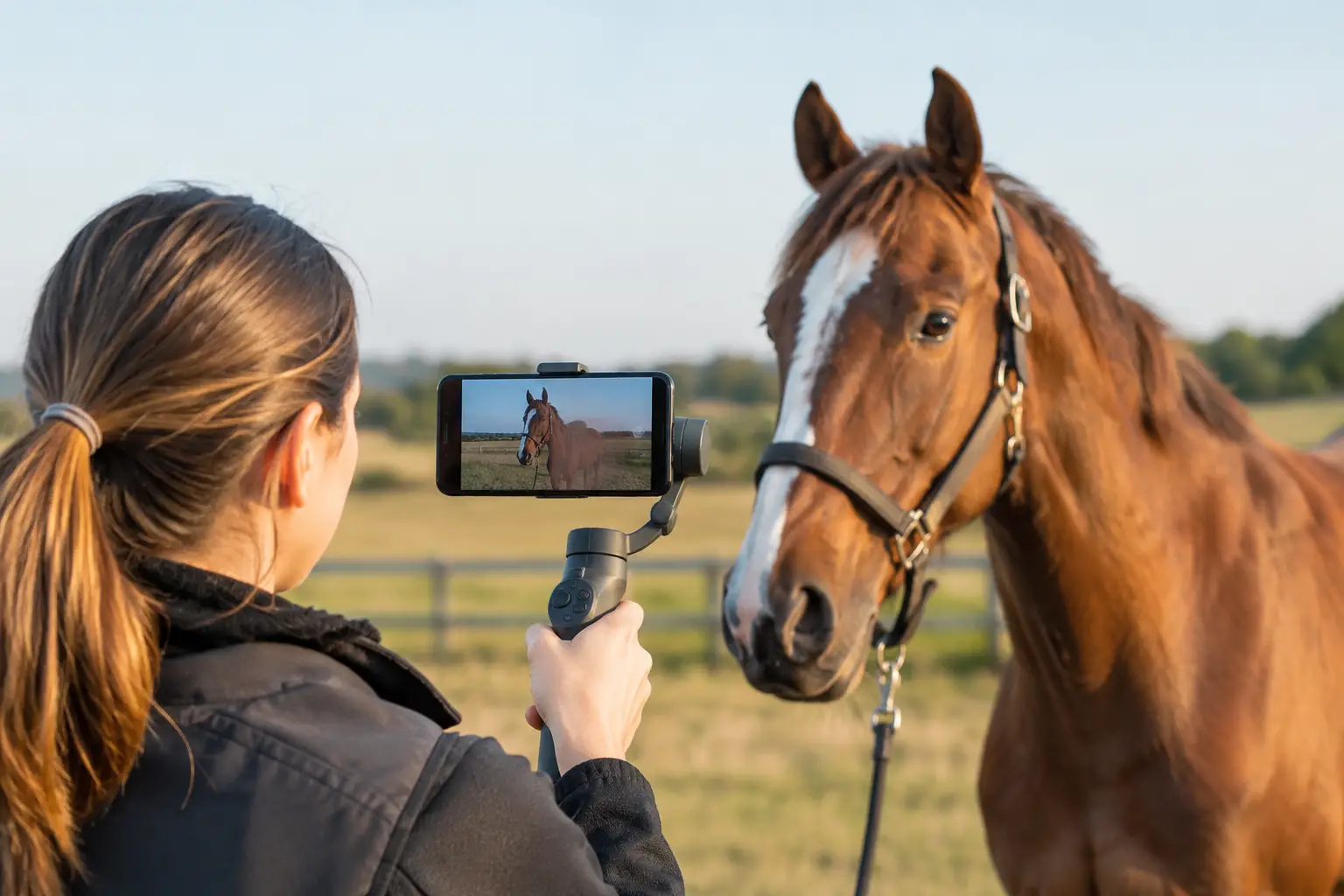
A polished video can make a horse look like the answer to everything you have been hoping for: quiet, willing, soft in the contact and safe enough for your confidence. But are seller videos reliable? They can be useful, certainly. They are not proof that a horse is suitable for you, safe in ordinary handling, or honestly represented.
That distinction can save you from an expensive and heartbreaking mistake. A video is a carefully chosen slice of a horse’s life, often filmed on one good day, with a capable rider, in familiar surroundings. It may show a lovely horse. It may also leave out the very information that matters most when you are deciding whether you can live, ride and feel safe with that horse week after week.
Are seller videos reliable for judging a horse?
Seller videos are reliable for one thing: confirming that a horse can perform the behaviour shown in that particular clip. If you see the horse walk, trot and canter under saddle, you know it has done those things at least once in that setting. That is all you can safely conclude.
A video can help you decide whether a horse is worth travelling to see. It can show basic movement, apparent way of going, conformation from certain angles and whether the horse is being ridden in a discipline that interests you. It may also reveal obvious concerns that save you the trip, such as a tense expression, rushing, hollowing, tail swishing, resistance to the rider’s leg or a rider working very hard to keep control.
What it cannot reliably tell you is how the horse behaves when being caught after a wet week, led past another horse, tied to the float, rugged, shod, wormed, ridden away from home or asked to stand quietly while you sort out a gate. Those ordinary moments are where a supposedly quiet horse can become a very different proposition.
The problem is not that every seller is dishonest. Many genuine sellers are proud of a horse and film it at its best. The problem is that buyers can mistake a highlight reel for a full assessment. When your safety, savings and confidence are on the line, you need more than the best two minutes of footage.
What a video may be hiding without meaning to
Editing is not automatically a red flag. A seller may trim a long ride simply because nobody wants to watch twenty minutes of circles. But selective footage changes what you can assess. If every transition is cut, every mounting moment is missing and the horse appears only after it is warmed up, you are being shown a performance rather than the whole picture.
Pay close attention to who is riding. A horse may look uncomplicated under a confident professional or a strong, balanced teenager, then feel like too much horse for a returning adult rider. This is not a failure on your part. A horse does not need to be dangerous to be unsuitable. A forward, sensitive horse that responds beautifully to an experienced rider may still overwhelm someone rebuilding confidence.
Also consider the setting. A horse going quietly in its home arena, after being worked beforehand, tells you far less than a horse being handled from the paddock, tacked up, mounted and ridden in a normal session. Some horses are saints in a familiar routine and unsettled when anything changes. Others are genuinely steady wherever they go. Your job is to work out which horse you are looking at.
Watch for the parts that are absent. Is there footage of the horse standing at the mounting block? Is it shown walking on a loose rein? Do you see both reins, transitions, a halt, and the rider getting on and off? Is there any ordinary handling, or only flattering ridden work? Missing footage is not proof of a problem, but it should guide your questions.
How to watch a sales video with clear eyes
Before you press play, write down what you actually need. Not your dream horse on its best day - your real needs. Perhaps you need a horse that is quiet to catch and handle, forgiving if your balance is not perfect, sensible out on trails, and steady enough to help you enjoy riding again. That criteria matters more than a flashy trot or a beautiful colour.
Watch the first time with the sound off. Sellers often describe a horse as quiet, safe or easy, and those words can influence what your eyes think they see. Without commentary, look at the horse’s expression and body language. Does it look settled through its eye, jaw and tail? Does it move freely forward, or is it hurried, tight or braced? Does the rider look relaxed, or are they constantly managing speed, direction and contact?
Then watch again and notice the rider. A quiet horse does not require perfection from its rider, but a horse that is difficult may be held together by a skilled person with excellent timing. Look for hands that are fixed or busy, legs gripping, a short rein throughout, repeated corrections or a horse that never truly takes a breath. One moment alone means little. A pattern deserves attention.
It is also reasonable to ask when the clip was filmed and whether the horse had been ridden beforehand. Ask who is riding, how often the horse is ridden, and whether the video shows its normal level of work. A straightforward seller should not be offended by practical questions. You are not accusing them of anything. You are trying to make a responsible match.
Ask for ordinary, unpolished footage
If the first video interests you, request short clips of everyday tasks rather than another edited riding montage. Ask to see the horse being caught, led, groomed, saddled, mounted and ridden at walk, trot and canter on both reins. If trails matter to you, ask for genuine footage out of the arena. If the horse will live on agistment or travel to clinics, ask how it behaves away from home and around unfamiliar horses.
A seller may not have every clip ready, and that is fine. Their willingness to have an open conversation matters more than instant production quality. Be wary when simple questions are brushed aside, when you are told you are overthinking it, or when pressure appears before you have met the horse.
The viewing is where the real assessment begins
Never buy a horse based on video alone, no matter how lovely it looks or how far away it is. A video can earn a horse a place on your shortlist. It cannot replace a viewing, a suitable trial, an independent pre-purchase veterinary examination, or the opinion of a knowledgeable horse person who has no financial interest in the sale.
At the viewing, arrive early if you can. You want to see the horse in an ordinary moment, not only groomed, tacked up and ready to perform. Watch it be caught and handled. Notice how it reacts to the saddle, girth and mounting block. Ask the seller to ride first, then see whether the horse behaves consistently when a rider closer to your ability gets on.
Do not let embarrassment put you in the saddle before you are ready. If the horse looks anxious, strong, reactive or simply beyond your current confidence, you are allowed to say no. You do not have to prove you are brave. Buying a horse is not an audition for anyone’s approval.
If possible, see the horse more than once and vary the conditions. A second visit can reveal whether the first experience was typical or carefully managed. Take the horse somewhere different if that is practical. A horse that copes calmly with a change of routine gives you more useful information than one perfect arena video ever could.
When a good video is still a good sign
None of this means you should dismiss every well-made seller video. Clear, longer footage can be a positive sign, particularly when it shows the horse from paddock to ride and includes normal mistakes, pauses and unglamorous moments. A seller who openly discusses the horse’s quirks, history and suitable rider type is often giving you something more valuable than a sales pitch: context.
The key is to keep the video in its proper place. Let it help you form questions, not answer them for you. A horse that looks less polished but is honestly represented and genuinely suited to your life may bring far more joy than the beautiful prospect who leaves you frightened, out of pocket and wondering what you missed.
Trust what you see, but trust your own unease as well. If the footage leaves you with questions, ask them. If the answers do not sit right, walk away. The right horse should not require you to talk yourself out of your own good judgement.