
A horse can look lovely in the seller's arena and still be the wrong purchase for your plans, your budget, or your confidence.
A pre-purchase examination — often called a vetting — is a veterinary assessment of a horse's health and soundness at one point in time. It can reveal risks you'd never spot from the saddle. What it can't do is promise the horse stays sound forever, or tell you whether he's actually safe for you.
That distinction matters more than most buyers realise. A clean vetting doesn't cancel out pushy behaviour, a cold-backed reaction, or a seller who won't let you see the horse handled in ordinary circumstances. The vet examines the horse. You still have to assess the whole match.
Tell the Vet the Truth About What You Want
The exact scope of the exam should be agreed with your vet beforehand — and it starts with being honest about your plans. Quiet trail riding, adult riding club, showing, jumping: a finding that's a serious concern for a performance horse might be a perfectly acceptable risk for occasional low-level riding.
In Australia, "basic," "limited" and "comprehensive" vettings don't mean exactly the same thing at every practice. Ask your vet directly what's included, what isn't, and what each additional test is actually designed to answer.
History Comes First
The vet will confirm identity — markings, brands, microchip, papers — and ask about age, work level, previous injuries, medication and vices. This is exactly why the vet should be working for you, not the seller: they need the freedom to ask direct questions and record what they're told.
If a history is vague, shifts halfway through the conversation, or can't be backed up by records — that's information in itself, not a technicality to overlook.
The Clinical Check
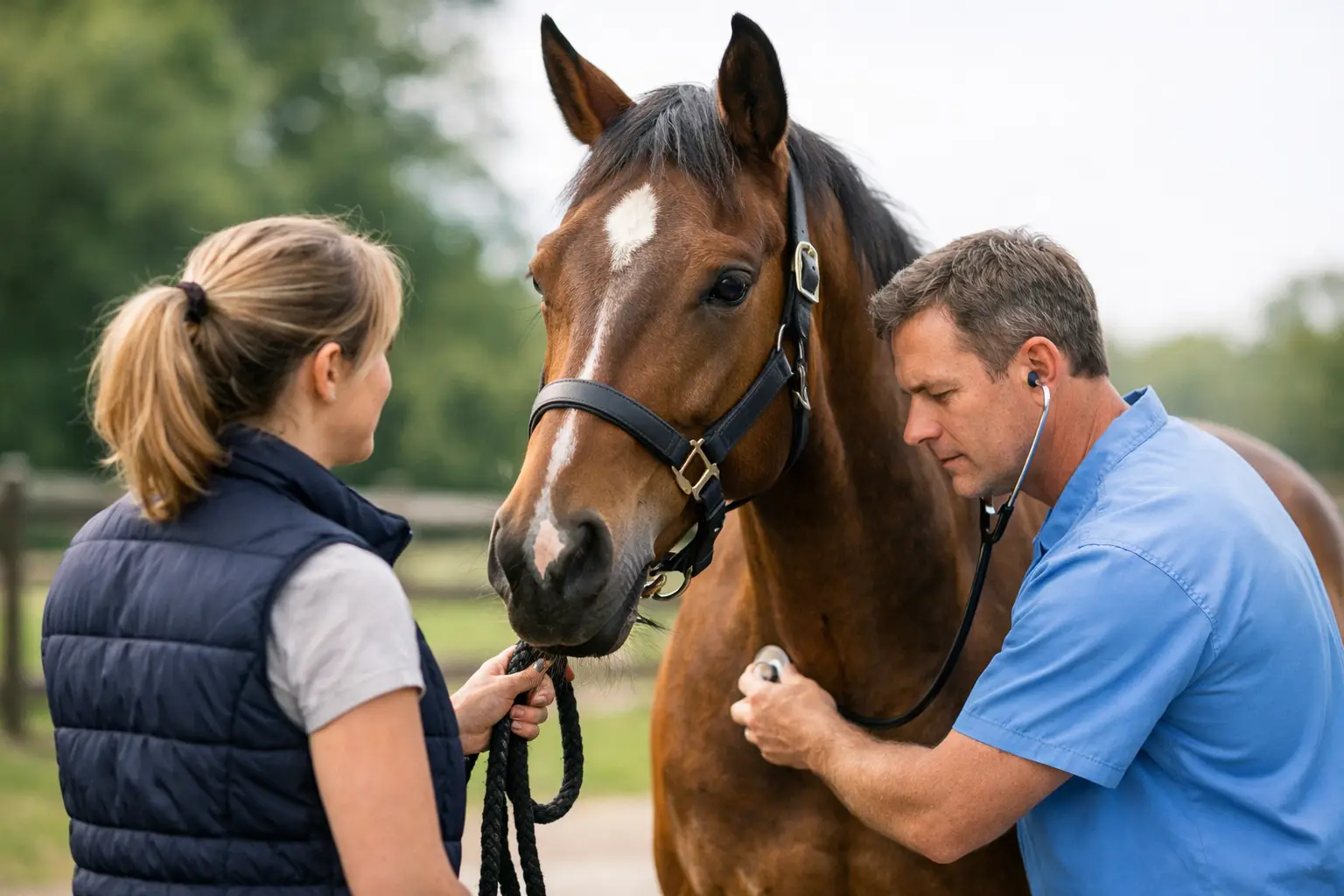
A standard exam covers the essentials: heart, lungs, temperature, eyes, teeth, skin, and a full palpation of the neck, back, pelvis and limbs for pain, heat or restricted movement. The feet get close attention too — hoof balance, sole depth, digital pulses — because poor hoof care can hide, create or worsen problems long before it shows up under saddle.
Movement Tells a Different Story Than Standing Still
The horse is watched walking and trotting in hand, usually on a firm surface, from the front, side and behind. Flexion tests are common — a joint held flexed briefly, then the horse trotted away to see if anything changes.
Here's the part buyers often get wrong: a positive flexion response isn't automatically a diagnosis. Some horses react because they're tense or unfit on the day. Others look completely fine and have an issue that only shows under a specific workload. The findings need interpretation — which is exactly why the questions you ask your vet matter as much as the exam itself.
Seeing the Horse Actually Work
In a fuller exam, the horse may be ridden or lunged so the vet can assess movement, breathing, recovery rate and any lameness that only becomes clear under exertion.
Don't let a seller rush this stage. If you're buying for dressage, jumping or distance riding, a couple of quiet circles on a loose rein isn't evidence of anything. And if the horse is already warmed up and sweaty when you arrive — ask why.
When X-Rays and Further Testing Make Sense
Further diagnostics — X-rays, ultrasound, endoscopy, blood tests — aren't automatic for every horse, but they're often worth it when the price, workload or clinical findings justify them.
X-rays aren't a crystal ball. Plenty of horses have imperfect images and stay comfortable for years. Others look clean and develop problems later. What matters is whether the imaging lines up with the clinical exam, the horse's age, and your own risk tolerance.
If a seller refuses reasonable diagnostics or insists you use only their vet, that's not a detail to explain away because you've already fallen for the horse.
What a Vetting Can Never Tell You
This is the part that trips up even careful buyers: a horse can pass a clinical exam completely and still be the wrong horse. Green, anxious, dominant on the ground, difficult to catch, spooky, too much horse for where you're at — none of that shows up on a vet report.
A vetting reduces the risk of an expensive physical surprise. It says nothing about the everyday moments that actually make up ownership — being caught, led, groomed, and ridden by you, not just the seller.
Preparing Properly
Book an independent vet yourself, and make it clear you're the client. Give them your intended use, your experience level, and anything that concerned you on the trial ride.
Skip the question "would you buy this horse?" — your vet doesn't know your finances, goals or confidence the way you do. Better questions: What risks am I accepting? What could this cost to manage? Would this finding rule the horse out for the work I described?
And then give yourself room to actually think. A horse that's right for you will still be right after an independent vetting and a calm decision — not just after the seller mentions another buyer is on the way.
The Vetting Is Half the Picture
A physical exam protects your investment. It doesn't protect you from a temperament mismatch, a pressure sale, or a horse that's simply too much for your current skill and confidence — those all need their own framework to evaluate properly.
The True Match™ Guide was built to cover exactly that other half: the red flags a vet report will never catch, the questions worth asking before the vetting is even booked, and a printable checklist to bring to every stage of the process.