
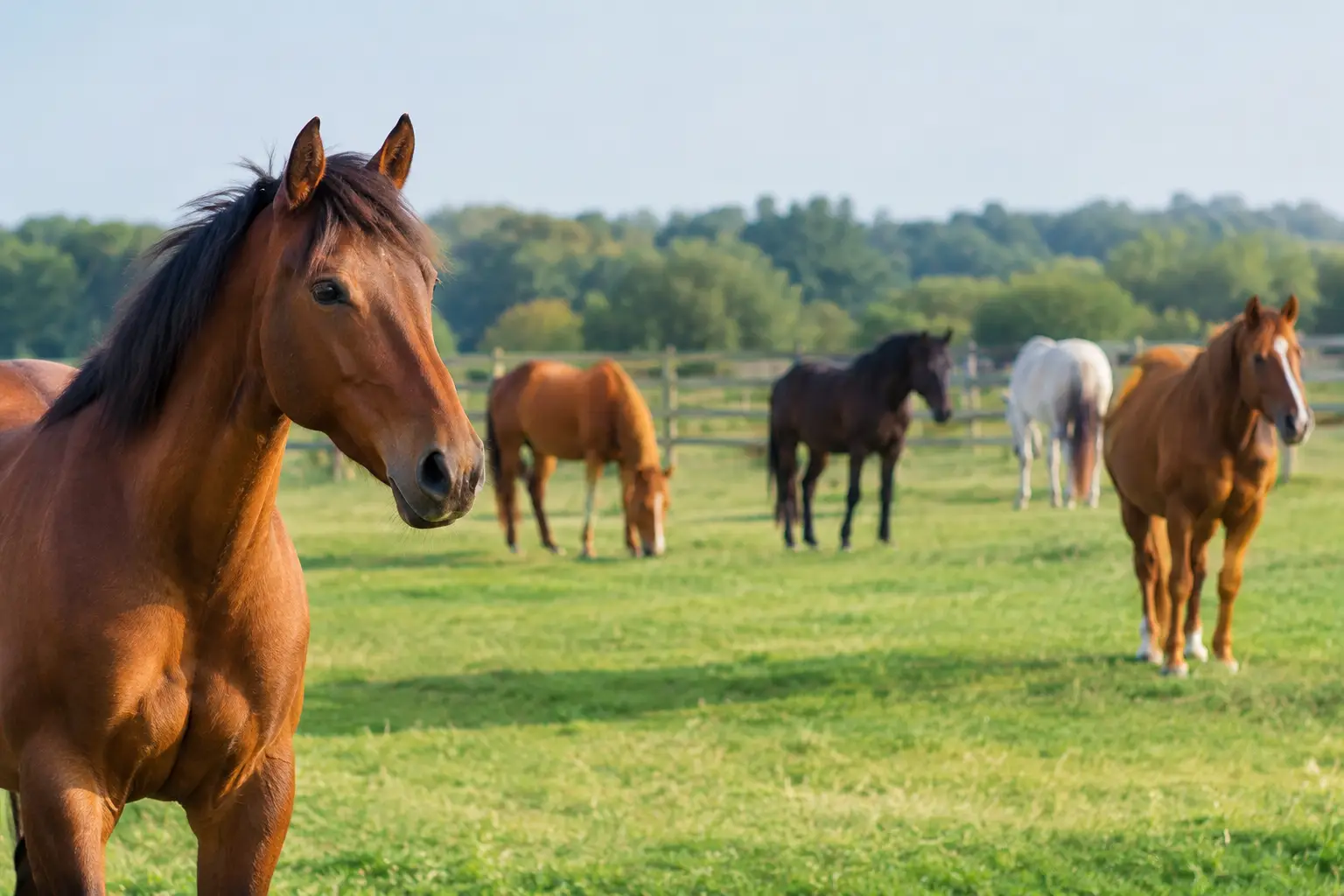
A horse who walks into your space can turn an ordinary catch, groom or lead into a tense negotiation. If you are wondering how to reduce horse crowding, start by taking the behaviour seriously without turning it into a personal battle. Crowding is not a harmless quirk when a horse outweighs you by several hundred kilos. It can steal your confidence, make everyday handling feel unsafe and, if ignored, become barging, biting, dragging or striking.
The good news is that most horses are not trying to be "the boss". They are responding to what has been consistently available to them. If moving into your space gets them grass, scratches, release from pressure, a quicker walk to the paddock, or simply no response at all, they have learned that it works.
Your job is not to punish your horse for being close. It is to teach a clearer answer: people have space too, and a calm horse can stay out of it.
What horse crowding really looks like
Crowding is not just a horse standing near you. Some horses are affectionate, curious and quiet, and there is nothing wrong with that. The issue is whether they can respect a boundary when you ask.
A horse is crowding when they drift their shoulder, head, hip or whole body into you, lean on the lead, step over you while being groomed, rush through gateways, swing their hindquarters towards you or push you aside to reach feed or grass. A horse that repeatedly turns their nose into your chest or pockets may look sweet, but it is still worth teaching them to wait outside your space.
Pay attention to the moments that feel small. Many owners first notice crowding at the gate, then find themselves being dragged towards a patch of green grass six months later. The behaviour usually does not improve because we wish it would. Horses learn through repetition, and they learn remarkably quickly from inconsistent boundaries.
Rule out discomfort before you correct the behaviour
Before you assume your horse is simply pushy, look at the whole picture. A normally polite horse that suddenly crowds, pins their ears during grooming, swings away from a hand on their body or becomes difficult to lead may be uncomfortable.
Pain, poorly fitting tack, ulcers, dental trouble, vision changes, hormonal shifts and lameness can all affect a horse's tolerance and behaviour. So can turnout changes, a new herd, limited forage, lack of movement or anxiety about leaving mates. A horse who is worried does not need a bigger argument. They need the cause of their worry identified.
If the behaviour is new, intense, or comes with aggression, involve your vet and an experienced, suitable professional. Do not wait until someone gets hurt. There is no shame in needing help with a big horse and a small margin for error.
How to reduce horse crowding: claim your space early
The most useful boundary is simple: your horse should be able to stand beside you, not on top of you. Choose a comfortable bubble around your body, roughly an arm's length where practical. The exact distance matters less than being consistent.
Start in a safe, enclosed area with a well-fitted halter and lead. Wear gloves and sturdy boots, and avoid practising in a narrow stable, at feed time or beside a busy gate. You need room to move without getting trapped.
Ask your horse to stand quietly at your shoulder or slightly behind it. If they step into your space, respond straight away with a clear, proportionate cue that asks them to move away. This might be a change in your body position, a lifted hand, or a light cue with the lead or training tool you already use competently. The moment they take a step away or soften, release the pressure and let them stand.
That release is where the lesson happens. You are not trying to keep pressure on until your horse looks frightened or runs backwards. You are teaching, "When I ask you to make room, the answer is easy and the pressure goes away."
Be matter-of-fact. No nagging, no repeated shoving, and no apologising for needing space. If you move away every time your horse advances, they learn to move you. If you push them with your hands and then let them lean straight back in, they learn that the whole exchange is just part of being handled.
Practise the movements that make daily handling safer
Standing still is only one piece of the picture. A horse who can move their feet softly in response to a light request is easier to handle and usually feels clearer about where they belong.
Practise a few basic responses for short periods, ideally before your horse has already become impatient. Ask them to step back from you, yield the shoulder away, move the hindquarters away, and walk with slack in the lead. You do not need to drill these for half an hour. A few calm, correct repetitions are far more useful than a long session where both of you become frustrated.
The important part is to take these skills into real life. At the gate, ask for a pause before opening it. When leading, stop occasionally and see whether your horse stops without falling into you. During grooming, ask them to shift over before their shoulder crowds the grooming kit, not after they have shoved you into the wall.
This is where many well-meaning owners get stuck. They practise groundwork in an arena, then accept barging everywhere else because they are in a hurry. Horses do not automatically transfer a lesson from one setting to another. They need calm repetition in the places where the habit actually occurs.
Do not confuse affection with permission
Some owners worry that clearer boundaries will make their horse less affectionate or damage their bond. In my experience, the opposite is often true. Horses tend to settle when the rules are fair and predictable. They no longer have to guess whether today they can nudge you, pull you to grass or rush through the gate.
You can still scratch your horse, enjoy their company and let them be curious. Just make those things your choice. Invite them into closer contact when you want it, then ask them to step away again when you need room. That is a healthier relationship than one where you tolerate behaviour because you do not want to seem mean.
A horse does not need access to your body to feel connected to you. They need consistency, fair handling and a person who is calm enough to mean what they say.
Common mistakes that keep the habit going
Crowding often survives because the handler is unintentionally rewarding it. One day the horse is corrected for barging through a gate; the next day they are allowed to do it because rain is coming, someone is watching, or the owner is tired. Your horse does not understand the reason for the exception. They only learn that persistence sometimes pays.
Avoid feeding treats by hand if your horse is already mugging pockets or pushing into your chest. Treats are not the problem, but timing and manners matter. Ask for the horse to stand out of your space first, then offer the reward deliberately rather than letting them search your clothes for it.
Also avoid escalating simply because you feel embarrassed. A sharp slap, yelling or jerking the lead may make a horse back away in the moment, but it can create tension, defensiveness or fear without teaching a reliable response. Firm does not mean rough. It means timely, clear and consistent.
When crowding is more than a manners problem
Walk away from the idea that you should be able to fix every situation alone. A horse that barges with force, threatens to bite, strikes, rears, kicks out, pins you against a fence or drags you towards grass is not a casual groundwork project. The risk is real, especially for a returning rider or first-time owner whose confidence is already shaky.
Get experienced eyes on the horse and be honest about what you can safely manage. There is no prize for proving that you can handle too much horse. The right support can protect your confidence, your body and your horse from a pattern of escalating corrections.
If you find yourself constantly stepping aside, bracing on the lead or dreading the walk from paddock to tie-up rail, do not dismiss that feeling. Louise's Claim Your Space mini course focuses on one easily missed handling habit that can keep horses pushy and unsettled, and gives owners a clearer starting point for changing it.
Your horse does not need you to be louder, tougher or perfect. They need you to be safe, fair and consistent enough that personal space becomes an ordinary part of every interaction.