
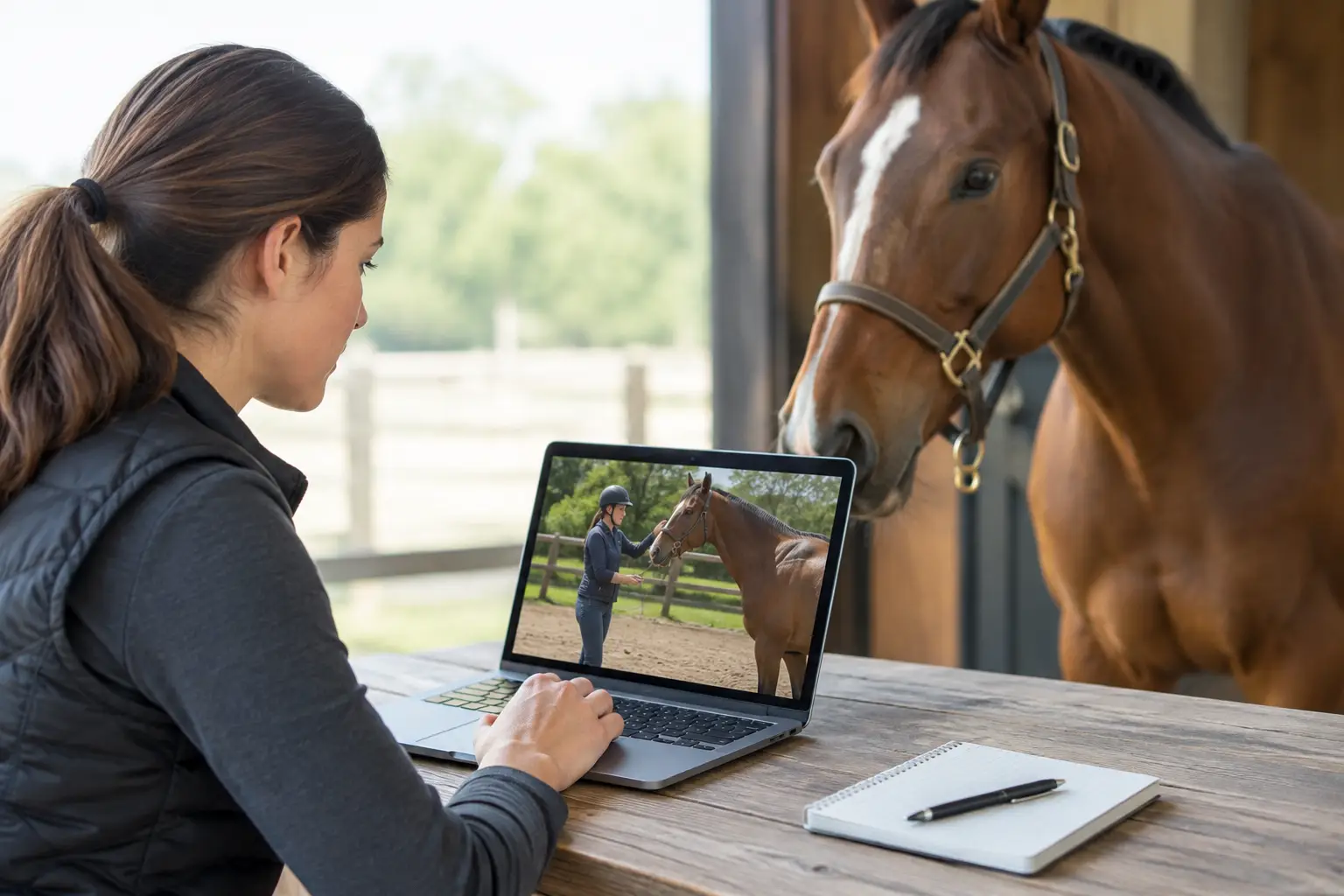
A horse can look quiet for twenty minutes and still be completely wrong for you. That is how many expensive, confidence-shaking situations begin: a lovely face, a reassuring sales pitch, a test ride that goes reasonably well, and a buyer who wants to believe they have found their horse.
Good online horse education gives you something more useful than a list of breeds or pretty training videos. It teaches you what to look for when the pressure is on, what questions to ask when the answer matters, and when to walk away even though your heart is already halfway over the stable door.
For adult riders especially, better information is not about becoming cynical. It is about protecting your safety, your budget, your confidence and the horse from a partnership that was never fair to either of you.
What online horse education should actually teach
There is no shortage of horse content online. You can watch people ride difficult horses, scroll through quick handling tips, and collect more opinions than you know what to do with. The problem is that information alone does not make someone safer. Context does.
Useful education helps you make decisions in the real world, where horses may be anxious, sellers may be rushed, and you may be worried that another buyer will get there first. It should explain why a behaviour matters, what may be causing it, and whether it is something you can realistically manage with your experience, time and support.
A horse that paws while tied, crowds at the gate or barges through your space is not automatically a bad horse. But those behaviours are information. They can point to gaps in training, poor boundaries, anxiety, pain, inconsistent handling, or a horse that has learned people will move out of its way. Ignoring the information because the horse is otherwise appealing is where trouble starts.
The strongest online horse education does not promise to turn a beginner into a trainer overnight. It helps you recognise your limits without shame. There is a huge difference between being willing to learn and buying too much horse in the hope you will catch up.
Learn to assess the horse in front of you
One of the biggest traps for buyers and owners is assessing a horse by potential rather than daily reality. You are not buying the horse it might become after months of expert training, better management and perfect consistency. You are deciding whether the horse standing in front of you is suitable for your life now.
Before you become emotionally attached, look beyond the ridden demonstration. Watch how the horse is brought in, caught, groomed, saddled, led and mounted. Notice whether the handler has to work very hard to keep the horse settled. Notice whether the horse respects personal space or leans, pulls, rushes and pushes.
Ask yourself four plain questions:
- Does this horse’s everyday behaviour make me feel calm or on edge?
- Could I handle this horse safely on an ordinary weekday, without a confident professional beside me?
- Is the seller showing me the horse as it truly is, including the less polished moments?
- If the horse had a difficult day, do I have the skills, facilities and support to deal with it?
These are not negative questions. They are responsible ones. A horse can be talented, affectionate and beautifully bred, yet still be the wrong match for a rider returning after years away or an owner with limited help at home.
Watch for pressure, not just problems
Pressure is often the warning sign people miss. It can sound harmless: “There are lots of other people interested”, “You will get used to that”, or “He only does that with nervous riders.” Sometimes there is a reasonable explanation. Sometimes there is not.
Either way, you do not have to make a decision on the spot. A suitable horse will still need to be suitable after you have had time to think, discuss it with your instructor, arrange an independent vet check and see it more than once. If a seller makes you feel foolish for asking sensible questions, take that seriously.
The same applies to your own inner pressure. Many adult riders feel they should be grateful to have found any horse within budget, especially after a long search. That feeling can make red flags look like small compromises. But a compromise on colour, height or an unimportant detail is very different from compromising on safety and temperament.
Online horse education is not a substitute for hands-on support
A screen cannot tell you if a particular horse is lame, dangerous or suitable. No course, article or video can replace a thorough vet assessment, a qualified instructor who understands your riding, or experienced eyes on the horse you are considering.
That is not a weakness of online learning. It is knowing where it fits.
Online education gives you a framework before you arrive at the property. It helps you spot what needs further investigation, prepare better questions, and avoid being swept along by a polished presentation. Then local, hands-on professionals can help you assess the details that cannot be judged from a photo, video or advertisement.
For current owners, it can also help you separate a training issue from a safety issue. A horse that is mildly green or inconsistent may improve with the right programme and professional guidance. A horse that repeatedly frightens you, runs over you, bucks you off, bolts or leaves you too scared to catch it needs a more serious, honest assessment. Hoping the problem will disappear is not a plan.
Choose teaching that respects both horse and rider
Be careful with education that treats every unwanted behaviour as defiance or every worried rider as the problem. Horses do not wake up intending to ruin your day. Behaviour has causes, and good horsemanship asks what the horse is communicating.
At the same time, compassion for the horse does not mean accepting unsafe behaviour. You can look for pain, stress, confusion and management issues while still insisting on clear boundaries. You are allowed to say, “This is not safe for me.” You are allowed to seek help. You are allowed to decide that a horse is not a fit.
Look for educators who explain their reasoning, acknowledge that circumstances vary, and do not use fear to sell certainty. Be wary of anyone claiming one technique works for every horse or that a difficult situation can always be fixed quickly. Horses are individuals. A pushy young gelding, a worried rescue mare and an experienced school horse with a sudden change in behaviour may need very different responses.
The best teachers leave you more observant, not more dependent. They help you trust what you are seeing while giving you practical ways to check your assumptions.
Turn learning into calmer decisions
Knowledge only helps if you use it before emotion takes over. Keep a written record when viewing horses. Note what you saw rather than what you hoped you saw. If you are considering a purchase, compare each horse against the same non-negotiables: safe handling, suitable temperament, manageable training level, soundness, realistic ongoing costs and access to appropriate support.
For owners working through confidence or groundwork concerns, focus on one clear behaviour at a time. Practise in a safe area, use appropriate equipment, and get experienced help early if the behaviour is escalating. Small issues around personal space can become much bigger when they are repeatedly overlooked.
A simple education resource can be valuable when it gives you a clearer next step. Louise Kropach’s free horse-buying guide is designed to help riders recognise a few of the warning signs that are easy to excuse when a horse seems perfect in every other way. No fluff, no pressure to prove you are brave enough for a difficult horse.
You do not need to know everything before you own or buy a horse. But you do need enough understanding to pause, ask better questions and choose safety over urgency. The right horse should give you room to grow, not make you spend every ride wondering whether you are in over your head.